Imagine standing inside an ancient Egyptian temple before sunrise, surrounded by thousands of years of history, and watching the first rays of sunlight slowly travel through a dark sanctuary. As the sun reaches the statues at the back of the temple, their faces and bodies begin to glow in a remarkable display of ancient Egyptian astronomy, architecture, and religious belief.
This is the Abu Simbel Sun Festival, one of the most fascinating cultural events in Egypt.
Held at the temples of Abu Simbel in southern Egypt, the festival attracts visitors who want to witness a phenomenon connected to the temple’s original design and the ancient Egyptian worship of the sun. The event takes place twice a year and creates a memorable experience for anyone interested in history, archaeology, astronomy, or Egyptian culture.
But when exactly does the Abu Simbel Sun Festival happen? Why does sunlight enter the temple in such a precise way? What can visitors expect, and how should you plan your trip?
In this complete guide, we’ll explain everything you need to know about the Abu Simbel Sun Festival in Egypt, including its dates, history, meaning, what happens inside the temple, how to get there, what to bring, photography tips, and how to combine the festival with an unforgettable trip through Aswan and southern Egypt.
Quick Answer: What Is the Abu Simbel Sun Festival?
The Abu Simbel Sun Festival is a spectacular solar phenomenon that occurs at the Great Temple of Abu Simbel in southern Egypt approximately twice a year. At sunrise, sunlight travels deep into the temple sanctuary and illuminates several of the statues at the back of the temple.
The phenomenon is traditionally associated with the temple’s solar alignment and the religious significance of sunlight in ancient Egypt. The event is especially popular with travelers because it combines ancient architecture, astronomy, history, and a dramatic sunrise experience.
The festival is generally observed around February 22 and October 22, although the exact circumstances and timing can vary.
What Is the Abu Simbel Sun Festival?
The Abu Simbel Sun Festival is a solar alignment that takes place inside the Great Temple of Abu Simbel.
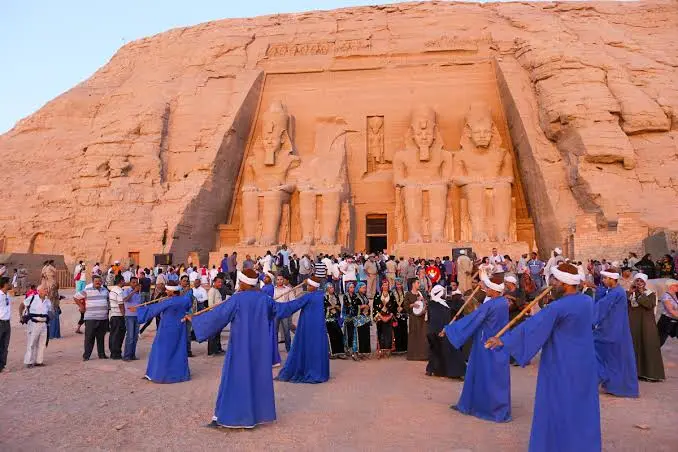
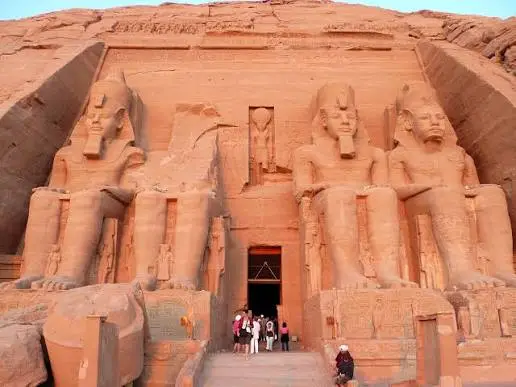
The temple was built during the reign of Ramesses II, one of ancient Egypt’s most powerful pharaohs. Its enormous rock-cut façade features four monumental seated statues of the king, while the interior contains halls, religious scenes, and a sanctuary containing important divine and royal figures.
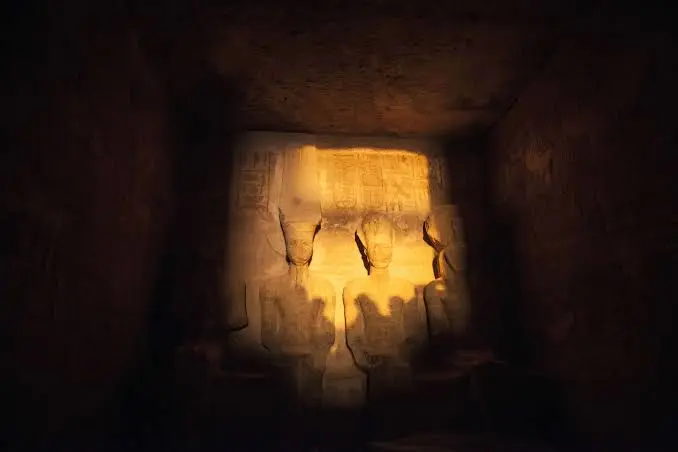
On the festival dates, the rising sun sends a beam of light through the temple’s entrance and along the central axis toward the sanctuary.
The light reaches three of the four principal statues located at the rear.
The phenomenon is remarkable because the temple’s architecture was designed with an extraordinary understanding of the relationship between the structure and the movement of the sun.
For modern visitors, seeing the sunlight gradually enter the dark sanctuary is one of the most memorable experiences in southern Egypt.
When Is the Abu Simbel Sun Festival?
The Abu Simbel Sun Festival traditionally occurs twice every year:
- February 22
- October 22
These dates are associated with the solar alignment inside the temple.
The event usually attracts large numbers of visitors, including international tourists, Egyptian travelers, photographers, archaeologists, and people interested in ancient Egyptian culture.
Because the event takes place around sunrise, visitors generally need to arrive extremely early.
If you’re planning to attend, don’t think of this as an ordinary temple visit. The experience requires more preparation because thousands of people may be interested in watching the phenomenon on the same morning.
Let’s Explore Egypt Tours to Experience the Abu Simbel Sun Festival with Love Egypt Tours
Why Does the Sun Enter the Temple?
One of the biggest questions surrounding the Abu Simbel Sun Festival is how sunlight can travel so precisely through a temple that was built more than 3,000 years ago.
The Great Temple was constructed along an axis that allows sunlight to enter through the entrance and illuminate the sanctuary during specific periods of the year.
Inside the sanctuary are four seated figures associated with:
- Ramesses II
- Amun-Ra
- Ra-Horakhty
- Ptah
When sunlight reaches the sanctuary, three of the figures become illuminated.
The statue of Ptah, traditionally associated with the underworld and darkness, remains in shadow.
This contrast has fascinated historians, archaeologists, and visitors for generations.
The precise meaning of the alignment is still discussed by researchers, and it is important to distinguish between established archaeological evidence and modern interpretations. Nevertheless, the solar phenomenon demonstrates the extraordinary relationship ancient Egyptians created between architecture, religion, and the movement of the sun.
The History of Abu Simbel Temple
To understand the Sun Festival, it helps to understand the history of Abu Simbel itself.
The temples were constructed during the reign of Ramesses II, who ruled Egypt during the 13th century BCE.
The Great Temple was dedicated primarily to Ramesses II and several major Egyptian deities.
Its enormous façade is one of the most recognizable monuments in Egypt.
Four colossal statues of Ramesses II dominate the entrance. Each statue represents the king seated on a throne, emphasizing his power and divine status.
Inside, visitors encounter decorated chambers featuring scenes connected with religion, warfare, royal ceremonies, and the king’s relationship with the gods.
The smaller temple nearby was dedicated to Queen Nefertari, the principal wife of Ramesses II, and to the goddess Hathor.
Together, the two temples form one of the most spectacular archaeological sites in southern Egypt.
Why Is Abu Simbel Important in Egypt?
Abu Simbel is important for several reasons.
Ancient Egyptian architecture
The temples demonstrate the scale and sophistication of New Kingdom monumental architecture.
Royal power
The enormous statues of Ramesses II communicate the authority and status of the pharaoh.
Religious symbolism
The temples were connected with major Egyptian gods and religious traditions.
Solar alignment
The movement of sunlight through the Great Temple provides an extraordinary example of ancient architectural planning.
Modern engineering
Abu Simbel also has an important modern history because the temples were relocated during the construction of the Aswan High Dam.
The relocation project helped save the monuments from being submerged by the rising waters of Lake Nasser.
This engineering achievement became one of the most significant international archaeological preservation projects of the 20th century.
The Experience: What Happens During the Abu Simbel Sun Festival?
The experience begins long before the sunlight reaches the sanctuary.
Visitors typically arrive while it is still dark or very early in the morning.
Outside the temple, the atmosphere can be exciting as groups of visitors gather in anticipation.
As dawn approaches, the sky begins to brighten.
Eventually, sunlight enters the temple.
The beam gradually moves deeper into the structure until it reaches the sanctuary.
Inside, visitors watch the statues become illuminated by the natural sunlight.
The entire experience can last only a relatively short time, which makes preparation particularly important.
Afterward, visitors can explore the temples in greater detail, photograph the monumental façade, and appreciate the surrounding landscape.
Discover the Abu Simbel Sun Festival with Our Egypt Tour Packages
What to Expect at the Abu Simbel Sun Festival
Crowds
The festival is considerably busier than an ordinary visit to Abu Simbel.
Expect:
- Large groups of visitors
- Early morning departures
- Crowded areas around the temple
- Limited space inside certain areas
- Increased demand for transportation and accommodation
If you dislike crowds, consider visiting Abu Simbel on a different date.
However, if witnessing the solar phenomenon is your main goal, the crowds are part of the experience.
Weather
Southern Egypt is generally dry, sunny, and warm for much of the year.
The February festival takes place during a cooler period, while October can be warmer.
Because the event happens early in the morning, temperatures can initially feel quite comfortable before becoming warmer later in the day.
Always check the current forecast before traveling.
Photography
The festival provides exceptional photography opportunities.
You can photograph:
- The temple façade
- The statues of Ramesses II
- The sunrise
- The entrance of the temple
- The illuminated sanctuary
- Lake Nasser
- The surrounding desert landscape
However, photography conditions inside the sanctuary can be challenging because the light is relatively low and crowds may make positioning difficult.
A camera capable of handling low-light conditions can be useful.
Best Time to Visit Abu Simbel
If your goal is specifically to experience the Abu Simbel Sun Festival, plan your visit around February 22 or October 22.
If you are more interested in exploring the temples without the festival crowds, consider traveling on another day.
Early morning is generally an excellent time for Abu Simbel because the temperatures are more comfortable and the light can be beautiful.
The ideal season also depends on your wider Egypt itinerary.
Many travelers combine Abu Simbel with:
- Aswan
- Philae Temple
- The Nile River
- Luxor
- Karnak Temple
- Valley of the Kings
- Edfu
- Kom Ombo
How to Get to Abu Simbel
Abu Simbel is located in southern Egypt, close to the border with Sudan and approximately 280 kilometers southwest of Aswan.
The most common starting point for tourists is Aswan.
By Air
Flying from Aswan to Abu Simbel is one of the fastest options.
Domestic flights can significantly reduce travel time, which can be especially useful if you’re visiting specifically for the Sun Festival.
Flight schedules should always be checked before booking because availability can change seasonally.
By Road
You can also travel by road from Aswan.
This option is commonly used by organized tours and private vehicles.
Because the festival begins around sunrise, transportation arrangements should be confirmed well in advance.
Organized Tour
For first-time visitors, an organized Abu Simbel tour can simplify the experience.
A tour may include:
- Transportation
- Entrance arrangements
- Guide services
- Hotel pickup
- Coordination with other sightseeing activities
During the Sun Festival, advance planning is particularly important because demand can be significantly higher.
Abu Simbel Sun Festival Ticket and Costs
Entrance fees and transportation prices can change, particularly as Egypt updates tourism fees and ticket policies.
For that reason, travelers should verify the latest official prices shortly before their trip rather than relying on old blog posts.
Your total budget may include:
- Temple entrance tickets
- Transportation from Aswan
- Domestic flights if applicable
- Accommodation
- Tour guide
- Meals
- Photography-related expenses
- Additional sightseeing
The Sun Festival itself is not simply a separate attraction with one fixed cost; much of your expense comes from getting to Abu Simbel and arranging your trip around the event.
How Long Should You Spend at Abu Simbel?
For most travelers, several hours are enough to explore the Abu Simbel temples.
However, festival visitors should allow additional time because of:
- Early transportation
- Security procedures
- Large crowds
- Waiting before the solar phenomenon
- Temple exploration afterward
If you’re traveling from Aswan, Abu Simbel can be planned as a day trip.
Alternatively, you can stay overnight in the Abu Simbel area if you want a slower experience and more time around the monuments.
What to Bring to the Abu Simbel Sun Festival
Because you’ll be visiting very early in the morning, preparation matters.
Bring:
- Comfortable walking shoes
- Water
- Sunglasses
- Sunscreen
- A light jacket for the early morning
- A hat for later in the day
- Phone or camera
- Extra batteries or a power bank
- Cash for small expenses
- Identification and travel documents
A small backpack is usually more practical than carrying a large bag.
Expert Tips for Visiting the Abu Simbel Sun Festival
1. Book early
The festival attracts substantial interest, so flights, hotels, transportation, and tours can become limited.
2. Arrive very early
Don’t assume you can arrive at the last minute and still get a good position.
3. Dress in layers
February mornings can feel cool compared with the daytime temperature.
4. Protect your camera
Dust and sand are common in desert environments. Keep your equipment protected when you’re not photographing.
5. Don’t rely on old prices
Entrance fees and transportation costs can change. Check current information before your trip.
6. Plan your return journey
If you’re returning to Aswan on the same day, confirm your transportation arrangements in advance.
7. Visit both temples
Don’t focus only on the Great Temple. The nearby Temple of Nefertari is an important part of the Abu Simbel complex.
Real Traveler Insight
Many travelers find that the most memorable part of the Abu Simbel experience is not simply seeing the monuments but experiencing them at sunrise.
The combination of darkness, anticipation, ancient architecture, and the gradual appearance of sunlight creates an atmosphere that is very different from visiting an Egyptian temple during normal daytime hours.
For photographers and history enthusiasts, the festival can be particularly rewarding.
However, travelers who prefer quiet sightseeing should be prepared for significantly larger crowds than they would encounter on an ordinary visit.
Join an Egypt Tours to Witness the Amazing Abu Simbel Sun Festival
Common Mistakes to Avoid
Arriving too late
The solar phenomenon is the main reason many visitors attend the festival. Don’t treat it like a regular temple visit.
Forgetting warm clothing in February
Southern Egypt can be warm during the day but noticeably cooler before sunrise.
Assuming the event lasts all morning
The key solar alignment happens during a limited period, so timing matters.
Ignoring transportation logistics
Abu Simbel is remote. Confirm your transportation before traveling.
Spending the entire trip inside the temple
The exterior façade and surrounding landscape are equally impressive.
Relying on outdated information
Dates, ticket prices, transportation schedules, and access rules can change.

Related Attractions Near Abu Simbel
If you’re traveling to Abu Simbel, consider extending your journey to explore other major attractions in southern Egypt.
Aswan
Aswan is the natural base for many Abu Simbel trips and offers a relaxed Nile-side atmosphere.
Philae Temple
Located on an island near Aswan, Philae is one of Egypt’s most beautiful temple complexes.
Aswan High Dam
The High Dam played a major role in modern Egypt’s history and contributed to the relocation of the Abu Simbel temples.
Lake Nasser
The enormous lake created by the Aswan High Dam provides a spectacular backdrop to the Abu Simbel area.
Kom Ombo
This unusual double temple can be visited while traveling between Aswan and Luxor.
Edfu Temple
One of the best-preserved temples in Egypt, Edfu is commonly included on Nile cruise itineraries
Abu Simbel Sun Festival FAQ
What is the Abu Simbel Sun Festival?
It is a solar phenomenon at the Great Temple of Abu Simbel where sunlight enters the temple and illuminates statues in the sanctuary during specific periods of the year.
When is the Abu Simbel Sun Festival?
The traditional festival dates are February 22 and October 22 each year.
Why does the sunlight enter Abu Simbel Temple?
The temple was constructed along an axis that allows sunlight to travel through the entrance and reach the sanctuary during specific periods of the year.
How many times a year does the Sun Festival happen?
The phenomenon traditionally occurs twice a year.
Is Abu Simbel worth visiting?
Absolutely. Abu Simbel is one of Egypt’s most spectacular archaeological sites, combining monumental architecture, ancient religion, royal history, and an extraordinary solar alignment.
Can children visit the Abu Simbel Sun Festival?
Yes. Abu Simbel can be a fascinating experience for families, although parents should prepare for an extremely early morning and potentially large crowds.
Can you take photographs at Abu Simbel?
Photography policies can vary by location and may change, particularly for interior areas. Always follow the current instructions provided at the site.
How far is Abu Simbel from Aswan?
Abu Simbel is approximately 280 kilometers southwest of Aswan by road, making it a relatively long day trip but one that many visitors consider worthwhile.
Is February or October better for the Abu Simbel Sun Festival?
Both dates offer the opportunity to experience the solar alignment. Your choice can depend on your wider Egypt itinerary, weather preferences, and travel schedule.
Can I visit Abu Simbel without attending the Sun Festival?
Yes. Abu Simbel can be visited throughout the year, and visiting outside the festival dates may provide a less crowded experience.
Why the Abu Simbel Sun Festival Should Be on Your Egypt Bucket List
Egypt has no shortage of extraordinary historical sites, but the Abu Simbel Sun Festival offers something particularly unusual.
You’re not simply looking at an ancient monument.
You’re watching sunlight interact with architecture created thousands of years ago.
The experience connects the modern traveler with an ancient civilization that carefully observed the sky, the seasons, the movement of the sun, and the relationship between the natural world and religious belief.
From the enormous statues of Ramesses II to the quiet waters of Lake Nasser, Abu Simbel provides a completely different experience from the busy streets of Cairo or the bustling archaeological sites of Luxor.
If you’re planning an Egypt itinerary in 2026 or beyond, consider adding Abu Simbel to your journey—and if your dates align with February 22 or October 22, experiencing the Sun Festival can make the trip even more memorable.
Conclusion
The Abu Simbel Sun Festival is one of the most fascinating experiences you can add to an Egypt trip. Twice a year, sunlight enters the Great Temple of Abu Simbel and illuminates the ancient statues inside the sanctuary, creating a remarkable combination of architecture, astronomy, history, and spirituality.
To enjoy the experience, plan well in advance, arrange transportation from Aswan, arrive early, prepare for crowds, and allow enough time to explore both Abu Simbel temples.
Whether you’re passionate about ancient Egypt, photography, architecture, or simply looking for an unforgettable experience, Abu Simbel Egypt deserves a place on your travel itinerary.