
Stand on the Corniche in Luxor at sunrise and you are looking at one of the oldest tourism decisions in history. Behind you, the East Bank wakes up: temples, markets, horse carriages and the smell of fresh bread. Across the Nile, the West Bank sits quietly under pale limestone cliffs, where pharaohs chose to be buried more than 3,000 years ago.
So which one deserves your time? Most travelers ask this while planning Luxor, and most blogs answer with a vague “both are great.” That is true, but it does not help you decide how to spend your hours, your energy and your money.
This guide gives you a clear answer. We compare the two banks by what you will actually see, how long each takes, who each suits best and how to combine them without rushing. Our team at Love Egypt Tours has guided thousands of visitors through both sides, and the same mistakes come up again and again. You will learn how to avoid them, and if you would rather skip the planning, our Luxor Day Tours collection has private options for every pace.
Quick Answer: East Bank or West Bank?
If you only have a few hours, choose the East Bank for Karnak Temple and Luxor Temple, or the West Bank for the Valley of the Kings and Hatshepsut Temple. If you have one full day, visit both. The East Bank was the “city of the living,” home to grand temples of worship. The West Bank was the “city of the dead,” home to royal tombs and mortuary temples. Together they take about 8 to 10 hours, and the smoothest way to cover everything is our East & West Banks in One Day private tour, with an Egyptologist guide and a comfortable air-conditioned vehicle.
What Is the Difference Between the East and West Bank of Luxor?
Ancient Egyptians linked the Nile to the daily journey of the sun. The sun rises in the east, so the east was the land of life, and the temples where gods were honored were built there. The sun sets in the west, so the west became the land of the afterlife, and tombs were cut into the desert hills.
That ancient logic still shapes your visit today:
- East Bank: a living city with hotels, restaurants, the Corniche, markets and two enormous temple complexes.
- West Bank: farmland, villages and desert cliffs, with royal tombs, nobles’ tombs and mortuary temples spread over a wide area.
The feel is different too. The East Bank is lively and walkable. The West Bank is spacious, quiet and best explored by vehicle.
What Is the East Bank of Luxor Known For?
Karnak Temple: The Largest Temple Complex in Egypt
Karnak is not one temple. It is a city of temples built and expanded over roughly 2,000 years. The Great Hypostyle Hall, with its forest of 134 massive columns, is the moment most visitors remember for years. Go early, when the light slants across the stone and the tour buses have not arrived.
Luxor Temple: The One That Glows at Night
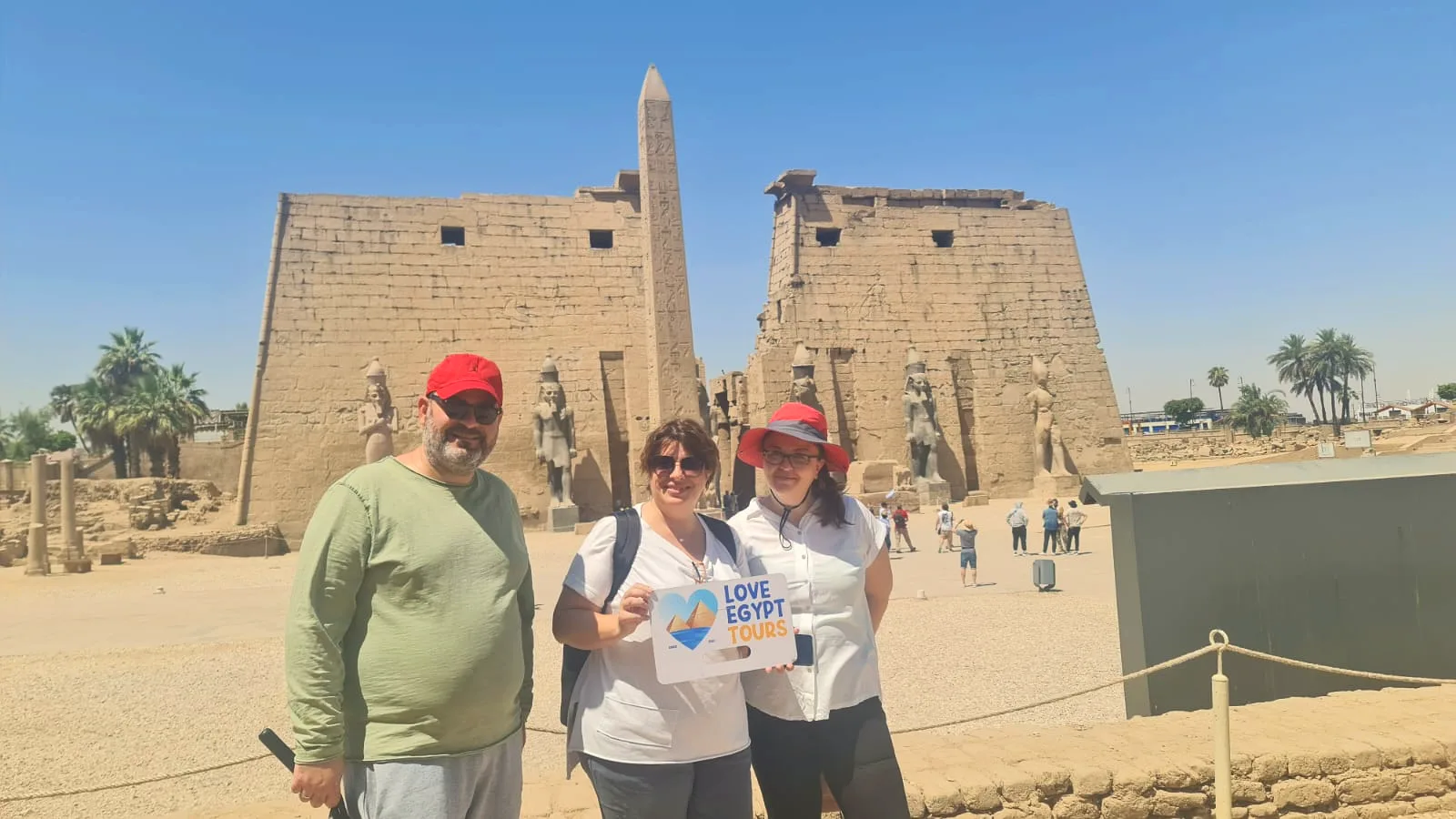
Luxor Temple sits right in the middle of the city, which makes it easy to visit at any time. It is at its best after sunset, when the colossal statues of Ramses II and the towering pylon are lit in gold. If your day tour ends in the late afternoon, this is the perfect final stop.
The Avenue of Sphinxes
This restored processional route once linked Karnak and Luxor Temple, and it is lined with hundreds of sphinx statues. Walking even a part of it gives you a sense of how the two temples were connected during the ancient Opet Festival.
Luxor Museum and the Corniche
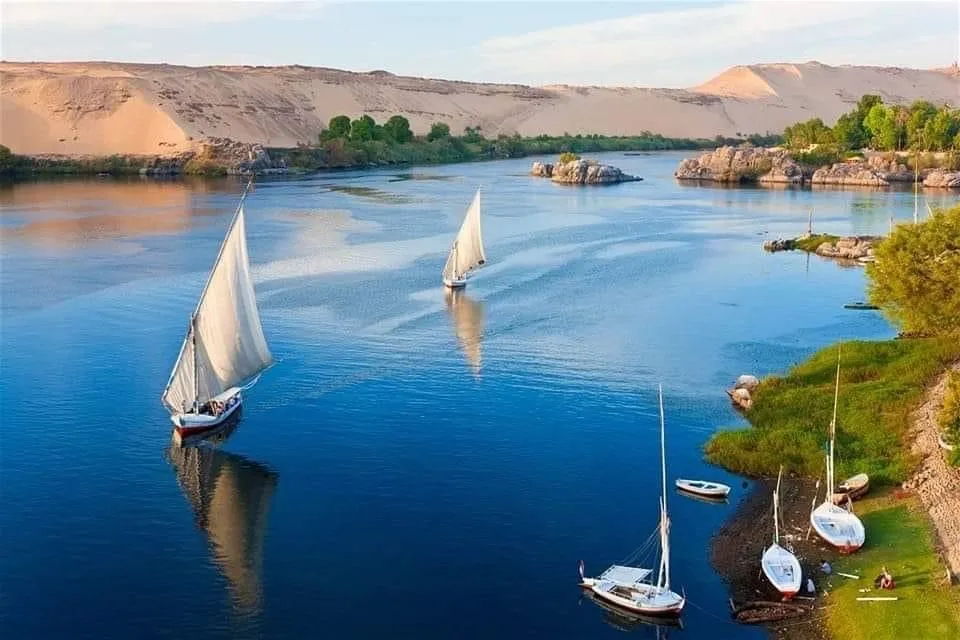
If you want a calm, air-conditioned break, Luxor Museum is compact and beautifully displayed. Afterwards, a sunset felucca ride from the Corniche is a relaxed way to see both banks from the water.
What Is the West Bank of Luxor Known For?
Valley of the Kings
This is the royal burial ground of the New Kingdom pharaohs, including Tutankhamun and Ramses VI. A standard ticket covers three tombs, and extra tombs, such as Tutankhamun’s, need separate tickets. Pick tombs with well-preserved painted walls and shorter queues rather than simply the most famous names.
Temple of Hatshepsut at Deir el-Bahari
Queen Hatshepsut’s terraced mortuary temple is one of the most striking buildings in Egypt, set dramatically against a sheer cliff. It tells the story of a woman who ruled as pharaoh and left a monument to prove it.

Colossi of Memnon
Two giant seated statues of Amenhotep III stand alone by the road. The stop is short and usually free to see from outside, but it makes a great photo and a useful landmark for your day.
Valley of the Queens, Medinet Habu and the Ramesseum
If you have more time, add Medinet Habu for its vivid reliefs, the Ramesseum for Ramses II’s mortuary temple and the Valley of the Queens for the tomb of Nefertari, which has a separate and higher ticket. These sites are less crowded and often feel more personal.
East Bank vs West Bank of Luxor: Side-by-Side Comparison
| East Bank | West Bank | |
|---|---|---|
| Ancient role | City of the living, temples of the gods | City of the dead, tombs and mortuary temples |
| Main sights | Karnak, Luxor Temple, Avenue of Sphinxes, Luxor Museum | Valley of the Kings, Hatshepsut Temple, Colossi of Memnon, Medinet Habu |
| Best time of day | Early morning for Karnak, evening for Luxor Temple | Early morning, before the heat builds in the valleys |
| Time needed | 3 to 4 hours | 4 to 5 hours |
| Walking level | Moderate, mostly flat | Moderate to high, with stairs and heat in the tombs |
| Crowds | Heavy at Karnak mid-morning | Heaviest at Valley of the Kings around 10 AM |
| Best for | Architecture, scale, evening atmosphere | Hidden painted tombs, royal history, quiet landscapes |
| Getting around | Walkable or short taxi rides | Needs a vehicle or guided tour |
Which Bank Should You Visit First?
Most experienced guides start on the West Bank. The tombs and temples there are open-air or in valleys with little shade, so they are far more comfortable in the cool morning. The East Bank then fits naturally into the afternoon, and Luxor Temple finishes the day with its evening lighting.
If you are visiting in summer, this order matters even more. Starting the Valley of the Kings at opening time can be the difference between enjoying the tombs and surviving them. Skip the logistics with our East & West Banks in One Day tour and let your guide handle the timing and transfers.
Which Bank Is Right for You?
- First-time visitors with one day: do both banks. This is exactly why we created East & West Banks in One Day, a private tour that links every highlight into one easy day.
- History lovers and photographers: give the East Bank a full morning for Karnak, and the West Bank a full morning for tombs.
- Families with children: the Colossi of Memnon, Hatshepsut Temple and the Avenue of Sphinxes are easy wins. Keep tomb visits short.
- Travelers with limited mobility: Luxor Temple and the Corniche are the easiest, and a private vehicle can reduce walking at Karnak and the West Bank.
- Return visitors: try Medinet Habu, Deir el-Medina and the tombs of the nobles, which few first-timers reach.
What to Expect on Each Side
On the East Bank, expect large open courtyards, a lot of walking on uneven stone and some of the most photogenic columns in Egypt. Vendors and caleche drivers will approach you near Luxor Temple, so a polite “no, thank you” goes a long way.
On the West Bank, expect desert scenery, steep steps into some tombs, warm air inside the valleys and strict rules on photography in certain tombs. The drives between sites are short but dusty, and an air-conditioned vehicle makes a big difference.
Practical Information
| Detail | East Bank | West Bank |
|---|---|---|
| Typical opening hours | Karnak and Luxor Temple open early morning until late afternoon or evening, depending on the season | Most sites open around 6 AM and close in the afternoon |
| Tickets | Separate tickets for Karnak, Luxor Temple and Luxor Museum | Valley of the Kings ticket covers three tombs, with extra tickets for some tombs |
| How to get there | Walk or taxi from most hotels | Cross by bridge with a vehicle, or by local ferry then taxi |
| What to wear | Light clothing, hat, sunscreen, comfortable shoes | Same, plus a light layer for sunrise if you take a balloon flight |
| Cash needed | Small notes for tips and drinks | Small notes for tips and tomb extras |
Ticket prices and hours change, and foreign visitor rates are updated regularly. Please confirm current figures with the official Supreme Council of Antiquities sources or with your tour operator before you travel.
Expert Tips From Our Guides
- Do the Valley of the Kings first. Open-air heat builds fast, and the first hour is by far the best.
- Choose tombs, not just names. A lesser-known tomb with vivid color can beat a famous one with a long queue.
- Save Luxor Temple for sunset. The same site feels like a different place after dark.
- Look up at Karnak. Traces of original paint remain on some ceilings and columns, and most visitors walk right past them.
- Bring water and small bills. Both are hard to find when you need them at the tombs.
- Consider a sunrise balloon flight. It gives you the West Bank from above, then you can start your ground tour while the day is still cool.
- Hire a licensed Egyptologist. At sites with thousands of reliefs, a guide turns “nice carvings” into a story you will remember.
Common Mistakes to Avoid
- Starting on the East Bank at 10 AM. You will meet peak crowds and peak heat in the same place.
- Trying to see every tomb. Tomb fatigue is real. Three well-chosen tombs are enough.
- Skipping the West Bank to “save time.” Many visitors regret it, because the tombs are the emotional heart of Luxor.
- Leaving the Nile crossing to chance. Ferries and taxis work, but a private transfer saves time and stress.
- Wearing the wrong shoes. Both banks involve stone, sand and steps.
- Visiting without context. Without a guide or good prep, ancient sites can blur together.
Related Attractions and Guides
- Explore our curated Luxor Day Tours for private, guided options.
- Short on time? See the best of Luxor without the planning on our East & West Banks in One Day tour.
- Planning a bigger trip? See our Egypt tours.
- Prefer to sail between Luxor and Aswan? Compare our Nile river cruises.
- Related reading: Temple of Hathor at Dendera, Nile Cruise vs Land Tour for first-timers, and Egypt in winter.
Suggested One-Day Itinerary: East and West Banks of Luxor
| Time | Stop |
|---|---|
| 6:30 AM | Hotel pickup in a private air-conditioned vehicle |
| 7:00 AM | Valley of the Kings (three tombs) |
| 9:00 AM | Temple of Hatshepsut |
| 10:15 AM | Colossi of Memnon photo stop |
| 11:00 AM | Cross to the East Bank, then lunch |
| 12:30 PM | Karnak Temple with your Egyptologist |
| 3:30 PM | Luxor Temple, ideally staying into the golden hour |
| 5:00 PM | Drop-off at your hotel or cruise ship |
Frequently Asked Questions
Which is better, the East Bank or West Bank of Luxor?
Neither is better, because they offer different things. The East Bank has Karnak and Luxor Temple. The West Bank has the Valley of the Kings and Hatshepsut Temple. If you can, see both.
Can you visit the East and West Bank of Luxor in one day?
Yes. With an early start and a private vehicle, most travelers cover the main sights of both banks in 8 to 10 hours.
How do you get from the East Bank to the West Bank?
You can cross by road bridge in a taxi or private vehicle, or take a local ferry and then a taxi. A guided tour handles the transfers for you.
Is the Valley of the Kings on the East or West Bank?
It is on the West Bank, in the desert hills across the Nile from Luxor city.
Is Karnak Temple on the East or West Bank?
Karnak is on the East Bank, a short drive from Luxor Temple and the city center.
How long do you need for each bank?
Plan around 3 to 4 hours for the East Bank and 4 to 5 hours for the West Bank, including travel between sites.
What is the best time of day to visit?
Visit the West Bank in the early morning and the East Bank in the afternoon, finishing with Luxor Temple around sunset.
Do you need a guide?
It is not mandatory, but a licensed Egyptologist makes a huge difference, especially in the tombs and at Karnak.
Sources and Citations
- Egyptian Ministry of Tourism and Antiquities, official visitor information and ticket updates.
- Supreme Council of Antiquities, opening hours and site regulations.
- UNESCO World Heritage Centre, “Ancient Thebes with its Necropolis.”
Please verify current prices and opening hours on official sources before publishing, as these change often.
Conclusion
The updated conclusion reads: “…Visit both on our East & West Banks in One Day tour, ideally starting early on the West Bank and ending at Luxor Temple under the evening lights, and Luxor finally makes sense. Ready to plan it? Browse our Luxor Day Tours and pick the pace that suits you.