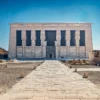

After visiting many of Egypt’s iconic temples, the Temple of Hathor at Dendera remains one of the most impressive and well-preserved. Located near Qena in Upper Egypt, this ancient temple is dedicated to the goddess Hathor, who represents love, music, joy, beauty and motherhood. With its towering columns, detailed reliefs and fascinating astronomical decorations, Dendera offers a unique experience for anyone interested in ancient Egyptian history and culture.
In this guide, we’ll share everything you need to know about the Temple of Hathor at Dendera — from its history and highlights to practical visitor information, expert tips and nearby attractions. Whether you’re planning a day trip from Luxor or adding it to a longer itinerary, this article will help you make the most of your visit.
Quick Answer: What Is the Temple of Hathor at Dendera?
The Temple of Hathor at Dendera is one of Egypt’s best-preserved ancient temples, located in Dendera, near Qena in Upper Egypt. Dedicated to Hathor, the ancient Egyptian goddess associated with love, music, joy, beauty, and motherhood, the temple is famous for its monumental columns, astronomical ceiling decorations, detailed hieroglyphs, and impressive Ptolemaic and Roman architecture. It is approximately 60 km north of Luxor and makes an excellent day trip for travelers interested in ancient Egyptian history.
Introduction: Discover the Temple of Hathor at Dendera
Egypt is home to some of the world’s most remarkable ancient monuments, but not every memorable temple is located in Luxor or Cairo. The Temple of Hathor at Dendera offers visitors a different perspective on ancient Egyptian religion, architecture, and astronomy.
Located near Qena in Upper Egypt, the Dendera Temple Complex is particularly well known for its beautifully preserved decorations and the distinctive faces of Hathor carved into its monumental columns. Unlike some ancient sites where centuries of damage have made details difficult to recognize, Dendera allows visitors to appreciate many of the original artistic features that decorated its walls and ceilings.
The temple also reveals an interesting chapter in Egyptian history. Although it follows traditional Egyptian religious and architectural styles, much of the main structure dates to the Ptolemaic period, with later additions made during Roman rule.
Whether you are planning a cultural holiday, a Nile Valley itinerary, or a day trip from Luxor, the Temple of Hathor deserves consideration. In this guide, you will discover its history, the most important things to see, ticket information, opening hours, travel tips, and how to include Dendera in your Egypt itinerary.
Where Is the Temple of Hathor at Dendera?
The Temple of Hathor is situated in the Dendera Temple Complex near the village of Dendera in Qena Governorate, Upper Egypt.
The archaeological site lies approximately 5 km northwest of Qena and around 60 km north of Luxor. Its location makes it possible to visit independently or as part of a longer itinerary through southern Egypt.
Travelers staying in Luxor can arrange a private excursion to Dendera, while visitors exploring Qena can reach the complex with local transportation or a pre-arranged transfer.
Location: Dendera, Qena Governorate, Egypt
Nearest major tourist destination: Luxor
Main attraction: Temple of Hathor
Best for: Ancient Egyptian history, temple architecture, photography, and cultural sightseeing
What Is the History of the Temple of Hathor?
The Temple of Hathor was built to honor Hathor, one of the most widely worshipped deities in ancient Egypt. She was associated with music, dancing, joy, beauty, motherhood, and the sky.
Dendera had a long history as a religious center before the construction of the temple that visitors see today. Evidence suggests that earlier religious structures existed on the site, while the principal surviving temple was developed during the Ptolemaic period and continued to receive additions during Roman rule.
The construction and decoration of the main temple extended across several generations. Its inscriptions and reliefs reflect the religious traditions of ancient Egypt, even though some of the rulers represented on its walls belonged to the Greek and Roman worlds.
This combination makes Dendera particularly valuable for understanding how Egyptian religious practices continued under foreign rule.
The temple was not simply a place of worship. It was part of a larger sacred complex that included additional religious buildings and spaces associated with ceremonies and temple life.
Today, the complex is recognized for its architectural preservation and the extraordinary detail of its carvings and astronomical decorations.
Why Is the Temple of Hathor Famous?
The Temple of Hathor is famous for several features that make it different from many other ancient Egyptian monuments.
1. The Monumental Hathor Columns
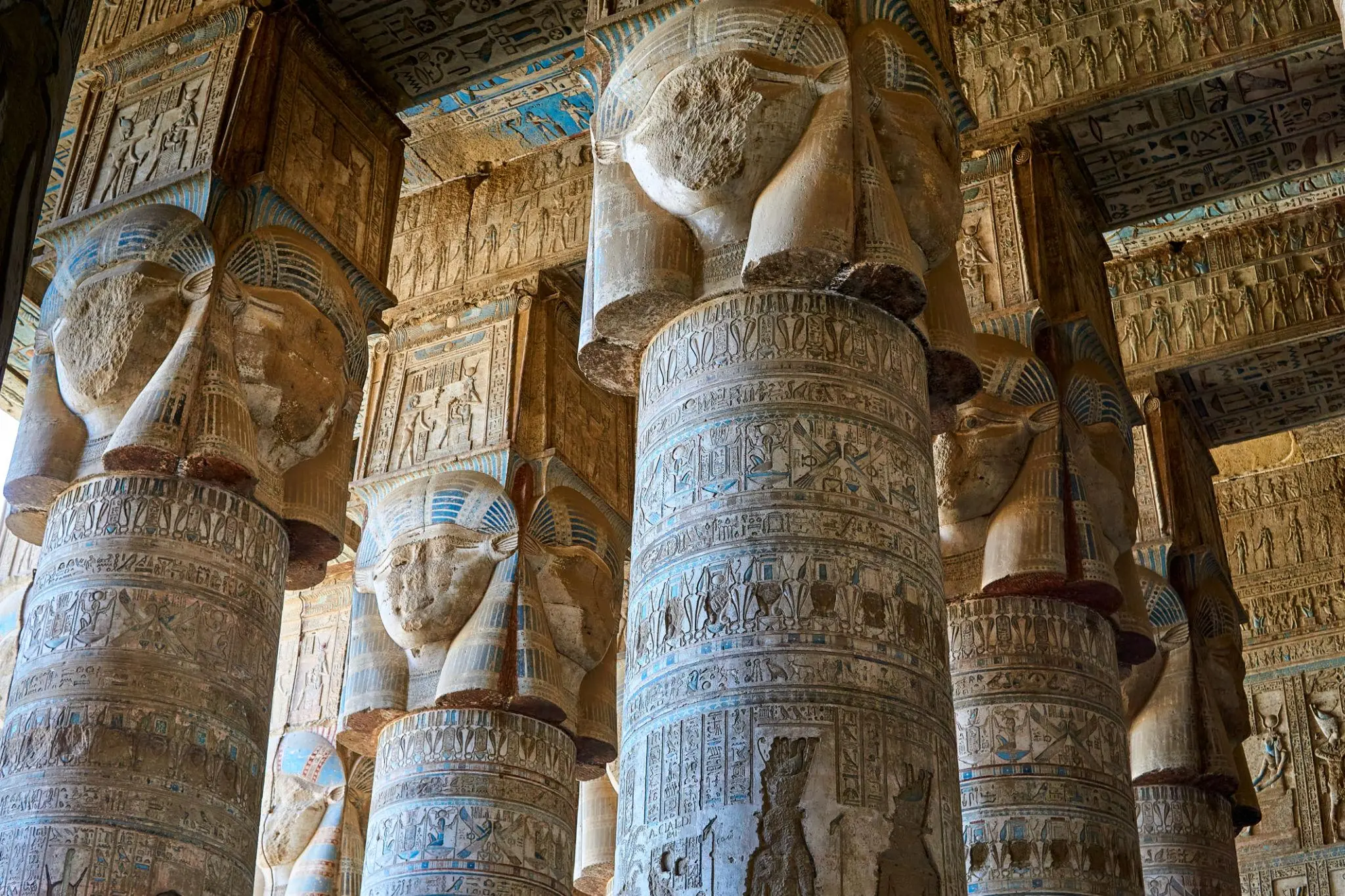
One of the first features visitors notice is the temple’s impressive entrance hall, supported by massive columns decorated with distinctive Hathor-headed capitals.
These columns feature representations of the goddess’s face, making them among the most recognizable architectural elements at Dendera.
Look closely at the carved details, including the facial features and decorative elements associated with Hathor. They demonstrate the skill of the artisans who worked on the temple.
2. The Astronomical Ceiling
The temple is especially known for its ceiling decorations depicting astronomical and religious imagery.
These decorations reflect the importance of the sky, celestial cycles, and cosmic order in ancient Egyptian beliefs.
The famous Dendera Zodiac is associated with the temple, although the original relief is now preserved in the Louvre Museum in Paris. Visitors should therefore distinguish between the original artifact and the astronomical decorations that remain at Dendera.
3. The Detailed Hieroglyphs and Reliefs
The temple’s walls preserve a wealth of inscriptions, ritual scenes, and representations of rulers making offerings to the gods.
These carvings help explain the religious functions of the temple and show how Egyptian artistic traditions continued through the Ptolemaic and Roman periods.
For visitors, the details are much easier to understand with an Egyptologist guide who can explain the figures, symbols, and stories behind the scenes.
4. The Rooftop and Upper Temple Areas
The upper levels of the temple are notable for their astronomical decorations and architectural details. Where access is permitted, visitors may have the opportunity to explore the rooftop area.
Access to specific sections can vary, so check the available tickets and current visitor arrangements before your visit.
5. The Wider Dendera Temple Complex
The Temple of Hathor is the principal attraction, but the wider complex includes other archaeological remains, religious structures, and features associated with the site’s long history.
Allow enough time to explore beyond the entrance hall rather than treating Dendera as a quick photo stop.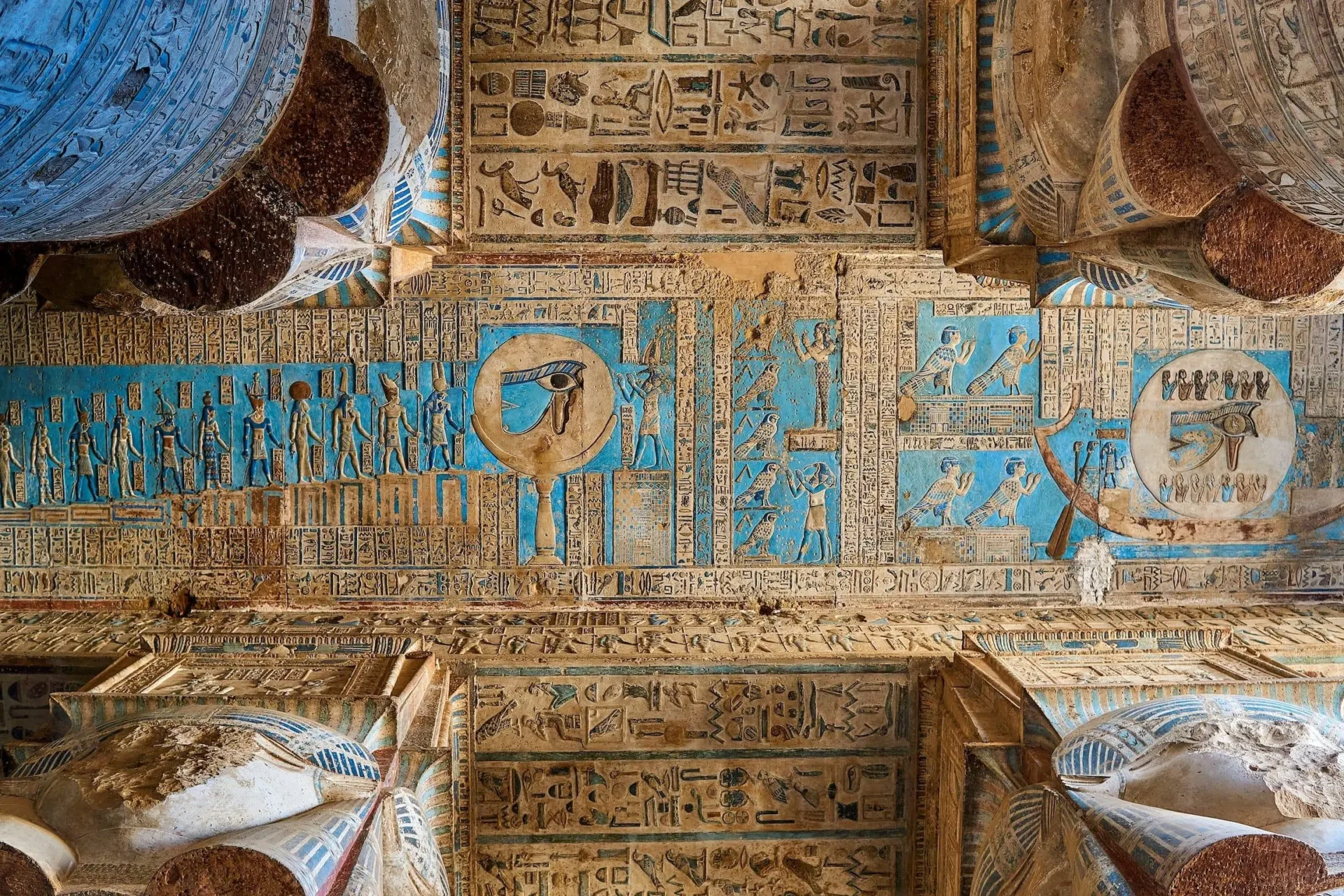
What Can You Expect During a Visit to Dendera?
A visit to the Temple of Hathor combines history, architecture, and visual discovery.
You will first encounter the monumental temple façade and its impressive columns. Inside, the decorated halls reveal layers of carved imagery, hieroglyphic inscriptions, and religious scenes.
As you move through the temple, look upward to appreciate the ceiling decorations and observe how the appearance of the carvings changes between the different spaces.
The experience is particularly rewarding for travelers who enjoy understanding the meaning behind ancient monuments rather than simply photographing them.
A guided visit can help you recognize the symbolism of Hathor, understand the temple’s construction history, and appreciate the significance of the astronomical imagery.
Suggested visit duration: Allow approximately 1.5–3 hours, depending on your interest in the architecture, photography, and any additional areas open to visitors. This is a planning estimate rather than an official site requirement.
Practical Information for Visiting the Temple of Hathor
Before planning your excursion, check the latest official visitor information.
| Visitor information | Details |
|---|---|
| Location | Dendera, Qena Governorate, Upper Egypt |
| Opening hours | 7:00 AM–5:00 PM, according to the official Ministry listing |
| Foreign adult admission | EGP 300 on the official listing consulted for this guide |
| Foreign student admission | EGP 150, subject to eligibility and valid student identification |
| Temple panorama | Listed separately at EGP 100 for foreign visitors |
| Temple serdab | Listed separately at EGP 100 for foreign visitors |
| Recommended visit | Approximately 1.5–3 hours |
| From Luxor | Approximately 60 km by road |
| Transportation | Private car, arranged transfer, or organized excursion |
How Can You Get to the Temple of Hathor from Luxor?
The most convenient option for many visitors is a private transfer or organized day trip from Luxor.
A private excursion offers flexibility over departure time and allows you to spend longer exploring the temple. It can also be useful if you want an English-speaking Egyptologist guide to explain the historical and religious significance of the site.
Public transportation may be possible through Qena, but connections and onward transport should be arranged in advance.
If Dendera is part of a multi-day Egypt tour, discuss the route with your tour operator to avoid unnecessary driving and make the best use of your sightseeing time.
What Should You Bring?
- Comfortable walking shoes.
- Drinking water for the journey and outdoor sections.
- Sun protection, particularly in warmer months.
- A camera or smartphone for permitted photography.
- A bank card or the accepted payment method for official tickets.
- Your student identification if you intend to request a student ticket.
Expert Tips for Visiting the Temple of Hathor
Arrive Early
An early visit gives you more time to explore before the site closes and can make the experience more comfortable in warmer weather.
Look Beyond the Main Entrance
The monumental columns are impressive, but the ceiling decorations, inscriptions, and details in the inner halls deserve equal attention.
Consider Hiring an Egyptologist Guide
Many carvings are easier to appreciate when you understand the gods, rituals, and historical figures represented in them. A knowledgeable guide can turn a walk through the temple into a much more meaningful cultural experience.
Check Access to the Rooftop and Other Areas
Do not assume every additional section is included in the standard admission ticket. Confirm the current availability and fees before purchasing tickets.
Plan Your Transportation in Advance
If you are staying in Luxor, agree on your departure time, waiting arrangements, and return journey before leaving. This is particularly helpful when visiting with children or combining Dendera with other attractions.
Verify the Current Ticket Prices
Use the official Ministry website rather than relying exclusively on older travel blogs, which may list outdated prices..
Common Mistakes to Avoid When Visiting Dendera
1. Treating Dendera as a quick photo stop
The temple contains detailed inscriptions and ceiling decorations that deserve more than a brief visit. Set aside enough time to explore.
2. Assuming the Dendera Zodiac is still in the temple
The famous original Dendera Zodiac is now in the Louvre Museum. The temple itself remains notable for other astronomical decorations.
3. Arriving too close to closing time
The official visitor information states that the last entry is one hour before closing. Arrive earlier to avoid losing valuable sightseeing time.
4. Assuming all areas are included in the standard ticket
The official listing identifies separate fees for the panorama and serdab for foreign visitors. Check what is available and what your ticket covers.
5. Visiting without understanding the site’s location
Dendera is near Qena, north of Luxor. Plan the return journey and transportation arrangements before departure.
6. Relying on outdated prices
Admission fees can change. Confirm the official rates shortly before your visit.
What Other Attractions Can You Visit Near Dendera?
Dendera works well as part of a broader journey through Upper Egypt.
Luxor Temple
Located in the center of Luxor, Luxor Temple is famous for its monumental entrance, statues, and connections to ancient royal ceremonies.
Karnak Temple Complex
Karnak is one of Egypt’s largest religious complexes, with monumental pylons, obelisks, and the famous Great Hypostyle Hall.
Valley of the Kings
On Luxor’s West Bank, the Valley of the Kings contains royal tombs decorated with scenes and texts relating to ancient Egyptian beliefs about the afterlife.
Medinet Habu
This temple complex is known for its impressive architecture and extensive reliefs associated with Ramesses III.
If you are planning a trip from Luxor, consider visiting Dendera on a separate excursion or combining it with another suitable destination after discussing driving times and site schedules with your tour operator.
Frequently Asked Questions
1. Where is the Temple of Hathor located?
The Temple of Hathor is located in Dendera, near Qena in Upper Egypt, approximately 60 km north of Luxor.
2. Who was Hathor in ancient Egyptian religion?
Hathor was an important ancient Egyptian goddess associated with love, beauty, music, joy, motherhood, and the sky. Dendera was one of her principal religious centers.
3. How old is the Temple of Hathor at Dendera?
The surviving main temple largely dates to the Ptolemaic period, with construction and decoration continuing into the Roman period. The site itself has a much older religious history.
4. What is the Temple of Hathor famous for?
It is best known for its Hathor-headed columns, astronomical ceiling decorations, hieroglyphs, detailed reliefs, and well-preserved architecture.
5. How much is the entrance ticket to Dendera Temple?
The official Ministry listing consulted for this article gives an adult foreign visitor ticket price of EGP 300 and a foreign student price of EGP 150. Additional areas may require separate tickets. Always check the latest official rates before visiting.
6. What are the opening hours of Dendera Temple?
The official Ministry website lists opening hours of 7:00 AM to 5:00 PM. The last entry is one hour before closing, and visitors should verify current arrangements before departure.
7. Can you visit Dendera Temple on a day trip from Luxor?
Yes. Dendera is approximately 60 km north of Luxor and can be visited on a day trip by private vehicle or organized excursion. Allow time for both the journey and exploring the temple.
8. Is Dendera Temple worth visiting?
Yes, particularly for travelers interested in ancient Egyptian religion, architecture, astronomy, and detailed temple carvings. Its well-preserved decorations make it a rewarding addition to a trip through Upper Egypt.
Conclusion: Is the Temple of Hathor at Dendera Worth Visiting?
The Temple of Hathor at Dendera is one of the most rewarding archaeological sites to consider when exploring Upper Egypt. Its monumental columns, detailed reliefs, astronomical decorations, and long religious history offer a distinctive view of ancient Egyptian civilization.
For travelers staying in Luxor, a day trip to Dendera can add another dimension to an Egypt holiday, especially for those who want to explore beyond the region’s best-known temples.
With advance planning, enough time on site, and a knowledgeable guide, Dendera can become one of the highlights of a cultural journey through Egypt.
Plan Your Visit with Love Egypt Tours
Interested in discovering the Temple of Hathor at Dendera during your Egypt holiday?
Explore the available tours from Luxor with Love Egypt Tours and ask about private transportation, an English-speaking Egyptologist guide, and a customized itinerary that suits your travel plans.