
Most visitors come to Egypt for pyramids, temples, and the Nile. Then they spend one night in the desert and realize they have been missing half the country. Egypt is overwhelmingly desert, and these landscapes are nothing like each other: chalk sculptures that glow at sunset, black volcanic hills, dunes that run to the horizon, whale fossils in dry rock, and granite mountains where the air is cold before sunrise.
This guide covers the famous Egyptian deserts that are actually worth your time, what each one feels like, how far it is from Cairo or the Red Sea, and when to go. It is written for travelers planning a first desert trip who want to choose the right region instead of just booking the first safari they see. If you are building a longer route, our Egypt desert tours show how these stops fit together with the classic sights.
Quick answer: The most famous Egyptian deserts are the White Desert and Black Desert near Bahariya and Farafra, the Great Sand Sea around Siwa, Wadi Al-Hitan in Fayoum, the Eastern Desert near Hurghada, and the mountain deserts of South Sinai. First-time visitors usually choose a two-day Bahariya trip that combines the Black Desert and White Desert with a night of camping. The best months are October to April.
What are the most famous deserts in Egypt?
Egypt’s desert falls into three main regions. The Western Desert covers roughly two-thirds of the country and holds the oases, the White Desert, the Black Desert, and the Great Sand Sea. The Eastern Desert runs between the Nile Valley and the Red Sea, with rugged mountains and dry valleys. The Sinai Peninsula adds granite peaks and canyon country. Each region suits a different kind of traveler, so the best choice depends on how much time you have and what you want to see.
What should you expect on a desert trip in Egypt?
A desert trip is about landscape and time of day, not ticketed monuments. Most trips use 4×4 vehicles with a local driver or guide, because tracks cross sand, gravel, and rock. A typical day includes scenic stops, a short walk through formations, lunch, and a sunset viewing. Overnight trips add a camp with a simple dinner, a fire, and mattresses or sleeping bags under the stars. Expect silence, wide horizons, big temperature swings between day and night, and very little shade.
Which Egyptian deserts are worth visiting?
1. White Desert: Egypt’s most surreal landscape
The White Desert, near Farafra Oasis, is a protected area filled with chalk formations shaped by wind into mushrooms, towers, and animal-like silhouettes. Visitors often point out the well-known “chicken and tree” rock. The chalk looks cream by day, pink at sunset, and almost blue under moonlight. Nearby Crystal Mountain, a quartz outcrop on the road between Bahariya and Farafra, and the Agabat valley are common add-on stops.
Best for: photography, camping, stargazing. Plan an overnight stay, because the experience at dusk and dawn is the point. Camping here is basic, so bring layers and follow leave-no-trace rules.
2. Black Desert: dark hills over golden sand
Near Bahariya Oasis, the Black Desert is a field of conical hills capped with dark volcanic-looking rock that has crumbled across the sand. It is a short drive from Bahariya, which makes it the easiest Western Desert highlight to reach from Cairo. Climb one of the hills for a viewpoint over the rock-strewn plain.
Bahariya also offers hot springs, palm groves, and the Valley of the Golden Mummies, a cemetery of Greco-Roman mummies found in the 1990s. Most travelers combine the Black Desert and White Desert in a single trip.
3. Great Sand Sea and Siwa: dunes and an oracle
The Great Sand Sea is a vast sea of dunes that stretches toward the Libyan border. The easiest way to reach it is from Siwa Oasis, a Berber (Amazigh) community with its own language, a mud-brick fortress called Shali, salt lakes, and freshwater springs. The Temple of the Oracle of Amun, which Alexander the Great is said to have visited, sits here too.
A Siwa desert safari usually combines dune driving, sandboarding, a swim in a spring, and sunset on the dunes. Siwa is a long drive from Cairo, so give it at least two nights rather than a rushed visit.
Best for: adventure, dunes, culture. Sunset on the dunes is the highlight.
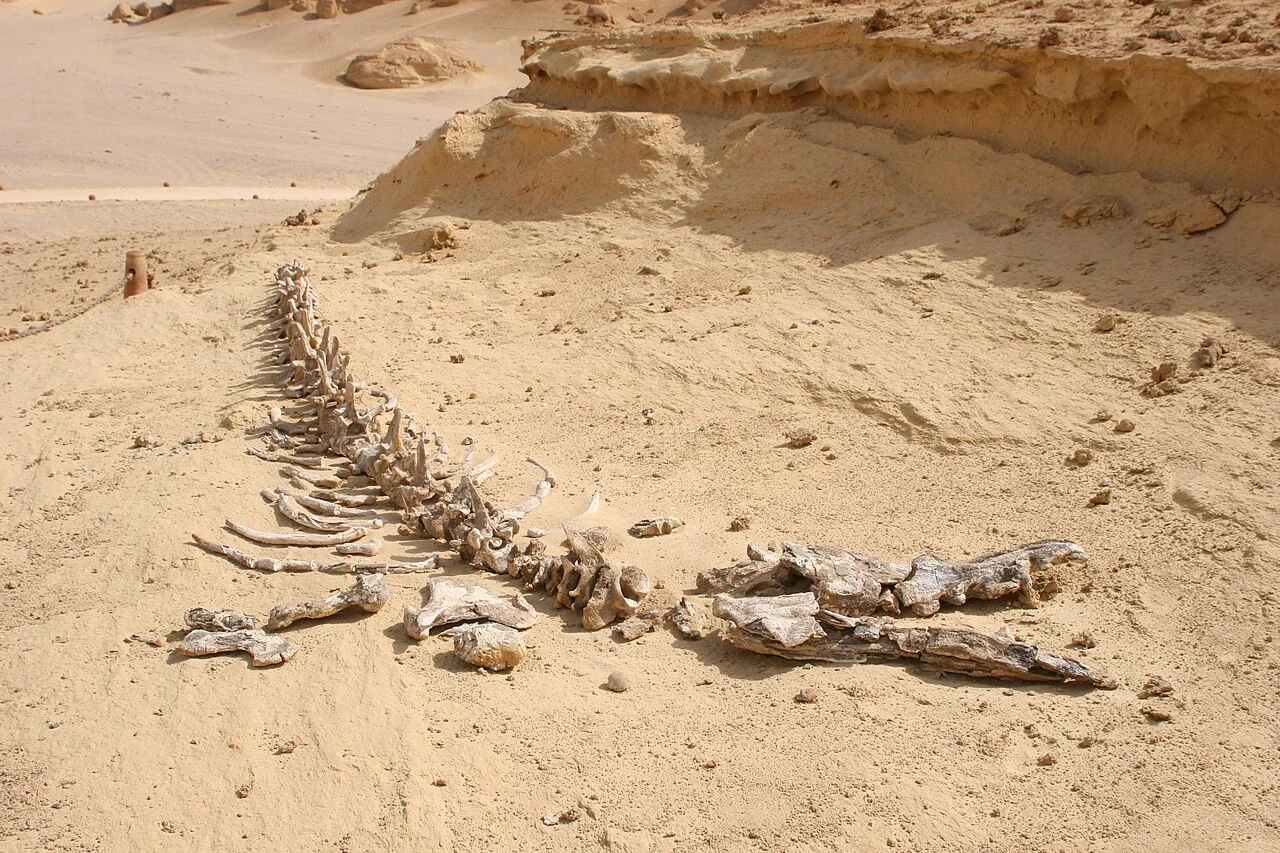
4. Wadi Al-Hitan: the desert of ancient whales
Wadi Al-Hitan, or Whale Valley, is in the Wadi El Rayan Protected Area in Fayoum. It is a UNESCO World Heritage Site, inscribed in 2005, for fossils of early whales roughly 40 million years old, including skeletons that still show small hind limbs. The fossils lie where they were found, in open desert, and visitors follow marked paths with signs explaining the evolution of whales from land animals to sea creatures.
It works well as a day trip from Cairo, usually combined with the waterfalls and lakes of Wadi El Rayan. Best for: families, geology fans, travelers with limited time.
5. Eastern Desert: mountains behind the Red Sea
The Eastern Desert is the easiest desert to add to a beach holiday. From Hurghada, Safaga, and Marsa Alam, half-day and full-day safaris head into rugged mountains and dry valleys. A typical trip includes quad bikes or 4×4 vehicles, a Bedouin-style camp, tea, a camel ride, a dinner, and stargazing.
The region also holds Roman-era quarries and old caravan routes that once linked the Nile Valley to the Red Sea ports. It is a good choice if you want the desert without a multi-day expedition.
6. Sinai: granite peaks, canyons, and Mount Sinai
South Sinai is a mountain desert of red and gold granite, dry riverbeds, and Bedouin villages. Saint Catherine’s Monastery, a UNESCO World Heritage Site, sits at the foot of Mount Sinai (Jebel Musa, about 2,285 meters). The classic experience is a night hike that begins around 2 a.m. to reach the summit for sunrise. Colored Canyon and the desert around Dahab and Nuweiba are popular for shorter trips.
Stick to South Sinai routes organized by licensed operators, and check your government’s current travel advice before you book.
7. Dakhla and Kharga: deep Western Desert oases
For travelers with a week, the deeper oases of Dakhla and Kharga show a different side of the Western Desert. Dakhla has a medieval mud-brick town called Al-Qasr, hot springs, and dunes close to the palms. Kharga has the Temple of Hibis, built in the Persian period, and the Al-Bagawat early Christian necropolis. These are long overland journeys, so they suit slow travel rather than a quick excursion.
The remote southwest, including Gilf Kebir and Gebel Uweinat, requires special permits and is for expedition-style trips only.
What practical information do you need before you go?
Distances and times below are approximate and vary by route and road conditions, so confirm them with your operator.
| Destination | From | Approx. travel time | Best for | Typical trip length |
|---|---|---|---|---|
| Black Desert and Bahariya | Cairo | About 5 hours | Easiest first desert trip | 1 to 2 days |
| White Desert | Cairo | About 7 to 8 hours | Camping, photography | 2 days |
| Siwa and Great Sand Sea | Cairo | About 8 to 9 hours | Dunes, culture | 2 to 3 days |
| Wadi Al-Hitan | Cairo | About 3 hours | Fossils, day trips | 1 day |
| Eastern Desert safari | Hurghada | 30 to 60 minutes to the desert | Beach plus desert | Half day or full day |
| Saint Catherine and Mount Sinai | Sharm El Sheikh | About 3 hours | Hiking, sunrise | 1 to 2 days |
| Dakhla and Kharga | Cairo | Long overland journey | Slow, deep desert travel | 5 to 7 days |
Best season: October to April. Daytime temperatures are comfortable and nights can feel cold, sometimes close to freezing in deep winter. Summer daytime heat can be extreme, so desert trips are best avoided between May and September.
Permits and fees: Protected areas and some routes charge entry fees or need permits. Fees change, so ask your operator to include them in the quote.
What expert tips make a desert trip better?
- Book at least one night. The light at sunset and sunrise is the main attraction, and a day trip misses both.
- Pack for two seasons. Bring sun protection for the day and a real jacket for the night, even in spring and autumn.
- Choose a licensed operator with 4×4 vehicles and a local driver. Desert tracks are easy to lose, and a mistake can be serious.
- Bring cash in small bills. Remote camps and oases rarely accept cards.
- Charge everything before you go. A power bank is essential for camping.
- Time your photos. The hour before sunset and the hour after sunrise give the best color and shadows.
What common mistakes should you avoid?
- Trying to see everything in one trip. Distances are long, so pick one or two regions.
- Visiting in summer. Midday heat makes walking and dune climbing unpleasant and sometimes unsafe.
- Rushing Siwa. It is far from Cairo, so a day trip leaves almost no time at the oasis.
- Wearing sandals. Closed shoes protect against hot sand and sharp rock.
- Climbing or removing formations. Chalk, fossils, and rock are fragile and protected.
- Leaving the group. Landscapes look alike in every direction, so stay with your guide.
- Booking the cheapest unlicensed option. Safety equipment, water, and insurance are where cheap trips cut corners.
Where can you read more about related places?
Plan the rest of your route with these Love Egypt Tours pages:
- Bahariya Oasis
- The Black Desert
- The White Desert
- Farafra Oasis
- Siwa Oasis
- Fayoum
- Hurghada
- Egypt in winter
What is a good desert itinerary for Egypt?
Two days: Bahariya, Black Desert, and White Desert. Drive from Cairo to Bahariya, visit the Black Desert and a hot spring, continue to Crystal Mountain and the White Desert, camp overnight, and return the next day.
One day: Wadi Al-Hitan and Wadi El Rayan. A day trip from Cairo to see the whale fossils and the lakes and waterfalls.
Five days: Cairo, Bahariya, White Desert, and Siwa. A longer loop that mixes landscapes and oasis culture, with time to rest between long drives.
To adapt any of these to your dates and budget, use our Customize Your Trip page.
Frequently asked questions
What are the most famous deserts in Egypt?
The White Desert, Black Desert, Great Sand Sea, Wadi Al-Hitan, the Eastern Desert, and the Sinai mountains are the best known.
Which Egyptian desert is best for first-time visitors?
The Bahariya area, with the Black Desert and White Desert, is the usual first choice. It is about five hours from Cairo and works as a one- or two-night trip.
When is the best time to visit the Egyptian desert?
October to April, when days are comfortable. Nights can be very cold in winter, and summer days can be extremely hot.
Can you camp in the Egyptian desert?
Yes. Overnight camps are common in the White Desert and around Siwa, and are best arranged through a licensed operator.
Is Wadi Al-Hitan a desert?
It is a protected fossil site inside Egypt’s Western Desert, listed by UNESCO in 2005 for its early whale fossils.
What should I wear in the desert?
Light, breathable clothes and a hat for the day, closed shoes, sunglasses, and a warm layer for the evening.
Is it safe to explore the desert alone?
For remote areas, travel with an experienced, licensed operator. Routes, permits, and weather conditions change, so independent travel is not recommended.
Final thoughts
Egypt’s deserts reward travelers who slow down. The White Desert and Black Desert give you the classic Western Desert experience, Siwa and the Great Sand Sea bring dunes and culture, Wadi Al-Hitan adds a fossil story, and the Eastern Desert and Sinai fit easily into a Red Sea or Sinai holiday. Pick one or two regions, give them a night, and the desert becomes the most memorable part of the trip.
Ready to plan your desert adventure?
Tell us your dates, budget, and the landscapes you want to see, and Love Egypt Tours will build a desert itinerary around them. Start Customize Your Trip