
The first thing most visitors notice about Egypt is not a monument. It’s a conversation. A shopkeeper invites you in for tea before you’ve said a word about buying. A taxi driver asks about your family and tells you about his. A stranger on a train insists you share their food. [Add one or two sentences of first-hand experience here, for example a moment with a guide, a host family or a street vendor that changed how you saw the country.]
Egypt has about 100 million people, roughly 7,000 years of recorded history and a culture shaped by pharaonic, Greek, Roman, Coptic, Islamic, Ottoman and modern influences. That layering shows up everywhere: in language, food, festivals, music, clothing and daily manners.
This guide explains the traditions and customs you’re most likely to meet as a traveler, what they mean, and how to be a considerate guest. If you’re still deciding how to see the country, our Egypt tours combine the major monuments with time for local experiences. You’ll also find practical etiquette, food and festival notes, and the mistakes I see visitors make most often.
Quick Answer: What Is Egyptian Culture Like?
Egyptian culture is warm, family-centered and hospitality-driven, shaped by Islam, Coptic Christianity and thousands of years of history. Visitors can expect generous hospitality, a strong tipping tradition (baksheesh), modest dress norms, shared meals, lively festivals and a relaxed attitude to time. Greeting people politely, dressing modestly at religious sites and accepting hospitality graciously will take you a long way.
What Are the Foundations of Egyptian Culture?
Family comes first. Extended families are close, often living near each other, and decisions are frequently made together. You’ll notice that children, parents and grandparents appear in public together, and that questions about your own family are a sign of friendliness, not nosiness.
Religion shapes the rhythm of life. Most Egyptians are Muslim, and a significant Christian minority, mostly Coptic Orthodox, has lived in Egypt for nearly two thousand years. The call to prayer sounds five times a day, church bells ring on Sundays, and both communities share many everyday customs. Religion is part of daily conversation, so expressions such as inshallah (God willing) and alhamdulillah (praise be to God) are used by almost everyone.
Hospitality is a point of pride. Welcoming guests is deeply valued. Being offered tea, food or help is usually sincere, and the generous response is to accept graciously.
Humor is everywhere. Egyptians are known across the Arab world for their wit. Jokes, nicknames and playful banter are part of ordinary conversation, and a smile and some good humor go far.
What Languages Do Egyptians Speak?
The official language is Modern Standard Arabic, used in writing, news and formal settings. In daily life, Egyptians speak Egyptian Arabic, a dialect understood across the Arab world thanks to decades of Egyptian film, television and music. English is widely spoken in tourism, and French, German, Italian, Spanish and Russian are common among tour guides.
A few phrases to try:
| Phrase | Meaning |
|---|---|
| Salam alaykum | Peace be upon you (greeting) |
| Shukran | Thank you |
| Afwan | You’re welcome |
| Yalla | Let’s go / come on |
| Inshallah | God willing |
| Mafi mushkila | No problem |
| Law samaht | Please / excuse me |
Even a clumsy attempt is appreciated and often leads to a bigger smile.
What Are the Most Important Egyptian Traditions?
Ramadan
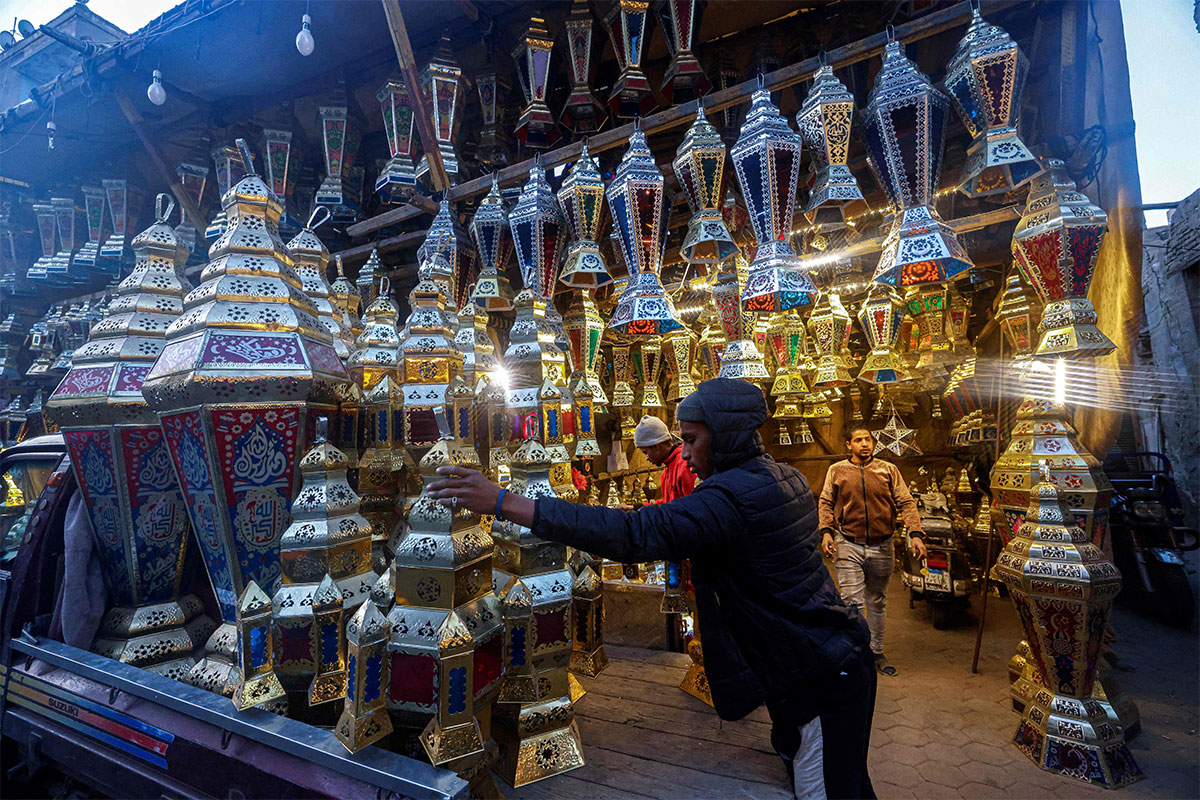
Ramadan, the Islamic holy month, is the most important time of the year for many Egyptians. Muslims fast from dawn to sunset, then gather for iftar, the meal that breaks the fast. Streets are decorated with colorful lanterns called fanous, and cities stay lively late into the night. Ramadan follows the lunar calendar, so it moves about 10–11 days earlier each year. Check current dates before you plan.
As a traveler, you’re welcome, but be considerate. Avoid eating, drinking or smoking openly in the street during daylight, and expect shorter opening hours and slower service in the afternoon. Many restaurants and hotels still serve visitors, and an invitation to an iftar table is a real honor.
Eid al-Fitr and Eid al-Adha
Eid al-Fitr marks the end of Ramadan, and Eid al-Adha is the feast of sacrifice. Families gather, wear new clothes, share sweets and meat, and visit relatives. Public places are busy, domestic travel increases, and prices at some tourist destinations rise, so book transport and hotels early if you travel around these dates.
Coptic Christmas and Easter
Coptic Christians celebrate Christmas on January 7, following the Coptic calendar. Easter usually falls on a different date than in the Western calendar. Visiting an old church during these periods, such as the Hanging Church in Coptic Cairo, can be a moving experience when you go respectfully.
Sham el-Nessim
This spring festival falls on the Monday after Coptic Easter, and Egyptians of all faiths celebrate it. Families picnic in parks and along the Nile, eating traditional foods such as salted fish (feseekh), colored eggs and fresh green onions. Its roots are often traced back to ancient Egyptian spring festivals.
Moulid
A moulid is a religious festival honoring a saint or a prophet, with processions, music, food stalls and sometimes fairground rides. The best known is the Prophet’s birthday (Mawlid al-Nabi), celebrated with sweets such as halawet el-moulid. Moulids are lively and crowded, so be mindful of belongings and ask before photographing people.
Weddings
Egyptian weddings are joyous, loud and long. You may hear the zaffa, a musical procession of drummers, dancers and horns, passing through the street. If you’re lucky enough to be invited to one, dress smartly, bring a small gift or contribution if appropriate, and be ready to dance.
What Is Egyptian Food Culture Like?
Food is the center of social life. Meals are shared, portions are generous and refusing everything can feel awkward, so accept at least a little.
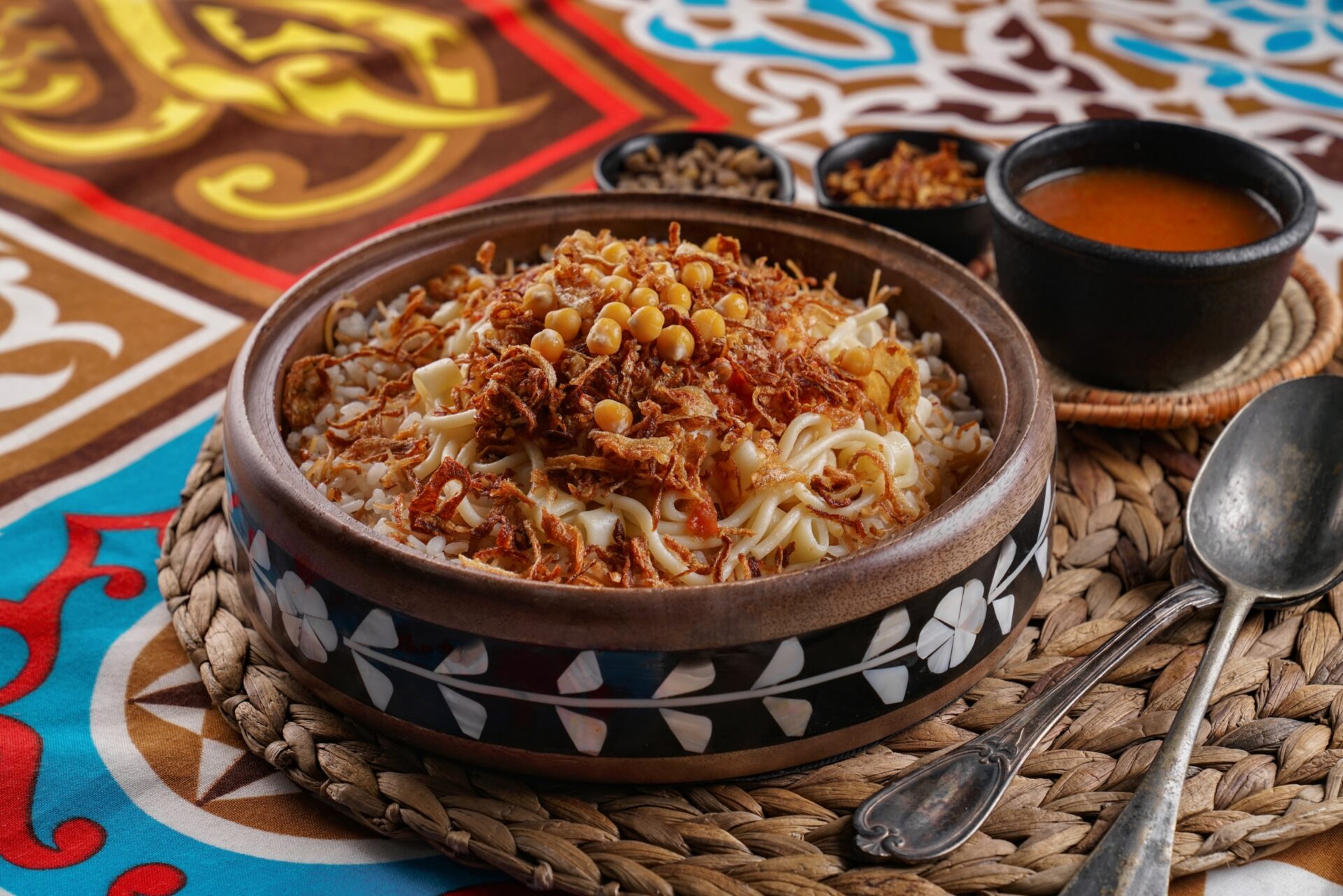
Staples to try:
- Koshari: a street-food favorite of rice, lentils, pasta, chickpeas, crispy onions and spicy tomato sauce.
- Ful medames and ta’meya: slow-cooked fava beans and Egypt’s version of falafel, made with fava beans, usually eaten at breakfast.
- Molokhia: a green leafy soup, often served with rice and chicken or rabbit.
- Mahshi: vegetables such as vine leaves, peppers or zucchini stuffed with seasoned rice.
- Aish baladi: the traditional flatbread eaten with almost every meal.
- Feteer meshaltet: layered flaky pastry, served sweet or savory.
- Om Ali: a warm dessert of pastry, milk, nuts and raisins.
Tea and coffee. Shai (tea) is the national drink, often served strong and sweet. Arabic coffee is common too. Accepting a glass of tea is one of the simplest ways to connect with people.
Mealtime manners. Eat with your right hand when sharing from common dishes, and wait for the host to invite you to start. Leaving a little food on your plate can signal you’ve had enough, since hosts often keep offering more.
How Should You Dress in Egypt?
Egypt is a conservative country in its general norms, though attitudes vary between Cairo, resort towns and rural areas. Modest clothing shows respect and also draws less attention.
- General sightseeing: shoulders and knees covered is a safe standard for both men and women. Light, loose clothing keeps you cooler and more comfortable.
- Mosques: women should cover their hair, arms and legs, and men should wear long trousers. Remove your shoes at the entrance. Many mosques provide scarves or robes.
- Churches: dress modestly and speak quietly.
- Resorts: beachwear is acceptable at hotels and resorts in Sharm el-Sheikh and Hurghada, but cover up when you leave the beach.
Egyptian Customs and Etiquette: Quick Reference
| Situation | What to do |
|---|---|
| Greetings | Handshakes are common between same-gender people. Wait for the other person to offer a hand across genders, or place your hand on your heart and nod |
| Left hand | Use your right hand for eating, giving and receiving |
| Entering homes | Remove your shoes if others do |
| Photography | Always ask before photographing people, especially women and children. Check rules at sites and museums |
| Public affection | Keep it minimal |
| Tipping | Baksheesh is expected for guides, drivers, porters and many services |
| Bargaining | Normal in bazaars, friendly and good-humored. Not used in fixed-price shops |
| Time | Schedules are often flexible, so build in a buffer |
Expert Tips for Respectful Travel
- Accept hospitality, then reciprocate. If you’re offered tea, say yes. If you’re invited home, bring a small gift such as sweets or pastries.
- Carry small notes for baksheesh. Tipping is part of how many people earn a living in tourism. Having small bills ready avoids awkward moments.
- Learn five Arabic phrases. Salam alaykum, shukran, afwan, yalla and inshallah will open doors.
- Ask your guide about local customs. A good guide enjoys explaining traditions and can tell you when to take pictures and when to hold back.
- Keep a slow pace. The relaxed rhythm of the day is part of the experience. Rushing through Egypt in a hurry misses a lot.
- Check prayer and holiday timings. Friday midday is an important prayer time, and many local businesses open later on Fridays.
- Say no politely and with a smile. Sellers can be persistent. A calm, friendly la, shukran works better than ignoring them.
Real Traveler Insight
We had the best time ever. Such a lovely and welcoming family, amazing food and incredible experience. They taught us so much about Egyptian culture and shared many stories and laughs with us.”
— Ivii M., visited Egypt in September 2026
Common Mistakes to Avoid
- Dressing too casually at religious sites. Shorts and sleeveless tops draw attention and may not be allowed inside mosques.
- Photographing people without asking. Always get permission, and respect a refusal.
- Eating or drinking openly during Ramadan daytime. It’s best to be discreet in public.
- Refusing every offer. Declining tea, food or help repeatedly can feel cold. Accept something, or decline very warmly.
- Treating baksheesh as a bribe. In Egypt it’s a customary way of saying thank you for service.
- Expecting strict punctuality. Delays happen, so build slack into your plans.
- Assuming one rule fits the whole country. Cairo, Luxor, Nubian villages, Siwa and Bedouin communities each have distinct customs.
- Making jokes about religion or politics. Stay curious and respectful instead.
What Are Egypt’s Regional Cultures?
Cairo and the Delta. Fast-paced, noisy and cosmopolitan, with a strong café culture and a long tradition of film, music and literature.
Upper Egypt (Saʿid). Often described as more traditional and tightly knit. Hospitality can be especially generous, and family honor and loyalty carry great weight.
Nubia (Aswan). Nubian communities have their own language, colorful houses and music. Many travelers reach Aswan on Nile river cruises from Luxor, and a visit to a Nubian village fits easily into the itinerary. It’s a rewarding, respectful way to learn about the Nile’s southern culture.
Bedouin communities (Sinai and the deserts). Known for desert hospitality, tea ceremonies, storytelling and traditions of guiding and herding.
Siwa Oasis. Home to Amazigh (Berber) culture, with its own dialect, crafts, clothing and traditions.
Music, Art and Entertainment
Egyptian music has been a cultural force across the Arab world for generations. Singer Umm Kulthum remains one of the region’s most beloved voices, and her recordings are still played in cafés and homes. Egyptian cinema and television, especially classic films and Ramadan TV series, influence how Arabic is spoken across the region.
Traditional performances to look for:
- Tanoura: a Sufi-inspired spinning dance performed in colorful skirts.
- Folk dance and mizmar music: especially in Upper Egypt.
- Nubian music: with its own rhythms and instruments.
Ask your hotel or guide where to see an authentic, locally loved performance.
Related Attractions
- Grand Egyptian Museum: What to See
- Islamic and Coptic Cairo Tour
- Nubian Village Visit in Aswan
- Egypt in Winter: Complete Guide
- Egyptian Food Tour in Cairo
Suggested Cultural Itinerary (3 Days in Cairo)
- Day 1: Islamic Cairo. Al-Muizz Street, historic mosques, Khan el-Khalili and tea at a traditional café.
- Day 2: Coptic Cairo and the Grand Egyptian Museum. The Hanging Church, Coptic Museum and the pharaonic collections.
- Day 3: Food and neighborhood walk. Koshari for lunch, a cooking class or street-food tour, and an evening felucca ride or folk performance.
Frequently Asked Questions
What is Egyptian culture known for?
Egyptian culture is known for its hospitality, strong family ties, ancient heritage, religious diversity, food, music and cinema.
What should tourists not do in Egypt?
Avoid dressing immodestly at religious sites, photographing people without permission, public displays of affection and eating openly during Ramadan daylight hours.
Is Egypt safe for respectful visitors?
Millions of travelers visit Egypt each year. Dressing modestly, using licensed guides and following local advice helps. Check your government’s current travel advice before you go.
What is baksheesh?
Baksheesh is a customary tip for services such as guiding, driving, carrying bags or helping with directions. It’s an expected part of tourism in Egypt.
What is the main religion in Egypt?
Islam is the majority religion, and there is a large Coptic Christian minority. Both are part of Egypt’s identity.
What is traditional Egyptian food?
Koshari, ful medames, ta’meya, molokhia and mahshi are among the best known dishes, usually eaten with aish baladi bread.
Can I visit Egypt during Ramadan?
Yes. Many visitors enjoy the festive evenings, but daytime services may be limited and you should be discreet when eating or drinking in public.
Sources and Citations
Check these official sources before you travel, as holiday dates, hours and entry rules change:
- Egypt’s Ministry of Tourism and Antiquities
- Egypt State Information Service (culture and traditions)
- UNESCO World Heritage listings for Egypt
- Your government’s official travel advice page
Add direct links to each source when you publish.
Conclusion
Egyptian culture is built around hospitality, family, faith and food, and the best way to experience it is slowly and with curiosity. Dress modestly at religious sites, accept offers of tea, learn a few Arabic phrases, carry small bills for baksheesh and ask before taking photographs. Do these things and you won’t just see Egypt’s monuments. You’ll meet the people who make the country feel alive.