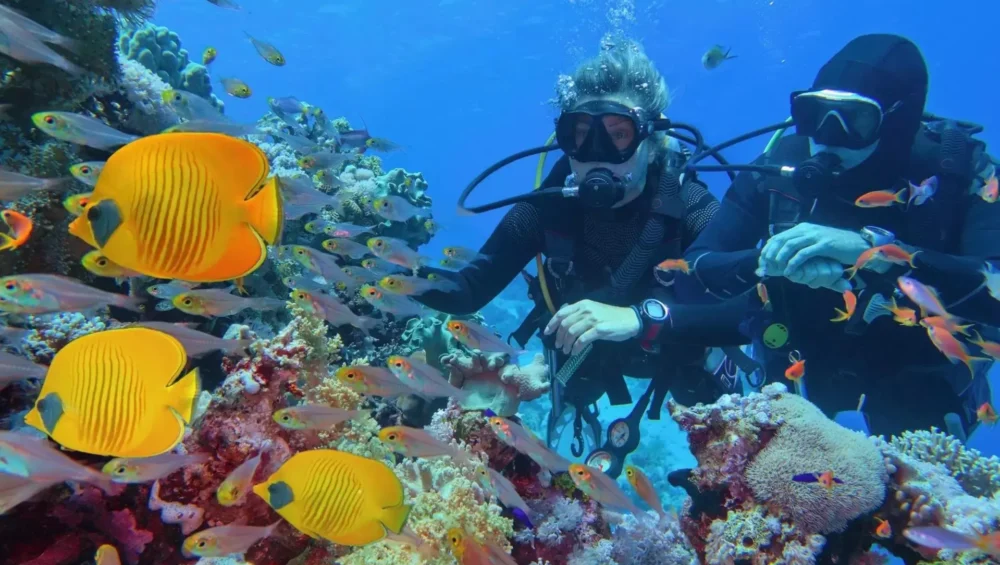
Egypt is famous for the Pyramids of Giza, ancient temples, and the Nile River, but beneath the surface of the Red Sea lies another world that is just as remarkable. Colorful coral reefs, tropical fish, dramatic walls, shipwrecks, turtles, dolphins, and even sharks make Egypt one of the most exciting diving destinations in the world.
But with so many coastal resorts and dive sites to choose from, how do you know where to go?
The best places to dive in Egypt range from lively resort destinations such as Sharm El Sheikh and Hurghada to quieter southern locations such as Marsa Alam. Each destination offers a different underwater experience. Some are ideal for beginners, while others are better suited to experienced divers looking for deep walls, strong currents, wrecks, or encounters with larger marine animals.
In this guide, we will explore 7 of the best places to dive in Egypt, what makes each destination special, the marine life you may encounter, who each location is best for, and practical tips to help you plan your Red Sea diving adventure.
Whether you are taking your first scuba diving lesson or already have hundreds of dives under your belt, Egypt has an underwater destination for you.
What Are the Best Places to Dive in Egypt?
The best places to dive in Egypt include:
- Sharm El Sheikh – Best for famous reefs, wrecks, and diving variety
- Dahab – Best for shore diving and unique underwater landscapes
- Hurghada – Best for beginners, families, and easy access to reefs
- Marsa Alam – Best for marine life, turtles, dugongs, and advanced diving
- El Quseir – Best for quieter reefs and uncrowded diving
- Safaga & Soma Bay – Best for coral gardens, walls, and drift diving
- Hamata & Berenice – Best for remote reefs and an off-the-beaten-path experience
Egypt’s Red Sea coastline offers diving throughout the year. The country is particularly attractive to divers because of its warm water, excellent visibility, extensive coral reefs, and diverse marine life. Egypt’s tourism authority notes that its Red Sea destinations are home to more than 300 coral species and over 1,000 species of fish.

1. Sharm El Sheikh: One of the Best Places to Dive in Egypt
If you are looking for a destination that combines excellent diving with a wide choice of hotels, restaurants, activities, and excursions, Sharm El Sheikh is one of the best places to dive in Egypt.
Located at the southern tip of the Sinai Peninsula, Sharm El Sheikh is surrounded by some of the Red Sea’s most famous dive areas. Its location provides access to spectacular coral reefs, dramatic walls, strong-current sites, and historic shipwrecks.
One of the major attractions is the Ras Mohammed National Park, where divers can explore impressive reef walls and encounter large schools of fish. The nearby Straits of Tiran are another major highlight, with famous reefs including Jackson, Gordon, Woodhouse, and Thomas.
The area is suitable for different levels of experience. Beginners can enjoy shallower reef dives, while experienced divers can explore deeper walls, drift dives, and wrecks.
The SS Thistlegorm is particularly famous among experienced wreck divers. The World War II-era cargo ship lies offshore from Sharm El Sheikh and has become one of the Red Sea’s iconic wreck dives.
What Can You See?
Depending on the dive site and season, you may encounter:
- Colorful reef fish
- Barracuda
- Tuna
- Turtles
- Moray eels
- Rays
- Reef sharks
- Large schools of tropical fish
- Vibrant hard and soft corals
Who Is Sharm El Sheikh Best For?
Sharm El Sheikh is particularly good for:
- First-time visitors to Egypt
- Beginner and intermediate divers
- Experienced wreck divers
- Families combining diving with a beach holiday
- Travelers who want plenty of resort facilities
Diving Experience
Best for: Reef diving, wreck diving, wall diving, and day trips.
If you want a destination where you can combine diving with a classic Red Sea resort holiday, Sharm El Sheikh is an excellent choice.
2. Dahab: Best for Shore Diving
For travelers searching for a more relaxed and independent diving experience, Dahab is one of the best places to dive in Egypt.
Unlike destinations where many dives require boat trips, Dahab is famous for its accessible shore dives. Several spectacular sites can be reached directly or relatively easily from the coastline.
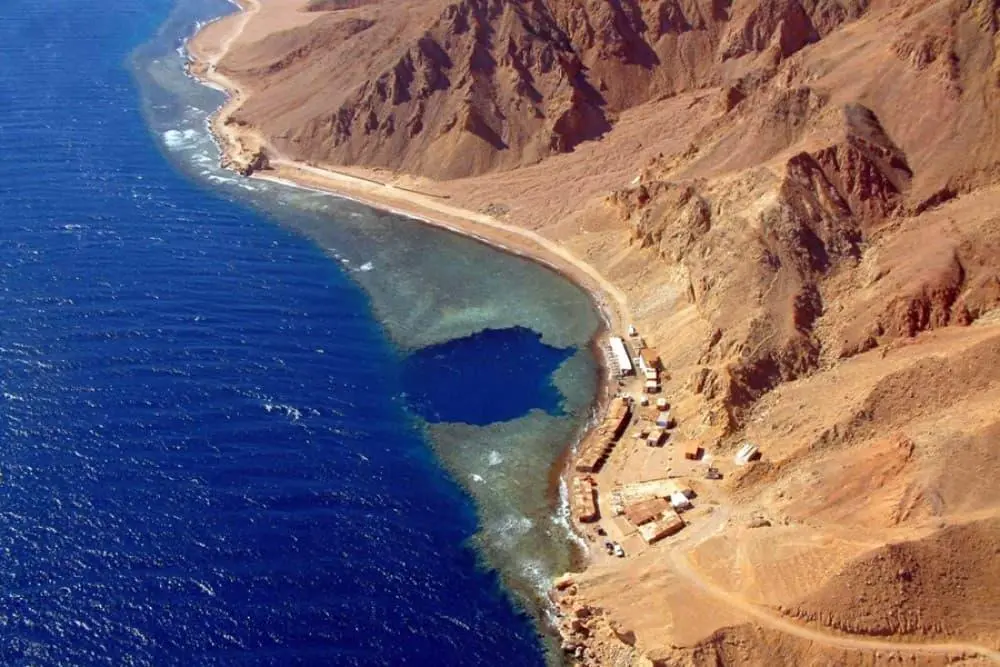
The most famous is the Blue Hole, a natural underwater formation that has become one of Egypt’s best-known diving landmarks.
The Blue Hole is approximately 70 meters wide and 80 meters deep according to Egypt’s official tourism platform. The site also features the famous Arch leading toward the open sea.
However, the Blue Hole should not be treated as a casual deep dive. Certain sections, particularly the Arch, require advanced technical diving experience and appropriate training. The surrounding reef can still be enjoyed without attempting the more demanding sections.
Dahab also offers other remarkable sites such as The Canyon, The Bells, and Gabr El Bint.
The Canyon is known for its unusual underwater rock formations and narrow passages, while Gabr El Bint combines dramatic walls with beautiful coral and marine life.
What Can You See?
Diving around Dahab can reveal:
- Lionfish
- Moray eels
- Turtles
- Reef fish
- Soft and hard corals
- Rays
- Colorful reef formations
Who Is Dahab Best For?
Dahab is ideal for:
- Shore divers
- Beginner divers
- Experienced divers
- Underwater photographers
- Technical divers
- Travelers who prefer a relaxed atmosphere
Why Choose Dahab?
Dahab offers something different from the larger resort destinations. You can spend the morning diving, enjoy a relaxed lunch by the sea, and explore the town without needing to follow a large organized excursion every day.
For travelers who want accessible shore diving combined with a laid-back atmosphere, Dahab is hard to beat.
3. Hurghada: Best for Beginners and Easy Diving
Hurghada is one of Egypt’s most established Red Sea diving destinations and remains one of the easiest places for travelers to organize a diving holiday.
The city has a large tourism infrastructure, with numerous hotels, dive centers, restaurants, water sports operators, and excursions.
Its location also makes it easy to reach many offshore reefs and islands by boat.
For beginners, this can be particularly convenient. You can take an introductory scuba experience or begin an internationally recognized diving course while staying in a major resort destination.
The waters around Hurghada are known for coral reefs and abundant reef fish. Nearby areas such as Giftun Island also provide opportunities for snorkeling and diving.
What Can You See?
Typical marine life around Hurghada includes:
- Butterflyfish
- Angelfish
- Parrotfish
- Moray eels
- Lionfish
- Rays
- Turtles
- Dolphins in suitable areas
- Colorful coral gardens
Who Is Hurghada Best For?
Hurghada is especially suitable for:
- Beginner divers
- Families
- First-time visitors
- Travelers combining diving and beach activities
- Travelers who want a wide selection of accommodation
PADI also highlights Hurghada as a reliable option for new divers because of its diving conditions, visibility, and wide range of dive centers.
Diving and Other Activities
One advantage of Hurghada is that non-divers can easily find other activities. While one traveler spends the day diving, others can go snorkeling, enjoy a boat trip, relax at the beach, or explore the resort area.
That makes Hurghada particularly convenient for groups with different interests.
4. Marsa Alam: Best for Marine Life
If seeing marine life is your biggest priority, Marsa Alam deserves a place near the top of your list.
Located farther south along Egypt’s Red Sea coast, Marsa Alam is known for its reefs, protected coastal areas, and opportunities to encounter larger marine animals.
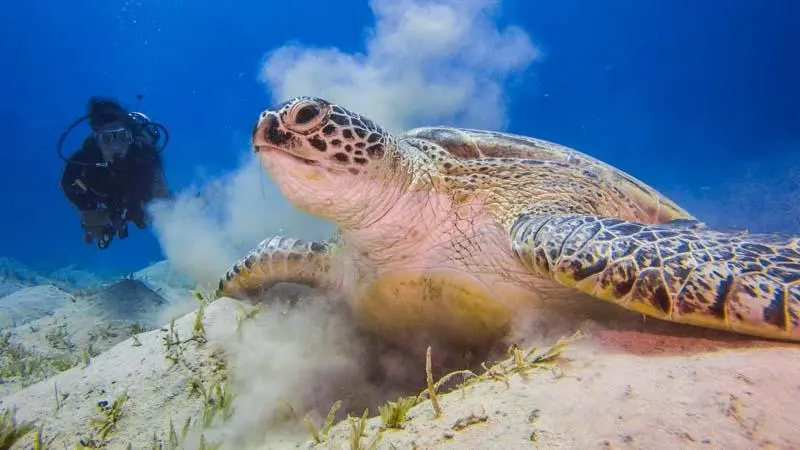
One of the area’s most famous sites is Abu Dabbab, where divers and snorkelers often look for green turtles and the elusive dugong.
The shallow seagrass areas make Abu Dabbab particularly interesting because these habitats can attract large herbivorous marine animals. PADI describes Abu Dabbab as suitable for divers of different experience levels and notes its reputation for turtle and dugong encounters.
For experienced divers, Elphinstone Reef is one of the major attractions.
Elphinstone is famous for dramatic walls, colorful soft corals, strong currents, and encounters with pelagic species. Oceanic whitetip sharks and hammerheads are among the animals that may be encountered under suitable conditions.
What Can You See?
Marsa Alam is known for:
- Green turtles
- Dugongs
- Reef sharks
- Oceanic whitetip sharks
- Hammerhead sharks
- Barracuda
- Rays
- Dolphins
- Colorful coral reefs
Of course, wildlife sightings are never guaranteed. Marine animals are wild and their presence varies according to season, weather, water conditions, and luck.
Who Is Marsa Alam Best For?
Marsa Alam is excellent for:
- Wildlife enthusiasts
- Underwater photographers
- Experienced divers
- Divers looking for fewer crowds
- Travelers interested in eco-diving
- People who want access to southern Red Sea sites
Marsa Alam also offers a range of diving options, from accessible house reefs to boat trips and more demanding offshore sites.
5. El Quseir: Best for Quiet and Uncrowded Diving
If you prefer your diving holiday to feel quieter and less commercial, consider El Quseir.
This historic Red Sea town sits between Hurghada and Marsa Alam and provides access to a variety of house reefs and nearby dive sites.
One of its main advantages is the atmosphere. Compared with larger resort destinations, El Quseir can offer a more peaceful diving experience.
PADI describes the area as suitable for different levels, with accessible house reefs and opportunities to reach more remote sites by boat or other local transportation.
What Makes El Quseir Special?
The area is particularly attractive for divers who enjoy:
- House reef diving
- Shore diving
- Coral gardens
- Smaller dive groups
- Less crowded dive sites
- Relaxed Red Sea holidays
You can also use El Quseir as a base for exploring southern Red Sea attractions.
Who Should Visit?
El Quseir is a strong option for:
- Couples
- Experienced divers
- Underwater photographers
- Travelers seeking tranquility
- People who have already visited Hurghada or Sharm El Sheikh
If your idea of a perfect diving trip involves spending more time underwater and less time in busy resort areas, El Quseir may be exactly what you are looking for.
6. Safaga and Soma Bay: Best for Coral Gardens and Drift Diving
Safaga and Soma Bay offer another excellent option for Red Sea diving.
Located south of Hurghada, this area is known for coral gardens, walls, reef fish, and drift-diving opportunities.
PADI identifies Safaga and Soma Bay as one of Egypt’s major diving areas, with shallow reefs, coral gardens, steep walls, and a variety of marine life.
One of the best-known sites in the region is Panorama Reef, which is particularly appreciated by experienced divers.
Depending on the site and conditions, divers can encounter reef sharks, barracuda, schooling fish, rays, and colorful corals.
What Can You See?
Expect the possibility of:
- Reef fish
- Barracuda
- Turtles
- Rays
- Napoleon wrasse
- Lionfish
- Coral gardens
- Reef sharks
Who Is Safaga Best For?
Safaga and Soma Bay are ideal for:
- Intermediate divers
- Experienced divers
- Drift-diving enthusiasts
- Underwater photographers
- Travelers looking for a quieter alternative to Hurghada
The region can also work well for travelers who want a comfortable resort holiday without giving up access to quality dive sites.
7. Hamata and Berenice: Best for Remote Red Sea Diving
For travelers who want to get away from the busiest tourist destinations, Hamata and Berenice in Egypt’s southern Red Sea region are worth considering.
These areas provide access to remote reefs and marine environments that can feel much more isolated than the larger resort centers.
The southern Red Sea is particularly appealing to divers who value natural surroundings, coral reefs, and a quieter atmosphere.
The experience is less about combining diving with a busy city and more about making the underwater world the main attraction.
What Can You Expect?
Depending on the location and dive trip, you may encounter:
- Pristine coral formations
- Tropical reef fish
- Turtles
- Rays
- Dolphins
- Reef sharks
- Large schools of fish
Who Is Hamata and Berenice Best For?
This region is particularly suitable for:
- Experienced divers
- Nature lovers
- Underwater photographers
- Divers looking for remote sites
- Travelers who prefer small-scale tourism
Because some sites are remote, planning your diving arrangements in advance is particularly important.
What to Expect When Diving in Egypt
The Experience
The biggest attraction is variety. A single Egypt diving holiday can include shallow coral gardens, dramatic walls, shore dives, wrecks, caves, drift dives, and encounters with large marine animals.
The Red Sea is also known for its excellent underwater visibility. PADI reports that visibility can often reach approximately 20–50 meters, although actual conditions vary from site to site and day to day.
Water Temperature
Egypt is a year-round diving destination.
Water temperatures generally range from around 21°C to 28°C depending on the season and location.
A wetsuit is therefore normally recommended, with thickness depending on the season and the individual diver.
Crowds
The busiest destinations tend to be Sharm El Sheikh and Hurghada, especially during popular holiday periods.
If avoiding crowds is important, consider:
- El Quseir
- Marsa Alam
- Hamata
- Berenice
- Smaller dive centers and house reefs
Photography Opportunities
Egypt is excellent for underwater photography.
Wide-angle photographers can capture coral walls, schooling fish, turtles, and large reef formations, while macro photographers can search for smaller creatures hidden around the reef.
Always follow your dive guide’s instructions and avoid touching or standing on coral.
Best Time to Dive in Egypt
One of the biggest advantages of diving in Egypt is that there is no single short diving season.
You can dive throughout the year, but your preferred timing may depend on what you want to see.
June to September
These warmer months can be attractive for divers interested in pelagic encounters, including the possibility of hammerhead sightings at suitable sites.
May to August
This period can offer opportunities for whale shark encounters, although sightings are never guaranteed.
Spring and Autumn
April to June and September to November can provide a comfortable balance between water temperatures and conditions on land, particularly for travelers who want to combine diving with sightseeing.
Practical Information for Diving in Egypt
How to Get There
Most international travelers enter Egypt through Cairo or fly directly to Red Sea airports such as Hurghada or Marsa Alam.
Sharm El Sheikh has its own international airport and is particularly convenient for travelers heading directly to the Sinai Peninsula.
Your best airport depends on your chosen diving destination.
How Long Should You Stay?
For a dedicated diving holiday, 5 to 7 days can provide enough time to enjoy several dives without rushing.
If diving is only one part of your Egypt vacation, you can combine several days at the Red Sea with Cairo, Luxor, or other destinations.
Beginner Divers
If you have never dived before, choose a destination with established dive centers and easy-access sites.
Hurghada, Sharm El Sheikh, Dahab, and Marsa Alam all offer options for beginners. PADI also highlights Sharm El Sheikh, Dahab, Hurghada, and Marsa Alam as strong destinations for learning to dive.
Experienced Divers
Experienced divers have considerably more choices.
You can look for:
- Deep dives
- Drift dives
- Wreck diving
- Shark encounters
- Offshore reefs
- Technical diving
- Liveaboard trips
Always check certification requirements, current conditions, and the experience level required for a particular dive site.
Expert Tips for Diving in Egypt
1. Choose Your Destination Based on Your Diving Goals
Don’t choose a resort simply because it is famous.
Ask yourself whether you want:
- Easy shore dives
- Wrecks
- Sharks
- Turtles
- Coral gardens
- Photography
- Technical diving
- Remote reefs
Your answer can completely change which of the best places to dive in Egypt is right for you.
2. Check Your Certification
Not every dive site is suitable for every diver.
Some locations involve strong currents, deep walls, or challenging conditions. Your dive operator should match the site to your certification and experience.
3. Don’t Chase Marine Life
Seeing a turtle or shark can be unforgettable, but never chase, touch, feed, or corner marine animals.
Responsible diving protects the environment and usually produces better wildlife encounters anyway.
4. Protect the Reef
Avoid touching coral or resting your fins on reef structures.
Good buoyancy control is one of the best ways to protect the underwater environment.
5. Leave Enough Time Between Diving and Flying
Follow recognized diving safety guidance regarding surface intervals before flying after scuba diving. Your dive center can advise you based on your diving schedule.
Real Traveler Insight
Many divers choose Egypt because it offers a rare combination: high-quality Red Sea diving and easy access to a major tourism infrastructure.
You don’t necessarily have to choose between a comfortable holiday and serious diving.
A traveler staying in Sharm El Sheikh, Hurghada, or Marsa Alam can enjoy diving during the day and return to a hotel, restaurant, or resort in the evening.
For a more independent experience, Dahab and El Quseir can provide a quieter alternative.
The biggest lesson is to choose the destination based on the type of underwater experience you want rather than simply choosing the most famous resort.
Common Mistakes to Avoid
Choosing a Destination Without Checking the Dive Sites
A destination may be beautiful above water but not necessarily the best match for your diving interests.
Attempting Advanced Dives Without the Right Experience
Sites involving deep water, strong currents, or technical passages should only be attempted with the appropriate training and experience.
Ignoring Weather and Sea Conditions
Even excellent dive sites can become unsuitable when weather or sea conditions change.
Touching Coral
Coral reefs are fragile ecosystems. A single careless diver can cause damage that takes years to recover.
Expecting Guaranteed Wildlife Sightings
Dugongs, sharks, dolphins, turtles, and other animals are wild. No responsible dive operator can guarantee that you will see a particular species.
Related Attractions to Add to Your Egypt Trip
One of the best things about choosing Egypt for a diving holiday is that you can combine underwater adventures with cultural sightseeing.
If you are staying in Sharm El Sheikh, consider exploring:
- Ras Mohammed National Park
- Nabq Bay
- Old Market
- Mount Sinai
- Saint Catherine area
If you are visiting Hurghada, you can add:
- Giftun Island
- Orange Bay
- Desert excursions
- Hurghada Marina
If you choose Marsa Alam, consider:
- Abu Dabbab
- Wadi El Gemal
- Dolphin House
- Elphinstone Reef
And if you are staying in Dahab, you can combine diving with:
- Blue Hole
- The Canyon
- Ras Abu Galum
- Three Pools
- Bedouin experiences
FAQ: Best Places to Dive in Egypt
What is the best place to dive in Egypt?
There is no single answer for every diver. Sharm El Sheikh is one of the best all-around choices because of its variety of reefs, wrecks, and dive centers. Dahab is excellent for shore diving, while Marsa Alam is particularly attractive for marine life.
Is Egypt good for beginner divers?
Yes. Egypt offers many beginner-friendly dive sites, particularly around Sharm El Sheikh, Hurghada, Dahab, and Marsa Alam. However, beginners should always dive with a qualified instructor or dive guide and stay within the limits of their training.
What is the best time to go diving in Egypt?
Egypt is a year-round diving destination. The best period depends on your priorities. Summer can be attractive for some shark encounters, while spring and autumn can offer comfortable conditions both underwater and on land.
Can you see sharks while diving in Egypt?
Yes, several Egyptian dive destinations are known for shark encounters. However, sharks are wild animals, and sightings are never guaranteed. Elphinstone Reef and some offshore Red Sea sites are particularly famous for pelagic encounters.
Can beginners dive at the Blue Hole in Dahab?
The surrounding Blue Hole area offers diving opportunities, but the more technically demanding sections should not be attempted by inexperienced divers. Diving under the Arch requires advanced experience and appropriate training.
Is Marsa Alam good for seeing turtles?
Marsa Alam is one of Egypt’s strongest destinations for turtle encounters. Abu Dabbab is particularly known for green turtles and is also associated with dugong sightings.
Is diving in Egypt possible all year?
Yes. Egypt’s Red Sea can be dived throughout the year, although water temperatures, weather, visibility, and marine-life encounters vary seasonally.
Which is better for diving, Hurghada or Sharm El Sheikh?
Both are excellent, but they suit slightly different travelers. Sharm El Sheikh offers access to famous sites such as Ras Mohammed and the Straits of Tiran, while Hurghada provides a large selection of accessible reef trips and is particularly convenient for beginners and resort travelers.
Conclusion: Choosing the Best Places to Dive in Egypt
The best places to dive in Egypt offer much more than clear blue water.
From the dramatic walls and famous wrecks of Sharm El Sheikh to the accessible shore dives of Dahab, the colorful reefs of Hurghada, and the extraordinary marine life around Marsa Alam, Egypt provides an impressive range of underwater experiences.
If you are a beginner, Hurghada or Sharm El Sheikh can be excellent starting points. If you love shore diving, Dahab deserves serious consideration. If marine life is your priority, Marsa Alam is difficult to overlook. And if you prefer quiet, less crowded diving, El Quseir, Hamata, and Berenice may be better choices.
The key is to match the destination with your experience level and what you actually want to see underwater.
With warm Red Sea waters, spectacular coral reefs, diverse marine life, and diving opportunities throughout the year, Egypt deserves its reputation as one of the world’s great scuba diving destinations.
Ready to explore Egypt beneath the surface? Combine your Red Sea diving adventure with Cairo, the Pyramids, Luxor, the Nile, or a relaxing beach holiday and create an unforgettable Egypt travel experience. Discover the 7 best places to dive in Egypt, from Sharm El Sheikh to Marsa Alam.