

Planning a trip down the Nile sounds simple enough — until you start searching and realize there isn’t just “one” Nile cruise. There are standard cruises, luxury cruises, dahabiyas, short 3-night sailings, longer 7-night journeys, and cruises that combine Luxor and Aswan with Abu Simbel. If you’re not sure which type fits your budget, travel style, and schedule, it’s easy to end up overwhelmed before you’ve even booked a cabin. In this guide, we’ll break down every major type of Nile cruise available in 2026, explain who each one is best suited for, and help you choose the sailing that matches exactly what you’re looking for — whether that’s affordability, romance, adventure, or five-star luxury.
Quick Answer
Nile cruises in Egypt generally fall into four main categories: Standard cruises (budget-friendly, full-board, 3–4 nights), Luxury/5-star cruises (premium service, spa, larger cabins), Dahabiyas (small traditional sailboats, private and intimate), and Long-itinerary cruises (7+ nights covering more temples and sometimes Abu Simbel). Most sail between Luxor and Aswan, visiting Karnak, Luxor Temple, Kom Ombo, Edfu, and Philae Temple along the way.
Why the Type of Nile Cruise You Choose Actually Matters
Before diving into the categories, it helps to understand why this decision isn’t just about price. The type of cruise you pick affects:
- How many passengers you’ll share the ship with
- Whether your itinerary can be personalized or is fixed
- The quality of cabins, food, and onboard service
- How close you’ll feel to the river itself versus being on a large floating hotel
- Your total trip cost, once transfers, guides, and entrance fees are factored in
With that context in mind, let’s look at each type in detail.
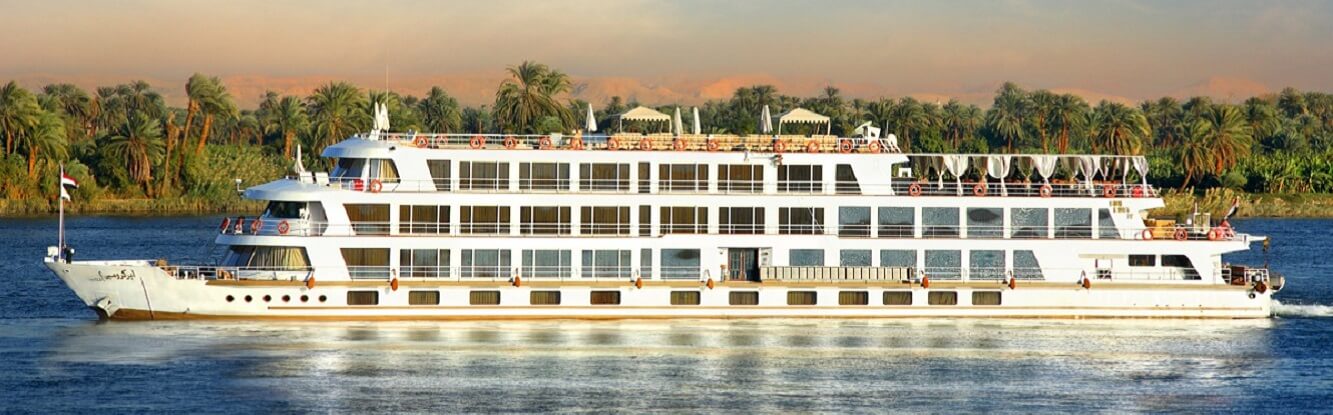
1. Standard Nile Cruises
Standard Nile cruises are the most popular choice for travelers who want an authentic Nile experience without paying a premium. These ships typically carry between 60 and 120 passengers, operate on a full-board basis (breakfast, lunch, and dinner included), and follow the classic Luxor–Aswan or Aswan–Luxor route over 3 or 4 nights.
What’s included:
- Comfortable, air-conditioned cabins with private bathrooms
- Full-board meals served buffet-style
- Guided excursions to major temples with an Egyptologist guide
- An onboard folkloric or Nubian show on at least one evening
Best for: First-time visitors, families, and travelers who want to see the essential Luxor-to-Aswan highlights — Karnak, Luxor Temple, the Valley of the Kings, Kom Ombo, Edfu, and Philae Temple — without stretching their budget.
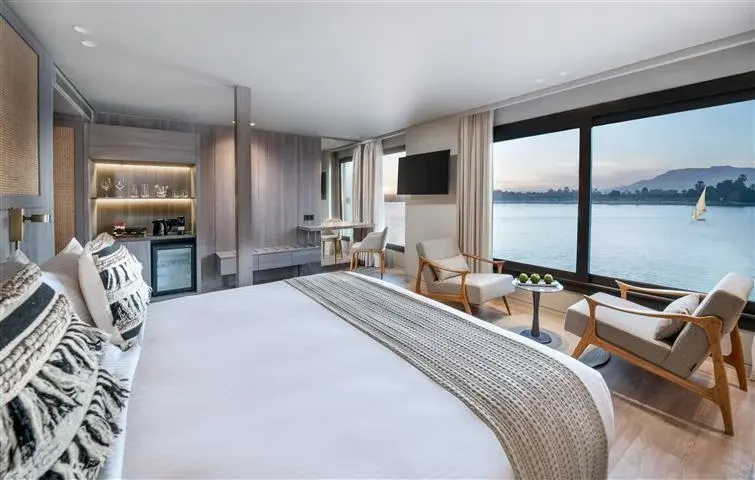
2. Luxury (5-Star) Nile Cruises
For travelers who want the same itinerary but with a noticeably elevated experience, luxury Nile cruises offer larger cabins or suites, higher-end dining (often à la carte rather than buffet-only), spa and wellness facilities, swimming pools, and a higher staff-to-guest ratio.
What’s included:
- Spacious cabins or suites, sometimes with private balconies
- Fine dining with more menu variety
- Spa treatments, sun decks, and sometimes a rooftop pool
- Premium linens, toiletries, and in-room amenities
Best for: Honeymooners, couples celebrating a special occasion, and travelers who see the cruise itself as part of the destination — not just transportation between temples.
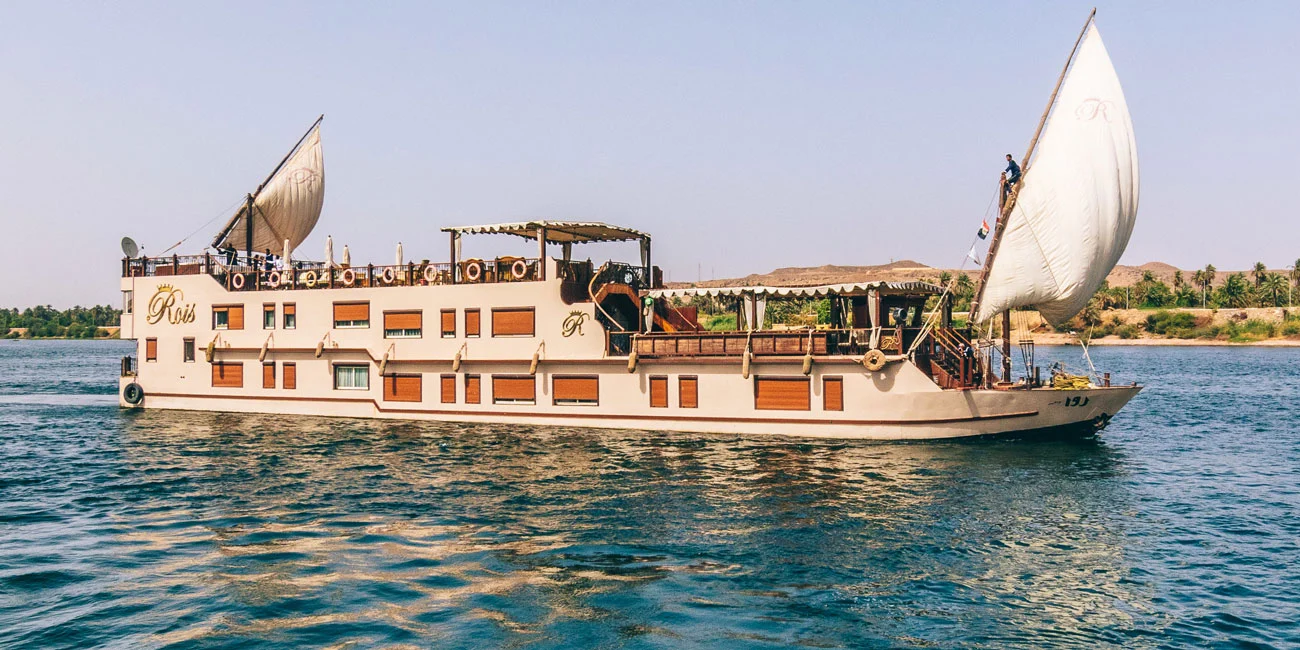
3. Dahabiya Nile Cruises
A dahabiya is a traditional wooden sailboat, much smaller than a standard cruise ship, typically hosting only 8 to 12 guests. Unlike large cruise ships that rely on engines and fixed schedules, dahabiyas move at a slower, wind-assisted pace, which gives the journey a distinctly peaceful, old-world feel.
What’s included:
- A small, intimate group setting (sometimes fully private for families or friend groups)
- Personalized itineraries with more flexibility on timing
- Home-style meals prepared fresh onboard
- Closer access to smaller, less-crowded sites along the riverbanks
Best for: Travelers seeking a quieter, more personal experience — away from large tour groups — and those who value atmosphere and authenticity over onboard facilities like pools or spas.
4. Extended Nile Cruises (7+ Nights)
While most Nile cruises run 3 or 4 nights between Luxor and Aswan, longer itineraries of 7 nights or more typically extend the journey to include Dendera, Abydos, or a full round-trip covering more of Upper Egypt in greater depth.
What’s included:
- More temples and archaeological sites beyond the standard route
- A more relaxed daily pace with fewer back-to-back excursions
- Often combinable with a Cairo stay or an Abu Simbel extension
Best for: History enthusiasts, repeat visitors to Egypt, and travelers who have more time and want to go beyond the “highlights reel” version of the Nile.
What to Expect on a Nile Cruise
The Experience: Days typically begin early, with excursions scheduled before the midday heat sets in, followed by lunch onboard while the ship sails to the next destination. Afternoons often include a second excursion or free time on the sun deck, and evenings bring dinner and sometimes a themed onboard event.
Crowds: Standard and luxury cruises can feel busy at major sites like Karnak during peak morning hours, while dahabiyas generally avoid this by design, thanks to their small group size and flexible scheduling.
Costs: Standard cruises are the most budget-friendly option per night; luxury cruises and dahabiyas cost more but offer a different kind of value — space, privacy, and service quality.
Weather: Winter (November to February) is the most comfortable season for sightseeing, while summer months (June to August) are hot but come with fewer crowds and lower prices.
Transportation: Most cruise packages include private air-conditioned transfers between the airport or train station and the ship, so you won’t need to arrange this separately.
Photography Opportunities: Sunrise and sunset views over the Nile from the sun deck, combined with the temple sites themselves, make Nile cruises one of the most photogenic ways to experience Egypt.
Practical Information
Opening Hours: Most temple sites are open daily from approximately 6:00 AM to 5:00 PM, with earlier entry generally recommended.
Ticket Prices: Entrance fees to major sites are usually included in your cruise package; optional excursions like Abu Simbel are typically priced separately.
Best Time to Visit: October through April offers the most comfortable sightseeing temperatures.
How to Get There: Most cruises begin or end in Luxor or Aswan, both accessible by domestic flight from Cairo or by overnight train.
Suggested Duration: 3–4 nights covers the essential route; 7+ nights suits travelers wanting a deeper, slower exploration.
Expert Tips
- Book your cruise several weeks in advance during peak season (October–April) to secure your preferred cabin category.
- Choose a lower deck cabin if you’re sensitive to boat movement, particularly on windier stretches of the river.
- Pack modest, breathable clothing for temple visits, along with a hat and reusable water bottle.
- If Abu Simbel interests you, check whether it’s included or bookable as an optional add-on before you book your cruise.
- Confirm whether your package is full-board or all-inclusive, since the difference affects whether drinks and extras are covered.
Real Traveler Insight
Many travelers who’ve sailed the Luxor–Aswan route mention that the early-morning excursions — while requiring an early wake-up call — consistently deliver the best experience, with cooler temperatures, softer light for photos, and noticeably smaller crowds at sites like Karnak and the Valley of the Kings.
Common Mistakes to Avoid
- Booking a cruise without checking whether Abu Simbel is included, then being surprised by an extra cost later.
- Assuming all cruise categories offer the same cabin size and amenities — always check deck and cabin type before booking.
- Underestimating how much walking is involved at sites like Karnak and the Valley of the Kings.
- Not packing modest clothing for temple visits, which can be uncomfortable in different site conditions.
- Choosing the shortest itinerary without realizing it may exclude Edfu or Kom Ombo, depending on the cruise direction.
Related Attractions
If you’re planning a Nile cruise, you may also want to explore:
- Abu Simbel Temples (optional extension from Aswan)
- Cairo and the Pyramids of Giza (often combined before or after the cruise)
- The Aswan High Dam and Philae Temple
- Dendera and Abydos Temples (included on longer itineraries)
Suggested Itinerary
3-Night Cruise (Aswan to Luxor): High Dam and Philae Temple in Aswan, Kom Ombo and Edfu on day two, Luxor East and West Banks on the final days.
4-Night Cruise (Luxor to Aswan): Karnak and Luxor Temple on day one, Valley of the Kings and Hatshepsut Temple on day two, Edfu and Kom Ombo on day three, Aswan sightseeing on day four.
7-Night Extended Cruise: All of the above, plus Dendera and Abydos, with additional free time and a more relaxed daily pace throughout.
FAQ Section
Is a Nile cruise worth it?
Yes — it’s widely considered the most efficient and scenic way to see Luxor and Aswan’s major sites without the fatigue of daily road transfers between cities.
How long should I spend on a Nile cruise?
3 to 4 nights is enough to cover the essential temples; 7 nights or more suits travelers wanting a deeper, slower exploration of Upper Egypt.
What is the best time of year for a Nile cruise?
October through April offers the most comfortable sightseeing weather, though summer sailings are cheaper and less crowded.
Is Abu Simbel included in a standard Nile cruise?
Not usually — it’s typically offered as an optional add-on excursion from Aswan, either by road or short domestic flight.
Are Nile cruises family-friendly?
Yes, standard and luxury cruises are generally well-suited to families, with flexible dining and comfortable cabins for various group sizes.
What’s the difference between a standard and a luxury Nile cruise?
Luxury cruises offer larger cabins, better dining, and additional amenities like spas or pools, while standard cruises focus on comfortable, good-value essentials.
Can I book a private cabin on a dahabiya?
Yes, dahabiyas can often be booked privately for families or small groups, offering full control over the itinerary pace.
Do Nile cruises include entrance fees to temples?
Yes, entrance fees for included excursions are typically part of the cruise package, though optional extensions may be priced separately.
Conclusion
Choosing the right type of Nile cruise comes down to matching the experience to your travel style — a standard cruise for comfortable, good-value sightseeing; a luxury cruise for added indulgence; a dahabiya for privacy and slow travel; or an extended itinerary for a deeper historical journey. Whichever you choose, sailing the Nile remains one of the most memorable ways to connect with Egypt’s ancient history.
Ready to sail the Nile? Explore our Nile cruise packages and find the sailing that matches your travel style, budget, and schedule today.