
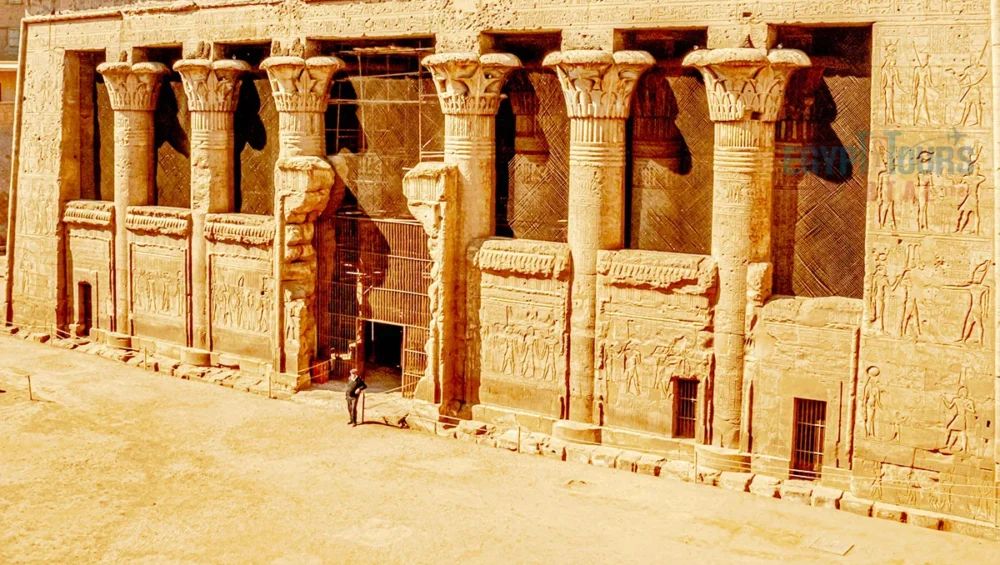
The Temple of Khnum (Arabic: معبد خنوم) is one of ancient Egypt’s most intriguing and beautifully preserved temples. Located in Esna, a historic city on the west bank of the Nile River between Luxor and Aswan, the Temple of Khnum stands as a testament to the religious devotion, architectural mastery, and cultural richness of ancient Egyptian civilization. Though less famous to the general world than Abu Simbel or Karnak, the Temple of Khnum is considered one of the most complete examples of Greco‑Roman temple design in Egypt — and an essential destination for anyone exploring the Nile Valley.
This article explores the Temple of Khnum’s history, architecture, religious importance, rediscovery, decoration, restoration, and modern significance. It is optimized for search engines with relevant terms and structured content to help both visitors and researchers better understand this extraordinary site.
1. Introduction: What Is the Temple of Khnum?
The Temple of Khnum is an ancient Egyptian temple dedicated primarily to the god Khnum — a creator deity associated with the source of the Nile and the potter who shaped human bodies on a potter’s wheel. The temple is located in Esna (ancient Latopolis), near the west bank of the Nile in Upper Egypt.
Unlike many other temples, the sanctuary of Khnum was gradually buried by centuries of Nile silt and urban expansion. It was rediscovered only in the 19th century and has survived with remarkably intact inscriptions, columns, and reliefs that offer precious insights into later Egyptian temple architecture — combining both traditional Pharaonic styles and Greco‑Roman influences. Let’s visit the Temple of Khnum through our Assouan Dahabiya Nile Cruise to experience its history, beauty, and spiritual significance firsthand.
2. Historical Background
2.1 Ancient Esna and Khnum’s Cult
Esna, known as Latopolis in Greco‑Roman times, was a thriving port and religious center in ancient Egypt. Its strategic location along the Nile made it an important hub for trade, agriculture, and spiritual life.
Khnum was one of the oldest deities in Egyptian religion. Originally worshiped at Elephantine, his cult spread southward and took on new significance in Esna. As the deity associated with the annual flooding of the Nile, Khnum became a symbol of fertility, creation, and life itself. Egyptians believed that Khnum not only controlled the inundation but also fashioned the bodies of newborn children on his potter’s wheel.
In addition to Khnum, the temple honored several other deities, including:
-
Nebtu — Khnum’s consort
-
Heka — the god of magic and medicine
-
Satis — a goddess connected with the Nile’s inundation
-
Anuket — a goddess associated with the Nile and fertility
2.2 Construction Phases
The temple was constructed during the Ptolemaic Period (332–30 BCE) and continued to receive additions and restoration through the Roman Period (30 BCE–4th century CE). This long building history makes the Temple of Khnum a unique example of evolving religious architecture.
The main phases include:
-
Initial Ptolemaic Construction — Early columns, walls, and sanctuary spaces were established.
-
Roman Enhancements — Later additions introduced new decorative elements and structural reinforcements.
-
Late Antique Modifications — Some reliefs and inscriptions reflect changes during the decline of ancient Egyptian religion.
Despite centuries of shifting dynasties and cultural influence, the Temple of Khnum retained its spiritual purpose until the decline of pagan worship in Egypt.
3. Rediscovery and Modern History
3.1 Burial by Time and Silt
Over time, the Temple of Khnum became buried under layers of Nile silt and urban buildup. By the Middle Ages, its entrance was obscured, and it lay hidden beneath the rising town of Esna.
3.2 European Rediscovery
European explorers and archaeologists encountered the temple in the early 19th century. The first detailed descriptions were made by travelers in the 1790s, but systematic study began in the 1820s. The temple façade and inner sanctuary were still concealed for decades, protected by centuries of debris.
3.3 Excavations and Uncovering the Temple
In the late 19th century, consistent clearing efforts finally revealed the temple’s monumental entrance and interior. These excavations showed that the temple had remained largely intact, with most columns, walls, and inscriptions untouched by major looting or destruction.
Today, the Temple of Khnum is one of the best‑preserved temples from Egypt’s Greco‑Roman era and serves as a valuable source of historical and cultural knowledge.
4. Architecture and Layout
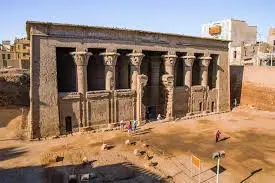
The Temple of Khnum is an architectural marvel that reflects the blending of ancient Egyptian design with influences from later periods. Its structure follows the traditional pylon → courtyard → hypostyle hall → sanctuary progression found in many major temples, but with unique stylistic details.
4.1 The Entrance and Outer Walls
The temple’s entrance is framed by massive walls covered in inscriptions and reliefs depicting kings, gods, and ceremonial scenes. Like many temples, the outer walls served both decorative and symbolic purposes — marking the transition from the outside world into the sacred realm.
4.2 The Hypostyle Hall
The most striking feature of the Temple of Khnum is its hypostyle hall — a vast columned chamber that once supported a high roof. This hall contains 24 towering columns, each intricately carved with images of gods and pharaonic figures.
The columns are remarkable for several reasons:
-
Height and Scale — The columns create an awe‑inspiring interior space.
-
Detailed Reliefs — Many reliefs depict scenes of ritual offerings, royal processions, and divine figures.
-
Astronomical Ceiling Decorations — Above the columns, fragments of the painted ceiling show stars and celestial patterns, suggesting cosmic symbolism.
4.3 Sanctuary and Inner Chambers
Beyond the hypostyle hall lies the sanctuary — the holiest part of the temple where the image of Khnum would have been housed. This area is smaller and more enclosed, emphasizing privacy and sacredness. Adjoining rooms likely served as storage for ritual objects and priestly equipment.
4.4 Reliefs and Inscriptions
The temple’s walls, columns, and gateways are richly decorated with carved reliefs and hieroglyphic inscriptions. These include:
-
Ritual scenes showing kings making offerings to gods
-
Mythological stories tied to creation and fertility
-
Hymns praising Khnum, Nebtu, and other deities
-
Texts invoking protection and blessings
Because many of these reliefs survived intact, the Temple of Khnum is an important source for understanding Ptolemaic and Roman religious beliefs and artistic conventions.
5. Religious Significance and Mythology
5.1 Who Was Khnum?
Khnum was one of the oldest and most revered gods in ancient Egypt. He was often portrayed as a man with the head of a ram — an animal symbolizing strength and fertility. As a creator god, Khnum was believed to shape human bodies on his potter’s wheel using clay from the Nile’s banks.
5.2 Khnum and the Nile Flood
The Nile’s annual flooding was central to Egyptian life, renewing the soil and ensuring agricultural productivity. Khnum was directly associated with this life‑giving flood, making his worship especially important in the Nile Valley.
5.3 Temple Rituals and Worship
Priests at the Temple of Khnum would perform daily rituals to honor the god and maintain cosmic balance. These rituals included:
-
Offerings of food, incense, and symbolic objects
-
Prayers for agricultural fertility
-
Ceremonies tied to royal legitimacy
-
Festivals celebrating creation and renewal
The temple also served as a social center where local officials, priests, and pilgrims gathered for religious occasions.
6. Artistic and Symbolic Features
6.1 Column Capitals and Carvings
The capitals (tops) of the temple’s columns are carved with elaborate floral, geometric, and symbolic designs. Some represent lotus flowers — a symbol of creation and rebirth — while others include images of deities and kings engaging in ceremonial acts.
6.2 Mythological Scenes
Many reliefs depict mythological scenes, such as:
-
Khnum creating humans on his potter’s wheel
-
Deities granting life and protection to the king
-
Ritual offerings by priests and royalty
These scenes help scholars understand how ancient Egyptians conceptualized creation, kingship, and divine order.
6.3 Hieroglyphic Texts
The hieroglyphic inscriptions at the Temple of Khnum are extensive. They serve both religious and historical functions, recording:
-
Names of rulers who contributed to the temple
-
Ritual formulas and invocations
-
Lists of offerings and ceremonial practices
Many of these texts have been translated by Egyptologists, providing valuable insight into language, belief, and ritual.
7. Conservation and Tourism
7.1 Preservation Challenges
Because the Temple of Khnum was buried for centuries, its inner portions survived relatively well. However, exposure to water table changes, weathering, and urban expansion poses ongoing challenges.
Conservation efforts focus on:
-
Stabilizing columns and ceilings
-
Cleaning and protecting reliefs
-
Managing visitor access to prevent damage
-
Researching ancient construction techniques
7.2 Visiting the Temple Today
Today, the Temple of Khnum is open to visitors as part of cultural tours in Upper Egypt. It is often included on Nile cruise itineraries between Luxor and Aswan, especially those that follow traditional river routes and stop in historic cities like Esna.
Travelers can explore:
-
The hypostyle hall with its towering columns
-
The sanctuary and inner chambers
-
Wall reliefs and carved inscriptions
-
Surrounding ruins and ancient foundations
Local guides often explain the symbolic and religious significance of each area, bringing the site’s history to life.
8. The Temple of Khnum in Cultural Memory
The Temple of Khnum holds a special place in both ancient and modern cultural memory. For ancient Egyptians, it was a vital center of worship and community life. For modern visitors, it offers a glimpse into the spiritual heart of an age when gods walked alongside kings and creation was believed to unfold at the banks of the Nile.
Its survival through time — hidden, forgotten, and then rediscovered — makes it not only an architectural treasure but also a symbol of resilience and continuity in Egyptian history.
9. Conclusion: Why the Temple of Khnum Matters
The Temple of Khnum is more than an archaeological site. It is a living testament to:
-
Ancient Egyptian religion and mythology
-
Architectural and artistic achievement
-
Cultural continuity across dynasties
-
The deep connection between people, land, and river
Whether you are a historian, traveler, or curious reader, the Temple of Khnum offers rich rewards for study and exploration. Its massive columns, vivid reliefs, and enduring spirit make it one of Egypt’s unsung masterpieces. Let’s visit the Temple of Khnum through our Assouan Dahabiya Nile Cruise