Kalabsha Temple is one of the largest and most impressive Nubian temples in Egypt, standing proudly on the shores of Lake Nasser near Aswan. Known for its remarkable preservation and fascinating relocation story, the temple offers visitors a peaceful journey through ancient Egyptian and Roman history away from the crowds of Egypt’s more famous sites.
Unlike many temples that remain in their original locations, Kalabsha Temple was carefully dismantled and reconstructed during the UNESCO rescue campaign that saved Nubian monuments from disappearing beneath the waters created by the Aswan High Dam. Today, it remains one of the most important examples of international cooperation in preserving world heritage.
For travelers exploring Aswan, Kalabsha Temple provides a unique blend of history, stunning lakeside views, and extraordinary ancient architecture.
Quick Facts About Kalabsha Temple
Location
West Bank of Lake Nasser, near Aswan, Egypt
Original Location
Bab al-Kalabsha (ancient Talmis), approximately 50 km south of Aswan
Opening Hours
Typically from 8:00 AM to 5:00 PM
Entrance Fees
Prices may change periodically. Visitors are advised to check the latest ticket rates before visiting.
Best Time to Visit
October to April when temperatures are cooler
Recommended Visit Duration
1.5 to 2.5 hours
Built During
Roman Period, around 30 BC
Dedicated To
Mandulis, a Nubian solar deity
UNESCO Rescue Campaign
Relocated between 1961 and 1963
History of Kalabsha Temple
Kalabsha Temple was originally built during the early Roman era, around the reign of Emperor Augustus. Although constructed under Roman rule, the temple follows traditional Egyptian architectural styles and religious practices.
The temple was dedicated to Mandulis, a Nubian sun god worshipped throughout Lower Nubia. Mandulis was often associated with divine protection, fertility, and the power of the sun.
The site where the temple originally stood was known in ancient times as Talmis. This settlement played an important role in trade routes connecting Egypt with Nubia and central Africa.
For centuries, the temple remained an active religious center. Ancient inscriptions indicate that local communities continued visiting and worshipping there long after the Roman period.
During the Christian era, parts of the temple were converted into a church. Several ancient carvings were altered or covered during this period, reflecting the religious transformations taking place throughout Egypt.
The Great Relocation of Kalabsha Temple
One of the most fascinating chapters in Kalabsha Temple’s history occurred during the 1960s.
When construction of the Aswan High Dam began, experts realized that many ancient Nubian monuments would be submerged beneath the rising waters of Lake Nasser.
UNESCO launched an international campaign to save these monuments. Kalabsha Temple became one of the largest structures selected for relocation.
Engineers carefully documented every section of the temple before dismantling it into thousands of stone blocks. Each block was numbered, transported, and reconstructed on higher ground near its current location.
The operation was considered a remarkable engineering achievement. Thanks to this effort, visitors today can still experience the temple almost exactly as it appeared in ancient times.
Without this rescue mission, Kalabsha Temple would have disappeared forever beneath the waters of Lake Nasser.
Architecture of Kalabsha Temple
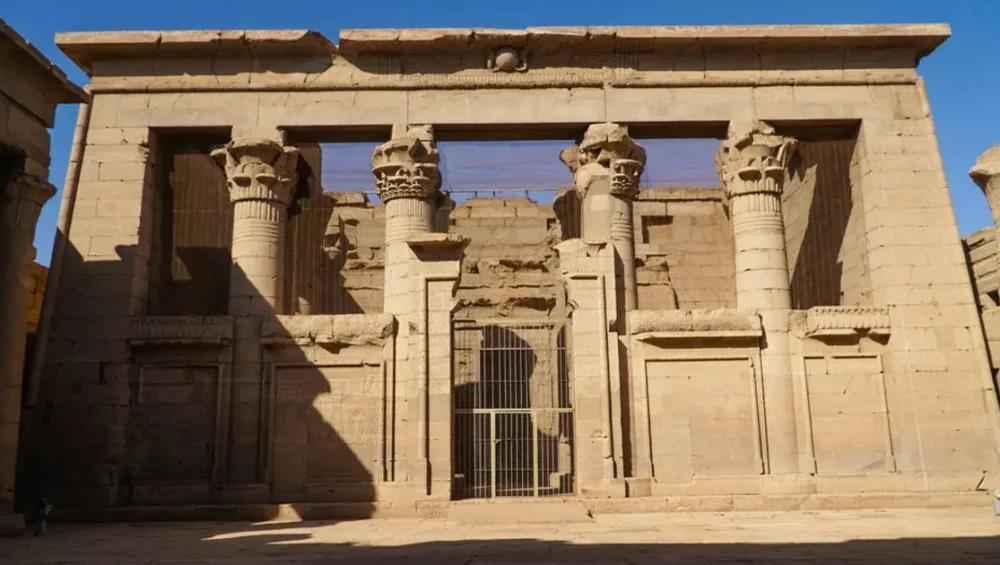
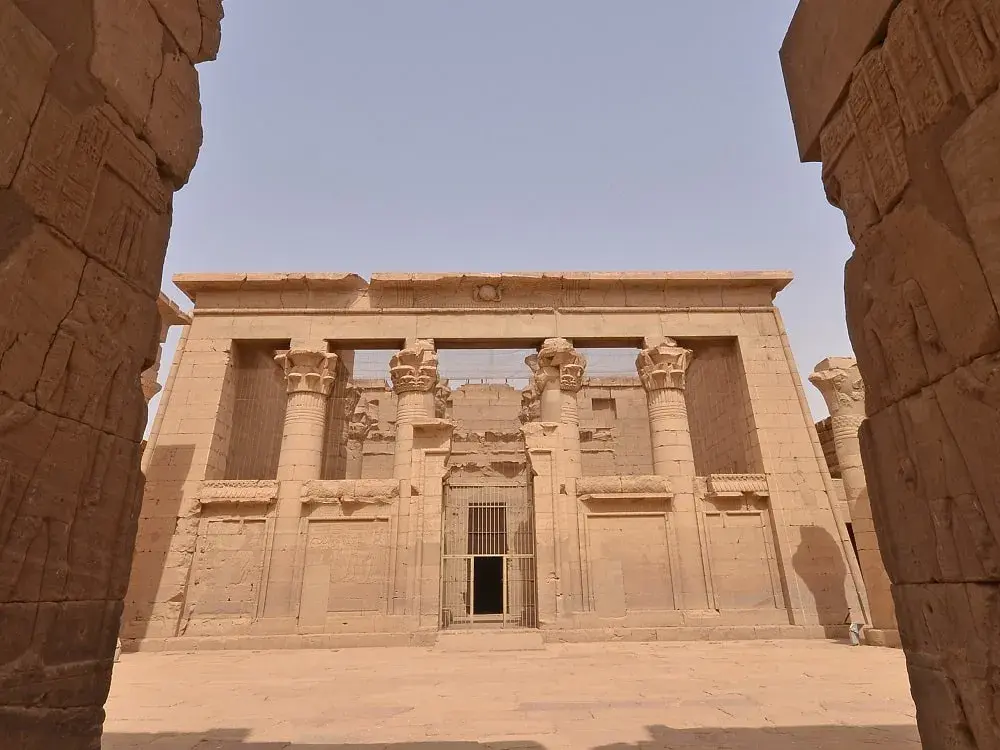
Kalabsha Temple is often regarded as the largest free-standing Nubian temple in Egypt.
Its architecture combines Egyptian, Nubian, and Roman influences, creating a unique monument that reflects centuries of cultural interaction.
The temple complex includes:
- Monumental entrance gateway
- Open courtyard
- Hypostyle hall
- Sanctuary
- Side chambers
- Decorative reliefs
- Ancient inscriptions
The structure is built primarily from sandstone, giving it a warm golden appearance that becomes especially beautiful during sunrise and sunset.
The Pylon Entrance
The temple begins with a massive pylon that immediately captures visitors’ attention.
Ancient reliefs carved into the walls depict royal figures presenting offerings to various gods. These scenes demonstrate how Roman rulers adopted Egyptian religious traditions to strengthen their authority in the region.
Walking through the entrance creates a powerful first impression and sets the tone for the rest of the visit.
The Courtyard
Beyond the pylon lies a spacious open courtyard.
This area would have hosted religious ceremonies and gatherings in ancient times. The courtyard offers excellent opportunities to appreciate the scale of the monument and observe architectural details often overlooked in more crowded temples.
The open space also provides beautiful views of the surrounding landscape and Lake Nasser.
The Hypostyle Hall
One of the temple’s most impressive features is the hypostyle hall.
Supported by large columns decorated with intricate carvings, this section demonstrates the skill of ancient craftsmen. The reliefs depict religious rituals, gods, and sacred symbols that played important roles in Nubian and Egyptian beliefs.
Visitors often spend considerable time examining the details preserved on these columns.
The Sanctuary
At the heart of the temple lies the sanctuary, the most sacred area of the complex.
Ancient priests would have performed rituals here in honor of Mandulis and other deities. Although the sacred statues are no longer present, the atmosphere of the chamber still conveys a sense of reverence and mystery.
The sanctuary provides insight into how religious ceremonies were conducted more than two thousand years ago.
Mandulis: The God of Kalabsha Temple
The temple was primarily dedicated to Mandulis, one of the most important Nubian gods.
Mandulis was associated with:
- The sun
- Divine protection
- Kingship
- Fertility
- Renewal
Many carvings inside the temple depict Mandulis wearing distinctive crowns and receiving offerings from rulers.
His worship spread throughout Lower Nubia and remained influential during both the Egyptian and Roman periods.
The presence of Mandulis highlights the cultural exchange that characterized the Nubian frontier region.
Ancient Inscriptions and Reliefs
Kalabsha Temple contains a remarkable collection of inscriptions.
Many scenes illustrate:
- Religious ceremonies
- Offerings to gods
- Royal processions
- Sacred symbols
- Roman imperial imagery
Some inscriptions are written in hieroglyphs, while others reflect later historical periods.
These carvings provide valuable information about religion, politics, and daily life in ancient Nubia.
Researchers continue studying the temple’s inscriptions to better understand the interactions between Egypt, Nubia, and Rome.
Discover Kalabsha Temple on a Lake Nasser cruises and experience Egypt’s Nubian heritage from the water, where ancient history meets breathtaking scenery.
What to Expect During Your Visit
The Place
The moment you arrive at Kalabsha Temple, you’ll notice how peaceful the site feels compared to many of Egypt’s major attractions.
The temple stands against the backdrop of Lake Nasser, creating a unique setting where ancient history meets beautiful natural scenery.
Massive sandstone walls, towering gateways, and detailed carvings surround visitors from the first steps inside the complex.
As you walk through the halls and chambers, you’ll discover fascinating details hidden in nearly every corner.
Crowds
Kalabsha Temple is generally much less crowded than famous sites such as Karnak Temple or Abu Simbel.
If you arrive before 9:00 AM, you may find yourself exploring large sections of the temple almost alone.
Visitor numbers usually increase later in the morning, especially during the peak tourism season between October and April.
The quieter atmosphere makes it an excellent destination for photography and slow exploration.
Distances
The temple complex is not excessively large, but visitors should expect moderate walking.
You’ll move through courtyards, halls, and surrounding areas while examining reliefs and architectural features.
Comfortable walking shoes are highly recommended, especially during warmer months.
Weather
Aswan is one of Egypt’s hottest regions.
During summer, temperatures can become extremely high, particularly between midday and late afternoon.
The best visiting conditions are usually found during the cooler months from October through April.
Bring:
- Water
- Sunglasses
- Sunscreen
- A hat
- Comfortable footwear
Early morning visits provide the most pleasant experience.
Nearby Attractions
Many travelers combine Kalabsha Temple with other attractions in Aswan.
Popular nearby sites include:
- Philae Temple
- Unfinished Obelisk
- Aswan High Dam
- Nubian Museum
- Elephantine Island
- Abu Simbel Temples
Exploring several sites together creates a deeper understanding of Nubian and Egyptian history.
Best Photography Spots
Photography enthusiasts will find numerous opportunities throughout the temple.
Excellent locations include:
Main Pylon
Captures the grandeur of the entrance.
Courtyard
Provides wide-angle architectural shots.
Columned Hall
Perfect for showcasing carved details and symmetry.
Lake Nasser Background
Offers unique combinations of ancient architecture and natural landscapes.
Morning light often produces the best photographs.
Practical Travel Tips
Best Time to Go
- October to April
- Early morning visits
- Before 9:00 AM for fewer crowds
What to Wear
- Light breathable clothing
- Comfortable walking shoes
- Hat or cap
- Sunglasses
What to Bring
- Water bottle
- Camera
- Sunscreen
- Small backpack
Common Mistakes
- Visiting during peak afternoon heat
- Rushing through the reliefs
- Forgetting sun protection
- Skipping nearby Nubian monuments
Real Visitor Insights
One of our travelers mentioned that the boat ride across Lake Nasser added an unexpected sense of adventure to the visit. Seeing the temple emerge against the water created a memorable first impression.
Visitors often say that Kalabsha Temple feels more authentic and relaxed than many of Egypt’s busier archaeological sites. The combination of impressive architecture and peaceful surroundings allows travelers to appreciate details they might miss elsewhere.
Many photographers also praise the temple’s lighting conditions, particularly during the first hours after sunrise.
Why Kalabsha Temple Is Worth Visiting
Kalabsha Temple offers something unique among Egypt’s ancient monuments.
It combines:
- Ancient Egyptian traditions
- Roman history
- Nubian culture
- UNESCO preservation efforts
- Beautiful Lake Nasser scenery
- Fewer crowds
For travelers seeking a deeper understanding of Nubia’s heritage, the temple provides an unforgettable experience.
Its remarkable rescue story alone makes it one of Egypt’s most inspiring archaeological sites.
Related Places to Explore
After visiting Kalabsha Temple, consider exploring:
- Philae Temple
- Abu Simbel Temples
- Kom Ombo Temple
- Edfu Temple
- Nubian Museum
- Aswan High Dam
These attractions help complete the story of ancient Egypt and Nubia.
FAQ About Kalabsha Temple
How long does it take to visit Kalabsha Temple?
Most visitors spend between 1.5 and 2.5 hours exploring the temple.
Is Kalabsha Temple crowded?
Usually no. It is significantly less crowded than many of Egypt’s famous temples.
Is Kalabsha Temple worth visiting?
Absolutely. Its history, architecture, lakeside setting, and relocation story make it one of Aswan’s hidden treasures.
Why was Kalabsha Temple moved?
The temple was relocated to save it from flooding caused by the creation of Lake Nasser after the construction of the Aswan High Dam.
Who was Mandulis?
Mandulis was a major Nubian solar deity and the principal god worshipped at Kalabsha Temple.
Can you visit Kalabsha Temple from Aswan?
Yes. The temple is located near Aswan and can easily be visited as part of a day tour.
Final Thoughts
Kalabsha Temple is more than an ancient monument—it is a symbol of cultural preservation and international cooperation. Its towering sandstone walls, fascinating Nubian heritage, and remarkable rescue story make it one of the most rewarding places to visit in Aswan.
Whether you’re passionate about archaeology, photography, history, or simply discovering lesser-known treasures, Kalabsha Temple deserves a place on your Egypt travel itinerary. Consider combining it with nearby Nubian and Aswan attractions to gain a richer understanding of this extraordinary region.