

Choosing the best time to visit Luxor can be the difference between a magical morning among painted tombs and a miserable afternoon in 40°C heat.
Luxor holds the Valley of the Kings, Karnak Temple and Luxor Temple, and almost all of it is outdoors. Weather, light and crowds shape your trip more here than in most cities. The climate is hot desert with almost no rain, so the real question is not “when will it be dry?” but “when will it be comfortable?”
This guide answers that with month-by-month weather, a season-by-season breakdown, current ticket prices, events through 2027, practical tips and the mistakes that catch first-time visitors out. By the end, you will know which month suits your budget, your tolerance for heat and the kind of trip you want.
Quick Answer: When Is the Best Time to Visit Luxor?
The best time to visit Luxor is from late October to April, and the sweet spot is December to February. Daytime highs sit around 20–25°C, nights drop to 7–10°C, and rain is almost nonexistent. November and March are good shoulder months. May to September is very hot, with July highs above 40°C, so go then only if you can start sightseeing at 6:00 AM and rest at midday.
What Is the Weather in Luxor Month by Month?
Luxor has a hot desert climate: long, scorching summers and short, dry, cool winters. The hot season runs from early May to the end of September, with average highs above 37°C, while the cool season runs from December to late February (WeatherSpark). Use the table below to match your dates to the conditions.
| Month | Avg high (°C) | Avg low (°C) | Feels like | Crowds and prices | Verdict |
|---|---|---|---|---|---|
| January | 22 | 8 | Cool, cold nights | Busy | Excellent |
| February | 25 | 9 | Mild | Busy | Excellent |
| March | 29 | 12 | Warm | Moderate | Very good |
| April | 35 | 17 | Hot by afternoon | Moderate | Good early in the month |
| May | 40 | 22 | Very hot | Quiet | Tough |
| June | 41 | 24 | Extreme | Quiet | Tough |
| July | 41 | 25 | Extreme | Quietest | Only for dawn sightseeing |
| August | 41 | 25 | Extreme | Quietest | Only for dawn sightseeing |
| September | 39 | 22 | Very hot | Quiet | Tough |
| October | 35 | 19 | Hot, easing | Rising | Good |
| November | 29 | 13 | Warm and pleasant | Busy | Excellent |
| December | 24 | 9 | Mild | Busiest | Excellent |
Temperatures are approximate long-term averages rounded to the nearest degree; WeatherSpark puts July’s average high at about 105°F (40.5°C) and January’s average low at about 46°F (8°C). Crowd and price levels are typical patterns, not measured figures. Rain is close to zero in every month.
Which Season Is Best for Visiting Luxor?
Winter (December to February): Best Weather, Biggest Crowds
Winter gives you comfortable days of roughly 20–25°C, ideal for walking Karnak and the West Bank all day. Nights can be genuinely cold, around 7–10°C, so pack layers. Expect the highest hotel prices and the longest queues around Christmas and New Year.
Spring (March to April): Warm Days and Thinning Crowds
March is still pleasant, and crowds start to ease. By mid-April, afternoons climb above 35°C, so move your sightseeing to the early morning. This is a good window if you want decent weather without peak-season prices.
Summer (May to September): Cheapest but Extremely Hot
June to August brings highs around 41°C with strong sunshine and little shade at the temples. Visitor numbers and hotel rates drop, and the sites are far quieter. If you travel now, treat the day as two short shifts: 6:00 AM to about 10:00 AM, then again in the evening.
Autumn (October to November): The Smart Shoulder Season
October is still hot but easing, and November is one of the most pleasant months of the year. Crowds build through November, so book flights and hotels early if you want to be here for the best weather.
When Should You Visit Luxor for Events and Special Trips?
- Luxor African Film Festival, late March 2027. The 16th edition is scheduled for late March 2027. Reported dates differ, with CairoScene giving 25–31 March and the festival’s own press page giving 28 March–3 April, so confirm on the official festival site before booking.
- Total solar eclipse, 2 August 2027. A total solar eclipse is expected over Luxor on this date, and Egyptian authorities have begun preparing, according to Ahram Online. It falls in peak summer heat, so expect high demand and book accommodation and tours as early as you can.
What Is the Best Time to Visit Luxor for Your Type of Trip?
- First-time visitors who want comfort: December to February, or November and March for slightly lower prices.
- Photographers: November to February for softer light and clearer days; go at sunrise in any season.
- Budget travelers: May to September, but only if you can handle the heat and plan around the early morning.
- Families with young children: November or March, when it is warm without being punishing.
- Heat-sensitive or older travelers: December and January.
- Hot air balloon fans: winter and early spring, when winds are calmer (see the tips section).
What Will Visiting Luxor Feel Like in Each Season?
The city splits into the East Bank, with Karnak and Luxor Temple, and the West Bank, with the Valley of the Kings and Hatshepsut’s temple. Most people spend one day on each, and the season changes how those days feel.
- In winter, mornings are crisp and you may want a light jacket at 6:00 AM, especially on the West Bank and on balloon flights. By late morning it is comfortable T-shirt weather, and you can stay out all day. The trade-off is company: tour groups and cruise passengers fill the big sites from mid-morning.
- In spring and autumn, the days are warm, the light is strong, and the middle of the day starts to feel heavy. You will want shade, water and a break at your hotel between about 12:00 PM and 3:00 PM.
- In summer, the heat is the main event. The sun is intense, stone surfaces hold the heat, and there is little shade in open courtyards like those at Karnak. Sightseeing becomes a dawn activity, and the sites feel calm and uncrowded in return.
At every time of year, expect a lot of walking on uneven ground, steps in and out of tombs, and a steady stream of offers from vendors and carriage drivers outside the main sites. A polite, firm “no, thank you” and a plan for the day make the experience far smoother.
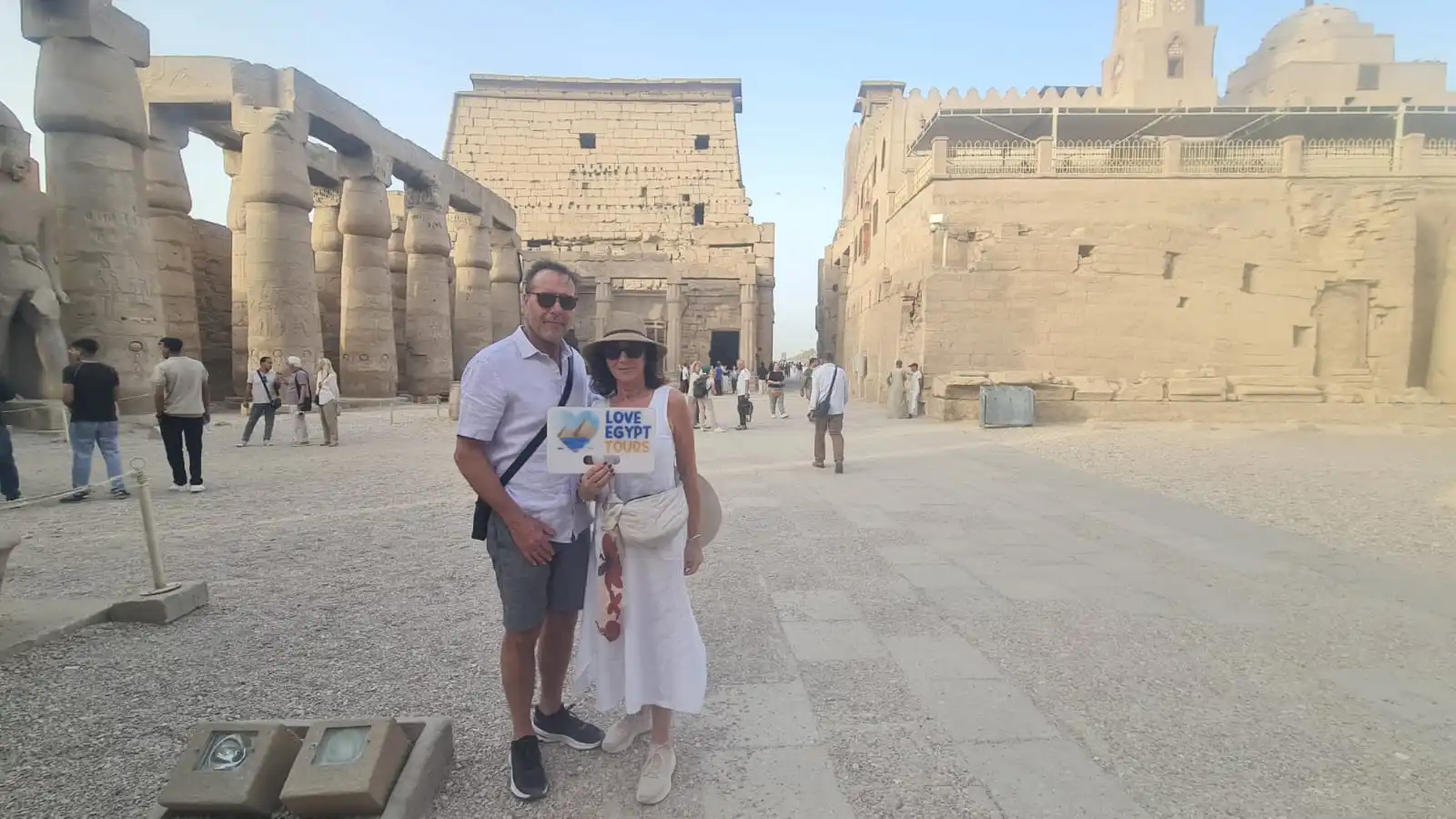
What Do You Need to Know Before You Go? Tickets, Hours and Getting There
A full Luxor sightseeing plan needs about EGP 3,400 per foreign adult for the seven main sites, before special tombs, guides and transport. Prices below were listed in November 2026 and change from time to time, so confirm them before you travel (Egypt Tours Portal ticket guide, updated 10 November 2026).
| Site | Foreign adult (EGP) | Student (EGP) | Opening hours |
|---|---|---|---|
| Karnak Temple | 600 | 300 | 6:00 AM – 5:00 PM |
| Luxor Temple | 500 | 250 | 6:00 AM – 8:00 PM |
| Valley of the Kings (3 tombs) | 750 | 375 | 6:00 AM – 5:00 PM |
| Tomb of Tutankhamun (extra) | 700 | 350 | 6:00 AM – 5:00 PM |
| Tomb of Seti I (extra) | 2,000 | No student rate | 6:00 AM – 5:00 PM |
| Temple of Hatshepsut | 440 | 220 | 6:00 AM – 5:00 PM |
| Valley of the Queens | 220 | 110 | 6:00 AM – 5:00 PM |
| Medinet Habu | 220 | 110 | 6:00 AM – 5:00 PM |
| Luxor Museum | 400 | 200 | Morning and evening sessions |
| Karnak Sound and Light Show | From 960 | From 480 | Evening shows |
How do tickets, payment and photography work?
- Payment: major sites such as Karnak and the Valley of the Kings now accept bank cards only, so bring a card. You can also buy online through the Ministry’s EgyMonuments platform and show the QR code at the gate.
- Discounts: foreign students with a valid ISIC card pay about half price, and children under 6 enter free.
- Last entry: usually one hour before closing, and earlier in winter and during Ramadan. One 2026 guide lists Karnak’s last entry at 4:00 PM.
- Photography: phone photos without flash are free at almost every site. Tripods, drones, professional cameras and filming need a separate permit.
- Luxor Pass: priced from USD 130 for the Standard version and from USD 250 for the Premium, valid for five days. For a two-day trip, single tickets are almost always cheaper.
How do you get to Luxor and around it?
- By air: Luxor International Airport (LXR) receives flights from Cairo and other cities. A taxi to central Luxor was benchmarked at around EGP 200 in March 2026, and about EGP 350 to the Valley of the Kings area.
- By river: many travelers arrive or leave on a Nile cruise between Luxor and Aswan.
- On the ground: the East and West Banks are separated by the Nile, so allow time for the bridge drive or a ferry crossing between them.
- Entry rules: check the current visa requirements for your nationality before booking flights.
Should you book a guided tour?
If you would rather have transport, tickets and a licensed guide arranged, browse the Best Luxor Day Tours 2027. For a first visit, the private Luxor Day Tour covers both the East and West Banks in one day. For a sunrise view over the temples and the Nile, book a Luxor Hot Air Balloon Ride for your first morning.
What Expert Tips Make a Luxor Trip Better in Any Season?
- Be at the West Bank gate at 6:00 AM. The Valley of the Kings opens first, and the early hour is the coolest and calmest of the day, in winter and summer alike. Save the East Bank for the afternoon and evening.
- Split your days by bank. Spend one day on Karnak and Luxor Temple and the next on the Valley of the Kings, Hatshepsut’s temple and one more West Bank site. Trying to see everything in a single day is the most common planning error.
- See Luxor Temple after sunset. It stays open until 8:00 PM, and the columns and the Avenue of Sphinxes are floodlit in the evening, which also gets you out of the daytime heat.
- Choose your tombs deliberately. The standard Valley of the Kings ticket covers three tombs from those open that day, and the list rotates. The extra tickets are Tutankhamun (EGP 700), Ramesses V and VI (EGP 220) and Seti I (EGP 2,000). Pay for Seti I only if the painted detail matters to you.
- Book the balloon for your first morning. Flights depend on wind, and the windier part of the year runs from late April to late September, according to WeatherSpark. A first-morning booking leaves you a spare day if your flight is cancelled.
- Build a midday break into every trip outside winter. Plan lunch and a rest at your hotel from around noon to 3:00 PM, then go back out for the late afternoon.
- Dress in layers in winter. Mornings and evenings are cold, and the middle of the day is warm. Wear closed shoes in every season for uneven stone and steep tomb steps.
- Carry a bank card and a small amount of cash. Cards are needed at the gates, while cash covers tips, toilets and small purchases.
- [Author: add one insider tip from your own visit, such as a favorite viewpoint, a restaurant, or the time of day you found the quietest at Karnak.]
What Mistakes Should You Avoid When Planning a Luxor Trip?
- Visiting in summer and sightseeing at midday. At 41°C there is little shade at the temples. Start at 6:00 AM and be done by late morning.
- Packing in too much. Karnak, Luxor Temple, the Valley of the Kings, Hatshepsut, the Valley of the Queens, the museum and a balloon flight do not fit in one day. Two full days is the realistic minimum.
- Arriving at the gate with only cash. The main sites now take cards, and a cash-only visitor can lose time sorting it out.
- Forgetting that winter nights are cold. Dawn at 7–10°C catches people in T-shirts, especially on balloon flights and early West Bank starts.
- Booking the balloon on your last morning. One windy day can cancel it, and you have no spare day to try again.
- Waiting too long to book in peak months. December and January fill up first, and November is not far behind. Book hotels and tours early if your dates are fixed.
- Buying tickets from people outside the entrance. Use the official counters, kiosks or the online platform.
- Buying a pass without doing the sums. For the seven main sites, single tickets come to about EGP 3,430, so a five-day pass only pays off if you visit nearly everything and return to sites.
Which Luxor Attractions Should You Read About Next?
Once you have picked your dates, these guides help you plan what to see. Link each topic to the matching article on your blog when it is ready.
- Karnak Temple: A Visitor’s Guide: the Hypostyle Hall, the obelisks and how long to allow.
- Valley of the Kings: Which Tombs Are Worth It?: rotating tombs, extra tickets and the best hour to arrive.
- Luxor Temple at Night: evening visits and the Avenue of Sphinxes.
- Temple of Hatshepsut and Medinet Habu: a West Bank morning that pairs two sites.
- Luxor Hot Air Balloon Ride Guide: what to expect, how cancellations work and what to wear.
- Luxor to Aswan Nile Cruise: temples along the river between the two cities.
- How Many Days Do You Need in Luxor?: one-, two- and three-day itineraries.
Frequently Asked Questions About the Best Time to Visit Luxor
What is the best month to visit Luxor?
December and January are the most comfortable months, with daytime highs of about 22–24°C. November, February and March are close behind and can be slightly cheaper or quieter.
Is Luxor too hot to visit in summer?
Summer is very hot, with July highs averaging about 41°C. It is manageable if you start sightseeing at 6:00 AM, finish by late morning and rest through the afternoon. Sites and hotels are also much quieter.
What is the cheapest time to visit Luxor?
Prices are generally lowest from May to September, when the heat keeps visitor numbers down. December and January are the most expensive, so book early for those months.
Does it rain in Luxor?
Almost never. Luxor gets only a couple of millimeters of rain in a typical year, so rain should not affect your plans in any month.
How many days do you need in Luxor?
Two full days is the practical minimum: one for the East Bank (Karnak and Luxor Temple) and one for the West Bank (Valley of the Kings and Hatshepsut’s temple). Add a third day for a balloon flight, Medinet Habu or a slower pace.
When is the best time for a hot air balloon ride in Luxor?
The calmer months, roughly late September to April, are the most reliable because strong wind can cancel flights. Book your flight for your first morning so you have a spare day if it is cancelled.
Is it worth visiting Luxor during the 2027 solar eclipse?
A total solar eclipse is expected over Luxor on 2 August 2027, and demand is likely to be high. It falls in peak summer heat, so plan dawn sightseeing and book accommodation and tours early.
Conclusion: So, When Is the Best Time to Visit Luxor?
For comfort, choose December to February, with November and March as slightly quieter alternatives. For lower prices and empty temples, travel from May to September and treat each day as a dawn shift. Whatever the month, start at the West Bank gates at 6:00 AM, give each bank its own day, carry a bank card and book balloon flights early in your stay.
Ready to Plan Your Luxor Trip?
When your dates are set, you can compare the Best Luxor Day Tours 2027 to see which fits your pace. If you want both banks covered in a single day, look at the private Luxor Day Tour. And if sunrise over the Nile sounds like your kind of morning, take a look at the Luxor Hot Air Balloon Ride.