The Real Builders Behind Egypt’s Greatest Wonder
The Pyramids of Giza are among the most iconic and mysterious structures ever built by human hands. Towering over the Giza Plateau on the west bank of the Nile, these colossal monuments have fascinated historians, travelers, and scholars for thousands of years. Yet one question continues to spark debate, myths, and misconceptions across generations:
Who really built the Pyramids of Giza?
Were they built by slaves, as often portrayed in movies?
Were aliens involved, as some fringe theories suggest?
Or was it something far more human, organized, and remarkable?
This article explores the true story of who built the Pyramids of Giza, based on archaeological evidence, ancient texts, and modern scientific research. By the end, you’ll understand not only who built them—but how, why, and what this tells us about ancient Egyptian civilization.
Overview: The Pyramids of Giza
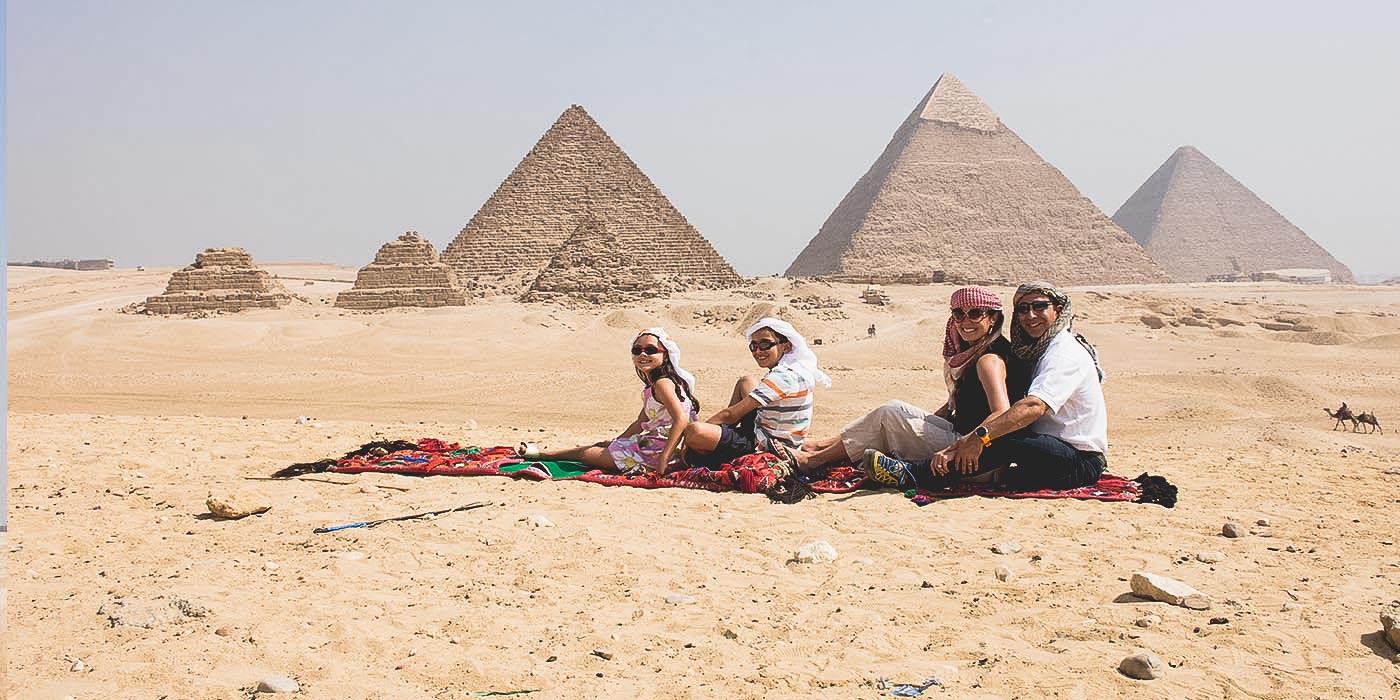
The Giza pyramid complex consists of three main pyramids:
- The Great Pyramid of Khufu (Cheops) – the largest and oldest
-
The Pyramid of Khafre (Chephren) – slightly smaller but appears taller due to its elevated base
-
The Pyramid of Menkaure (Mykerinos) – the smallest of the three
These pyramids were constructed during Egypt’s Old Kingdom, specifically the Fourth Dynasty (c. 2600–2500 BCE).
They were not isolated tombs but part of a vast ceremonial landscape including:
-
Mortuary temples
-
Causeways
-
Valley temples
-
Queens’ pyramids
-
Cemeteries for workers and officials
The Short Answer: Who Built the Pyramids?
The Pyramids of Giza were built by skilled Egyptian workers—not slaves—under the authority of the pharaohs Khufu, Khafre, and Menkaure.
These workers were:
-
Paid laborers
-
Craftsmen, engineers, and stone masons
-
Farmers working during the Nile’s flood season
-
Organized into rotating labor crews
This conclusion is supported by:
-
Archaeological discoveries
-
Workers’ villages
-
Human remains
-
Inscriptions inside the pyramids themselves
Let’s break this down in detail.
The Slave Myth: Where Did It Come From?
One of the most persistent myths is that the pyramids were built by slaves—often linked to biblical narratives. However, there is no archaeological or textual evidence supporting this idea.
Why the Slave Theory Is Wrong
-
No mass slave graves have ever been found near the pyramids
-
Workers’ tombs were discovered close to the pyramids—an honor never given to slaves
-
Skeletal remains show signs of medical care and healed injuries
-
Ancient Egyptian records describe workers receiving food, beer, and housing
The slave myth largely originated from:
-
Ancient Greek historians writing centuries later
-
Hollywood films and popular media
-
Misinterpretations of ancient texts
Modern Egyptology has firmly debunked this theory.
Archaeological Proof: The Workers’ Villages
One of the most important discoveries in understanding who built the pyramids came in the 1990s.
Heit el-Ghurab: The Lost City of the Pyramid Builders
Near the Giza Plateau, archaeologists uncovered a large settlement known as Heit el-Ghurab, often called the workers’ village.
Findings include:
-
Dormitories for laborers
-
Bakeries capable of producing thousands of loaves daily
-
Breweries
-
Storage facilities
-
Administrative buildings
This was not a slave camp—it was a planned industrial city supporting a massive workforce.
How Many People Built the Pyramids?
Contrary to earlier estimates of 100,000 workers, modern research suggests:
-
20,000–30,000 workers total
-
Organized into rotating teams
-
Construction spanned approximately 20–25 years
Workers were divided into:
-
Permanent skilled laborers (stonecutters, engineers)
-
Seasonal workers (mostly farmers during Nile flooding)
This system allowed Egypt to mobilize labor efficiently without damaging agricultural productivity.
The Organization of Labor: A National Project
Building the pyramids was a state-sponsored project, similar to a massive public infrastructure effort today.
Labor Teams and Crew Names
Inside the Great Pyramid, archaeologists discovered graffiti left by workers. These inscriptions include crew names such as:
-
“Friends of Khufu”
-
“Drunkards of Menkaure”
These names reflect pride, identity, and camaraderie—not oppression.
What Tools Did They Use?
Ancient Egyptians did not have iron tools or modern machinery. Instead, they relied on:
-
Copper chisels
-
Dolerite hammerstones
-
Wooden sledges
-
Ropes made from plant fibers
Recent experiments show that:
-
Sand mixed with water reduced friction
-
Stones could be moved efficiently using sledges
-
Precision was achieved through geometry and surveying
Their technological skill was extraordinary for its time.
How Were the Stones Transported?
The Great Pyramid alone contains over 2.3 million limestone blocks, some weighing up to 15 tons.
Transportation Methods
-
Limestone quarried locally
-
Granite transported from Aswan (over 800 km away)
-
Stones moved via the Nile using boats
-
Canals extended close to the construction site
In 2013, the discovery of the Diary of Merer, an ancient papyrus, confirmed these transport methods.
Engineering Genius: How Were the Pyramids Built?
Several theories exist regarding pyramid construction ramps:
-
Straight ramps
-
Zigzag ramps
-
Circular ramps
-
Internal spiral ramps
While no single theory is universally accepted, evidence suggests a combination of techniques adapted as the pyramid rose.
What’s undeniable is:
-
Precise alignment with cardinal directions
-
Mathematical accuracy
-
Advanced planning
The Great Pyramid is aligned to true north with astonishing precision—better than many modern buildings.
Why Were the Pyramids Built?
The pyramids were royal tombs, but their purpose extended beyond burial.
Religious Significance
-
The pharaoh was considered divine
-
The pyramid symbolized the primeval mound of creation
-
It acted as a gateway to the afterlife
-
The shape represented the sun’s rays
Building a pyramid was essential for maintaining cosmic order (Ma’at).
Were the Builders Well Treated?
Evidence strongly suggests yes
Diet and Living Conditions
Excavations show workers consumed:
-
Beef
-
Goat
-
Fish
-
Bread
-
Beer
Medical analysis reveals:
-
Treated fractures
-
Evidence of surgery
-
Long-term care for injured workers
This level of care indicates a valued workforce, not expendable slaves.
Who Designed the Pyramids?
The chief architect of the Great Pyramid is believed to be Hemiunu, a high-ranking official and relative of Pharaoh Khufu.
He oversaw:
-
Design
-
Logistics
-
Labor organization
This reinforces that pyramid construction was a highly centralized, bureaucratic operation.
The Role of the Pharaohs
Each pyramid was built for a specific ruler:
-
Khufu – Great Pyramid
-
Khafre – Second pyramid and the Great Sphinx
-
Menkaure – Third pyramid
The project reinforced:
-
Royal authority
-
National unity
-
Religious devotion
Participation was likely seen as a patriotic and spiritual duty.
Debunking Alien Theories
Claims that aliens built the pyramids persist despite zero evidence.
These theories:
-
Ignore archaeological data
-
Undermine ancient Egyptian achievements
-
Often stem from cultural bias
Every aspect of pyramid construction is explainable through known ancient technologies combined with exceptional organization.

What the Pyramids Tell Us About Ancient Egypt
The builders of the Pyramids of Giza were:
-
Skilled
-
Organized
-
Intelligent
-
Deeply religious
Their work reflects:
-
Strong central government
-
Advanced mathematics and engineering
-
Social cooperation on a national scale
The pyramids were not miracles—they were human achievements.
Conclusion
The Pyramids of Giza stand as timeless proof of ancient Egypt’s brilliance, ambition, and human ingenuity. Built by skilled Egyptian workers under visionary leadership, these monuments are more than stone structures—they are a powerful symbol of history, faith, and civilization that continues to inspire the world today.
If you want to truly discover the majesty of the Pyramids of Giza, there is no better way than experiencing them in person. Explore our carefully designed Egypt tours and travel with Love Egypt Tours, where history comes alive through expert guides, authentic experiences, and journeys crafted with passion and care.
Let the wonders of ancient Egypt leave a lasting mark on your heart. 🇪🇬✨