Discover the most famous pyramids in Egypt, from the Great Pyramid of Giza to Saqqara and Dahshur. Learn their history, secrets, and why they remain among the world’s greatest ancient monuments.
The Most Famous Pyramids in Egypt: A Journey Through Ancient Egyptian Wonders
Egypt is home to some of the world’s most extraordinary archaeological treasures, but nothing captures the imagination quite like its pyramids. Rising majestically above the desert sands, these remarkable monuments have fascinated travelers, historians, and archaeologists for thousands of years. They stand as lasting symbols of one of history’s greatest civilizations and continue to inspire millions of visitors every year.
The most famous pyramids in Egypt are far more than impressive stone structures. They are masterpieces of engineering, reflections of ancient Egyptian beliefs, and monuments built to preserve the legacy of powerful pharaohs. Every pyramid tells a unique story about royal ambition, architectural innovation, and the remarkable skills of the workers who transformed massive limestone blocks into eternal landmarks.
Whether you are planning your first trip to Egypt or simply want to learn more about its incredible heritage, this guide will introduce you to the country’s most iconic pyramids, explain their fascinating history, and help you understand why they remain among the greatest wonders ever created by humankind.
Egypt has more than 100 known pyramids, but the most famous pyramids in Egypt include the Great Pyramid of Khufu, the Pyramid of Khafre, the Pyramid of Menkaure, the Step Pyramid of Djoser, the Bent Pyramid, and the Red Pyramid. These monuments showcase the evolution of pyramid construction over hundreds of years and remain among the country’s most visited historical attractions.
Our privately guided Giza Pyramids Tours let you explore the Great Pyramid, the Sphinx, and Khafre’s Valley Temple through carefully designed half-day, full-day, and multi-day itineraries.
Why Were the Egyptian Pyramids Built?
The pyramids were constructed primarily as royal tombs for Egypt’s pharaohs during the Old Kingdom, between approximately 2700 and 2200 BC. Ancient Egyptians believed that death was not the end of life but the beginning of a new journey. A king needed a secure resting place where his body, treasures, and sacred belongings would remain protected for eternity.
Inside these enormous monuments, pharaohs were buried with jewelry, furniture, statues, food, weapons, and religious objects that they believed would accompany them into the afterlife. The pyramids also symbolized the king’s connection to the gods, especially Ra, the sun god.
Building a pyramid required years of planning and the efforts of thousands of skilled workers, engineers, architects, and craftsmen. Contrary to popular myths, historians now agree that these workers were not enslaved but were paid laborers who lived in organized communities near the construction sites.
The pyramids became powerful symbols of royal authority and demonstrated Egypt’s remarkable ability to organize large-scale construction projects thousands of years before modern technology existed.
1-The Great Pyramid of Khufu
Among all Egypt’s ancient monuments, none is more impressive than the Great Pyramid of Khufu, also known as the Pyramid of Cheops. Located on the Giza Plateau just outside Cairo, it is the oldest and largest pyramid ever built.
Constructed around 2560 BC during the reign of Pharaoh Khufu, the Great Pyramid originally stood approximately 146 meters (481 feet) tall. Although erosion and the loss of its smooth limestone casing have slightly reduced its height, it remains an engineering masterpiece more than 4,500 years later.
The pyramid was built using an estimated 2.3 million limestone blocks, many weighing several tons. The precision with which these massive stones were placed continues to amaze modern engineers.
For nearly 4,000 years, the Great Pyramid was the tallest human-made structure on Earth. It is also the only surviving member of the Seven Wonders of the Ancient World, making it one of history’s most remarkable architectural achievements.
Visitors can explore the narrow passageways leading toward the King’s Chamber and experience firsthand the incredible craftsmanship of ancient Egyptian builders. Standing inside the pyramid offers a unique opportunity to appreciate the ingenuity and determination required to complete such a monumental project.
Today, the Great Pyramid remains one of the world’s most recognizable landmarks and attracts millions of visitors from every corner of the globe.
2-The Pyramid of Khafre
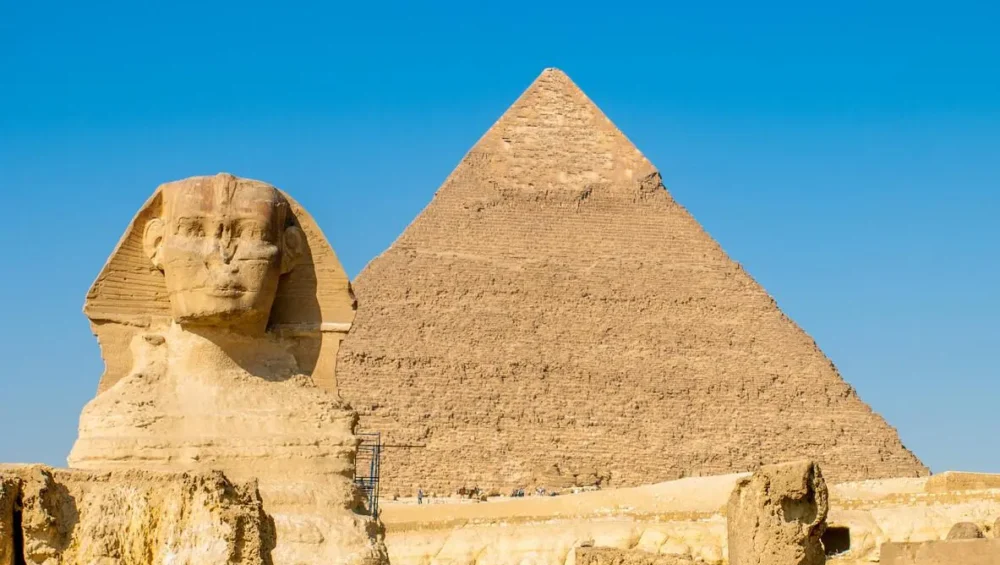
Just southwest of Khufu’s pyramid stands the Pyramid of Khafre, built for Pharaoh Khafre, the son of Khufu. Although slightly smaller than the Great Pyramid, it often appears taller because it was constructed on higher ground.
One of its most distinctive features is the remaining layer of polished white limestone casing still visible near the top. This provides visitors with an excellent idea of how the pyramids originally looked when their smooth surfaces reflected the bright Egyptian sun.
The Pyramid of Khafre is closely connected with another world-famous monument—the Great Sphinx. Most archaeologists believe that the Sphinx was carved during Khafre’s reign and was designed to guard the royal pyramid complex.
The entire complex includes:
- The Valley Temple
- A causeway connecting the temple and pyramid
- Mortuary temples
- Royal burial chambers
- Satellite pyramids
Together, these structures formed an elaborate funerary complex dedicated to the pharaoh’s eternal life.
Inside the pyramid, visitors can see the granite burial chamber where Khafre’s sarcophagus once rested. Although the treasures buried with the king disappeared long ago, the monument still provides valuable insight into ancient Egyptian burial traditions.
3-The Pyramid of Menkaure
The smallest of the three famous pyramids at Giza belongs to Pharaoh Menkaure, who ruled during the Fourth Dynasty.
Although significantly smaller than the pyramids of Khufu and Khafre, the Pyramid of Menkaure possesses a unique elegance that makes it one of the most admired monuments on the Giza Plateau.
Originally standing around 65 meters high, its lower sections were covered with beautiful red granite imported from Aswan, while the upper portions were finished with fine white limestone.
Several smaller pyramids nearby were built for royal queens, creating a balanced and impressive pyramid complex.
Unlike the enormous scale of Khufu’s monument, Menkaure’s pyramid demonstrates a shift toward refined craftsmanship rather than sheer size. Archaeologists have discovered remarkable statues within the associated temples, many of which are now displayed in museums around the world.
Visitors often appreciate the quieter atmosphere surrounding Menkaure’s pyramid, making it an excellent place to admire the impressive engineering of ancient Egypt while avoiding some of the larger crowds found around the Great Pyramid.
Why the Giza Pyramids Continue to Fascinate the World
The Giza Pyramids are far more than ancient tombs—they are symbols of human creativity, determination, and innovation. For centuries, scholars have debated the construction techniques used to build these massive monuments, inspiring countless scientific studies and archaeological discoveries.
Modern technologies such as laser scanning, satellite imaging, and non-invasive exploration continue to reveal new information about hidden chambers, construction methods, and the daily lives of the workers who built these incredible structures.
Their enduring mystery has inspired books, documentaries, films, and research projects, making them among the most studied archaeological sites in history.
For travelers, standing before these ancient monuments is an unforgettable experience. The sheer size, precision, and historical significance of the pyramids create a powerful connection with one of humanity’s greatest civilizations.
1-The Step Pyramid of Djoser
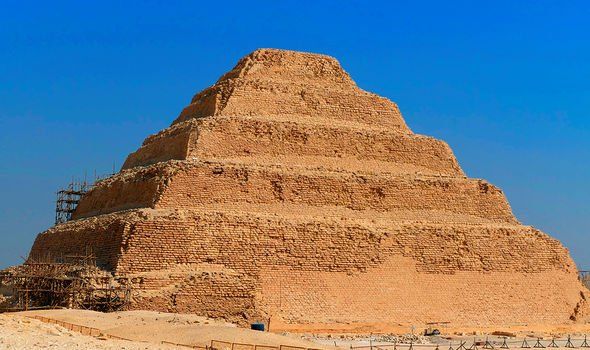
Long before the smooth-sided pyramids of Giza dominated the skyline, the ancient Egyptians experimented with a revolutionary design that forever changed architecture. The Step Pyramid of Djoser, located in Saqqara, is considered the first pyramid ever built and marks the beginning of Egypt’s pyramid age.
Constructed around 2670 BC for Pharaoh Djoser of the Third Dynasty, this remarkable monument was designed by the legendary architect Imhotep, who is regarded as one of history’s earliest known engineers and architects. Instead of building a traditional flat-roofed tomb known as a mastaba, Imhotep stacked six mastabas of decreasing size on top of one another, creating the world’s first step pyramid.
Standing approximately 62 meters (203 feet) tall, the Step Pyramid represented a groundbreaking achievement in stone construction. It became the prototype that inspired later pyramids, including those at Dahshur and Giza.
The pyramid is surrounded by a vast funerary complex covering nearly 15 hectares. Visitors can explore ceremonial courtyards, temples, shrines, and gateways that were designed to serve the pharaoh in the afterlife. This impressive complex provides valuable insight into ancient Egyptian religious practices and royal ceremonies.
Today, Saqqara is recognized as one of Egypt’s most important archaeological sites. While the Giza Plateau attracts larger crowds, many history enthusiasts consider Saqqara an essential destination because it reveals how pyramid construction evolved over time.
2-The Bent Pyramid
Among Egypt’s many ancient monuments, the Bent Pyramid is one of the most unusual. Located in Dahshur, about 40 kilometers south of Cairo, it immediately captures attention because of its distinctive shape.
Built during the reign of Pharaoh Sneferu around 2600 BC, the pyramid begins with steep sides but suddenly changes angle about halfway to the summit. This unexpected bend gives the monument its modern name.
Historians believe that builders altered the design during construction after realizing that the original angle placed too much stress on the structure. By reducing the slope, they prevented a possible collapse and successfully completed the pyramid.
Despite its unusual appearance, the Bent Pyramid remains one of the best-preserved pyramids in Egypt. Much of its original smooth white limestone casing is still intact, allowing visitors to appreciate how pyramids looked more than four thousand years ago.
Another fascinating feature is that the Bent Pyramid contains two separate entrance passages leading to different internal chambers, making it unique among Egyptian pyramids.
The Bent Pyramid represents an important stage in architectural experimentation, showing how ancient builders learned from experience before achieving the perfect pyramid shape.
3-The Red Pyramid
Just a short distance from the Bent Pyramid stands another masterpiece built for Pharaoh Sneferu—the Red Pyramid.
Often overlooked by first-time visitors, the Red Pyramid is actually Egypt’s first successful smooth-sided pyramid and served as the direct architectural model for the Great Pyramid of Khufu.
Its name comes from the reddish color of the limestone blocks used in its construction, especially noticeable during sunrise and sunset.
Standing approximately 105 meters (344 feet) tall, the Red Pyramid was the tallest structure in the world when it was completed. Unlike the Bent Pyramid, its sides maintain a consistent angle, demonstrating that Egyptian architects had finally perfected pyramid engineering.
Visitors can enter the pyramid through a descending passage that leads to several impressive chambers with high corbelled ceilings. Exploring the interior offers a unique experience because the pyramid receives fewer tourists than the Giza monuments, allowing for a quieter and more immersive visit.
The Red Pyramid highlights the remarkable progress achieved by ancient Egyptian engineers in only a few decades. Their innovations eventually made possible the construction of the magnificent pyramids at Giza.
Lesser-Known Pyramids Worth Visiting
Although Giza, Saqqara, and Dahshur contain Egypt’s most celebrated pyramids, many other pyramid sites deserve recognition.
1-Pyramid of Unas
Located at Saqqara, the Pyramid of Unas is famous for containing the earliest known Pyramid Texts—religious inscriptions carved directly into the burial chamber walls. These texts provide invaluable information about ancient Egyptian beliefs regarding the afterlife.
2-Pyramid of Teti
Also situated in Saqqara, the Pyramid of Teti may appear modest on the outside, but its interior features beautifully preserved hieroglyphic inscriptions that continue to fascinate archaeologists.
3-Pyramid of Meidum
The Meidum Pyramid is often called the “collapsed pyramid” because much of its outer structure fell away centuries ago. Many scholars believe it represents another important stage in the evolution of pyramid design before Sneferu perfected smooth-sided construction.
These monuments may not receive as much attention as Giza, but they offer visitors a deeper understanding of Egypt’s architectural development and ancient history.
Why the Egyptian Pyramids Continue to Inspire the World
More than 4,500 years after they were built, Egypt’s pyramids remain symbols of innovation, ambition, and human achievement.
Researchers continue to make exciting discoveries using advanced technologies such as ground-penetrating radar, 3D scanning, and thermal imaging. Hidden chambers, construction techniques, and ancient artifacts continue to reveal new chapters of Egypt’s remarkable past.
The pyramids also play a vital role in Egypt’s tourism industry, attracting millions of visitors each year. For many travelers, standing before these incredible monuments is the realization of a lifelong dream.
From school textbooks to Hollywood films and international documentaries, the pyramids have become universal symbols of history, mystery, and civilization.
It is no surprise that the most famous pyramids in Egypt continue to rank among the world’s most visited archaeological attractions.
Tips for Visiting the Egyptian Pyramids
To make the most of your visit, keep these helpful tips in mind:
- Visit early in the morning to enjoy cooler temperatures and fewer crowds.
- Wear comfortable walking shoes, as you’ll spend considerable time exploring uneven ground.
- Carry plenty of water, sunscreen, sunglasses, and a hat, especially during the summer months.
- Bring a camera to capture the breathtaking desert scenery.
- Consider hiring a licensed Egyptologist guide to gain deeper insight into the history and symbolism of each monument.
- Combine your visit with nearby attractions such as the Grand Egyptian Museum, Memphis, and Saqqara for a richer cultural experience.
Frequently Asked Questions
How many pyramids are there in Egypt?
Archaeologists have identified more than 100 pyramids across Egypt, although only a handful are regularly visited by tourists.
Which pyramid is the oldest?
The Step Pyramid of Djoser at Saqqara is widely recognized as Egypt’s oldest pyramid.
Which pyramid is the largest?
The Great Pyramid of Khufu is the largest pyramid ever constructed and remains one of the greatest engineering achievements in history.
Can visitors go inside the pyramids?
Yes. Several pyramids, including the Great Pyramid, the Pyramid of Khafre (when open), the Red Pyramid, and the Bent Pyramid, are accessible to visitors with the appropriate entrance tickets.
Are the pyramids worth visiting?
Absolutely. Seeing the most famous pyramids in Egypt in person is an unforgettable experience that offers a unique glimpse into one of the world’s oldest civilizations.
Final Thoughts
Egypt’s pyramids are much more than ancient stone monuments. They are timeless masterpieces that tell the story of visionary rulers, brilliant architects, and skilled workers whose achievements continue to amaze the modern world. From the revolutionary Step Pyramid of Djoser to the awe-inspiring Great Pyramid of Khufu, each monument represents an important chapter in the evolution of human civilization.
Whether you are fascinated by archaeology, passionate about history, or planning your dream vacation, exploring the most famous pyramids in Egypt is an experience unlike any other. These extraordinary landmarks showcase the ingenuity, artistry, and spiritual beliefs of ancient Egypt while reminding us of humanity’s ability to create wonders that endure for millennia.
Ready to experience these incredible monuments for yourself? Browse our carefully designed Egypt tours and discover the most famous pyramids in Egypt with expert guides, unforgettable experiences, and customized itineraries that bring ancient history to life.