

The Pyramid of Djoser, also known as the Step Pyramid, is one of the most iconic and historically significant monuments in Ancient Egypt. Located in the Saqqara necropolis near modern-day Cairo, it represents a revolutionary step in the evolution of Egyptian pyramid construction and is widely considered the earliest colossal stone building in Egypt. Commissioned during the 27th century BCE by Pharaoh Djoser, the pyramid reflects the architectural genius of Imhotep, the king’s vizier and chief architect. Today, the Pyramid of Djoser stands as a major attraction for tourists and historians alike, offering a glimpse into the monumental achievements of the Old Kingdom of Egypt.
Location and Overview
The Pyramid of Djoser is situated in Saqqara, approximately 30 kilometers (19 miles) south of Cairo. Saqqara served as a vast burial ground for the ancient city of Memphis, the capital of Egypt during the Old Kingdom. The Step Pyramid dominates the necropolis, surrounded by a complex of temples, courtyards, and ceremonial structures.
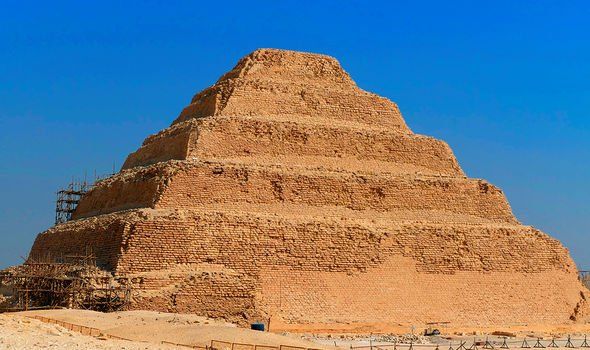
Measuring roughly 62 meters (203 feet) in height and covering a base area of 109 by 125 meters (358 by 410 feet), the pyramid was originally constructed as a series of six mastabas (rectangular structures) stacked on top of each other, forming a stepped design. This unique architectural style set a precedent for later pyramids, including the famous Pyramids of Giza.
Historical Context
Pharaoh Djoser and the 3rd Dynasty
Pharaoh Djoser ruled during the 3rd Dynasty of the Old Kingdom, around 2670–2640 BCE. His reign marked a period of political stability, economic prosperity, and monumental construction projects. Djoser sought to solidify his legacy through a grand mortuary complex, demonstrating both his power and his divine status as a ruler.
The Pyramid of Djoser was part of a larger mortuary complex that included temples, courtyards, chapels, and ceremonial structures. The design of the complex emphasized religious symbolism, reflecting the pharaoh’s role as an intermediary between the gods and the people.
Imhotep: Architect and Visionary
The Step Pyramid is credited to Imhotep, Djoser’s vizier and chief architect. Imhotep is one of the few non-royal figures from ancient Egypt whose name and achievements are well-documented. He was later deified as a god of wisdom and medicine due to his contributions to architecture, medicine, and engineering. Imhotep’s innovative use of stone for monumental construction transformed Egyptian architecture, moving away from traditional mudbrick mastabas to durable limestone structures.
Architectural Features
Step Pyramid Design
Unlike later smooth-sided pyramids, the Pyramid of Djoser features a stepped design, with six distinct tiers that gradually decrease in size as they ascend. This design was intended to represent a stairway to the heavens, allowing the pharaoh’s soul to ascend to the gods, particularly Ra, the sun god.
The core of the pyramid consists of local limestone, carefully cut and stacked to create a stable structure. Surrounding the pyramid are numerous ceremonial enclosures, including a rectangular wall that measures approximately 545 by 277 meters (1,788 by 909 feet). This wall includes 1,680 niches, symbolizing the pharaoh’s eternal presence and divine authority.
Mortuary Complex
The Pyramid of Djoser was part of an elaborate mortuary complex, which served both religious and ceremonial purposes. Key features include:
-
The Heb-Sed Court: A large open courtyard where the Sed festival, a ritual celebrating the pharaoh’s reign, was held.
-
The South Tomb: A symbolic tomb representing Djoser’s connection to the underworld.
-
The Serdab: A sealed chamber housing a life-sized statue of the pharaoh, allowing his ka (spirit) to observe rituals.
-
Chapels and Courtyards: Various chapels and open spaces for priests to perform daily offerings and rituals.
The entire complex exemplifies Old Kingdom architecture and provides valuable insight into religious practices, royal ideology, and ceremonial traditions of ancient Egypt.
Innovation and Influence
The Pyramid of Djoser is the first known monumental stone structure in history. Imhotep’s innovative use of limestone blocks influenced subsequent pyramid construction, paving the way for the smooth-sided pyramids of the 4th Dynasty, including those at Giza. The pyramid’s design reflects both engineering ingenuity and deep religious symbolism, representing the pharaoh’s journey to the afterlife.
Religious and Cultural Significance
Symbolism of the Step Pyramid
The stepped design of the pyramid symbolized a stairway to the sky, connecting the pharaoh with the divine. Ancient Egyptians believed that the pyramid’s shape facilitated the king’s ascent to join the gods in the afterlife. The complex’s layout, including temples, courtyards, and statues, reinforced the pharaoh’s divine authority and role as an intermediary between gods and humans.
Funerary Practices
The Pyramid of Djoser was not intended solely as a tomb but as a site for ongoing rituals to sustain the pharaoh in the afterlife. Priests performed daily offerings, and the surrounding chapels allowed for ceremonies honoring the king and the gods. These practices reflected the Egyptians’ belief in the ka (spiritual essence) and the importance of maintaining divine favor after death.
Discovery and Archaeological Studies
The Pyramid of Djoser remained known throughout history but became a subject of serious archaeological study in the 19th and 20th centuries. Early explorers documented the complex, while modern archaeologists have used excavation, 3D scanning, and remote sensing to understand its construction, design, and preservation needs.
Significant findings include:
-
The original layout of the mortuary complex, including courtyards, chapels, and ceremonial structures.
-
Stone carvings and inscriptions detailing rituals, construction techniques, and the pharaoh’s divine lineage.
-
Restoration evidence showing ancient repairs and modifications over centuries.
Modern Excavations
Excavations led by the Egyptian Antiquities Organization and international teams have revealed hidden chambers and tunnels beneath the pyramid. These studies provide insight into the pharaoh’s burial practices, architectural methods, and the evolution of pyramid construction.
Tourism and Visitor Experience
The Pyramid of Djoser is a major attraction for tourists visiting Egypt, particularly those exploring Saqqara and Luxor. Visitors can:
-
Walk around the pyramid and its mortuary complex.
-
Enter certain tunnels and chambers to explore the ancient architecture.
-
Learn about the history of Pharaoh Djoser, Imhotep, and the evolution of pyramids in Egypt.
-
Combine visits with nearby Saqqara attractions, such as mastabas and smaller pyramids.
The site is accessible from Cairo, making it an ideal destination for day trips or guided tours. Many Egypt tours include the Pyramid of Djoser as a highlight of historical exploration.
Conservation Efforts
Preserving the Pyramid of Djoser is critical due to natural erosion, human activity, and environmental factors. Restoration projects have focused on:
-
Stabilizing the stone structure and repairing damaged sections.
-
Controlling visitor access to protect fragile areas.
-
Monitoring environmental impacts, such as humidity and pollution.
Efforts by the Egyptian Ministry of Tourism and Antiquities have ensured that the Step Pyramid remains a safe and educational site for visitors while protecting its historical integrity.
Legacy and Influence
The Pyramid of Djoser holds a unique place in history as the first step in the evolution of Egyptian pyramids. Its design influenced later constructions, including the Great Pyramid of Giza. Scholars regard it as a testament to the creativity and vision of Imhotep, as well as the ambition of Pharaoh Djoser to achieve immortality through monumental architecture.
As an enduring symbol of Ancient Egypt, the Step Pyramid continues to inspire architects, historians, and tourists worldwide. Its combination of engineering, religious symbolism, and cultural importance makes it a key subject in the study of Egyptian civilization.
Conclusion
If you want to explore the Pyramid of Djoser, experience the history of Ancient Egypt, and witness the marvel of the first monumental stone pyramid, check out our Egypt tours. Travel with Love Egypt Tours, rated among the best on TripAdvisor, and enjoy an unforgettable journey through history, culture, and adventure.