The Citadel of Saladin, commonly known as the Cairo Citadel (Arabic: قلعة صلاح الدين), is a historic fortified complex in Cairo, Egypt. Perched on a prominent spur of the Muqattam Hills overlooking the city, it is one of the most iconic and enduring symbols of medieval Islamic military architecture. Originally commissioned in the late 12th century by the Kurdish‑Ayyubid ruler Salah al‑Din al‑Ayyubi (Saladin) to defend Cairo and consolidate his political authority, the Citadel has since played a central role in Egypt’s political, military, and cultural history. For nearly seven centuries, it served as the seat of government and residence for sultans, emirs, and later Ottoman governors, until its political functions shifted in the 19th century. Today, the Citadel stands as a major cultural landmark, a UNESCO World Heritage Site, and a popular destination for scholars and tourists alike.
Geographical Setting
The Citadel is strategically located on the Muqattam Hills, a limestone ridge on the eastern edge of Cairo. Its elevated position, approximately 75 meters above the surrounding plains, offers commanding panoramic views over Cairo and the former city of Fustat (Old Cairo), enabling defenders to observe and repel approaching forces. This high ground was a critical factor in Saladin’s decision to fortify the site, as it afforded both military advantage and symbolic domination over the region.
The topography around the Citadel includes steep slopes on the eastern and southern sides, while gentler gradients provide access from the west. The defensive perimeter was designed to take full advantage of this terrain, making any approach by invading forces more difficult. The selection of this site reflects medieval strategic thinking about fortifications and urban defense.
Historical Background
Origins and Ayyubid Foundation
In the aftermath of abolishing the Fatimid Caliphate and establishing Ayyubid rule in Egypt, Saladin recognized the need for a secure administrative and military center that could protect Cairo from external threats—especially the Crusaders who controlled territories across the Levant. The existing Fatimid palaces and fortifications were inadequate, leaving the city vulnerable. To rectify this, Saladin initiated the construction of a new fortress in 1176 CE.
The construction project was overseen by Saladin’s trusted chief eunuch Baha al‑Din Qaraqush, who coordinated labor, materials, and logistics. Workers quarried limestone from the surrounding hills and even dismantled some minor pyramids at Giza and Abusir to obtain building stone—a testament to the enormous scale and ambition of the undertaking.
Saladin also envisioned enclosing Cairo and Fustat with a massive defensive wall stretching from the Nile on one side to the Nile on the other, with the Citadel as the centerpiece of this line of fortifications. However, this extensive wall was never fully completed, even though segments were built long after his death.
Although Saladin did not live to see the completion of all main structures, significant parts of the Citadel including the core fortifications and the initial defensive walls were finished by 1183–1184 CE. Continued construction and additions occurred under his successors, especially Sultan al‑Kamil (r. 1218–1238), who is credited with occupying the Citadel as a royal residence and enhancing its facilities.
Development Under Later Dynasties
After the Ayyubids, the Mamluk dynasty (1250–1517) made significant contributions to the Citadel’s evolution. Mamluk sultans such as Al‑Zahir Baybars and Al‑Nasir Muhammad built new fortifications, palaces, and internal structures. Baybars is known to have divided parts of the complex and reinforced its military capabilities, while Al‑Nasir Muhammad commissioned the Ablaq Palace, recognized for its distinctive alternating bands of light and dark stonework—a feature that mirrored contemporary Mamluk architectural aesthetics.
During the Ottoman period (1517–1798), the Citadel continued to function as a power center, although its strategic importance was reduced relative to newer administrative centers. New gates and minor structures were constructed to adapt the fortress to evolving military technology and administrative needs.
Muhammad Ali Pasha and the 19th Century Era
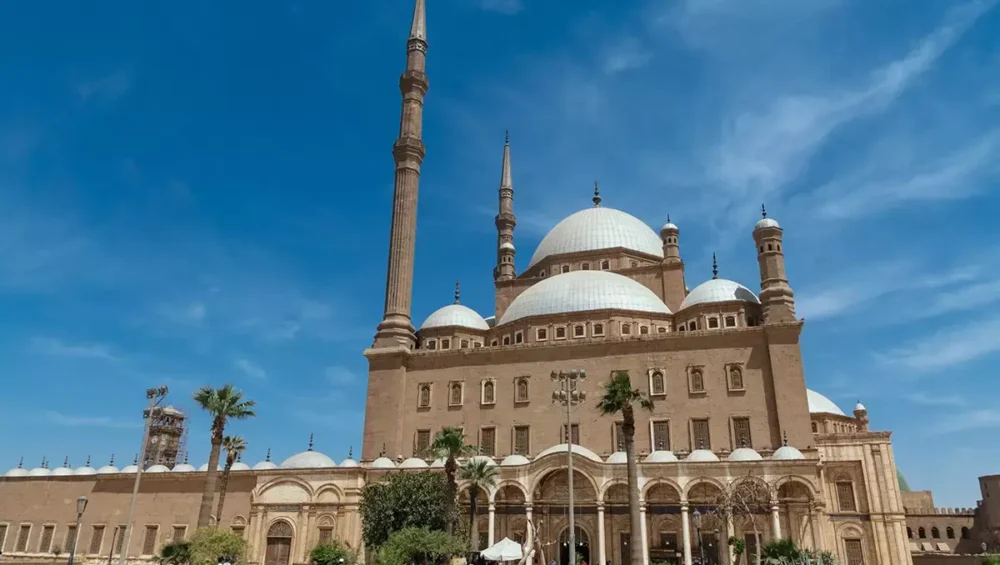
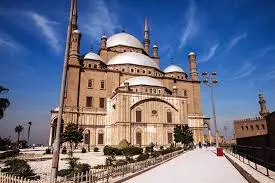
In the early 19th century, Muhammad Ali Pasha, the Ottoman‑appointed ruler who effectively established a dynasty ruling modern Egypt, undertook extensive modifications within the Citadel. Recognizing the symbolic importance of the site, he commissioned several new buildings, most notably the Mosque of Muhammad Ali—also known as the Alabaster Mosque—which dominates the skyline of the Citadel with its soaring central dome and twin minarets. This mosque, built between 1830 and 1857, reflects Ottoman architectural influence and remains one of the most famous landmarks in Cairo.
Muhammad Ali also constructed palaces such as the Jewel Palace (1814) and the Harem Palace (1826), adding residential quarters, administrative offices, and civic facilities. These additions expanded the Citadel’s role beyond purely military purposes to encompass governance and courtly life.
In 1874, Khedive Ismail relocated the official government residence to the newly built Abdeen Palace in downtown Cairo, diminishing the Citadel’s function as the political heart of Egypt, although it continued to be used for ceremonial and military purposes.
Architecture and Layout
Defensive Structures
The Citadel’s initial design focused heavily on defense, with thick limestone walls and fortified towers adapting to the contours of the Muqattam Hills. The layout comprises multiple enclosures:
-
The Northern Enclosure, which forms the oldest part of the fortress and includes major military fortifications and watchtowers.
-
The Southern Enclosure, which became a residential and administrative zone with palaces, mosques, and living quarters.
-
The Lower Enclosure, extending along the western slope with auxiliary fortifications and access routes.
Gateways such as Bab al‑Azab (the Azab Gate) and the Mokattam Gate (renamed later) controlled ingress and egress, allowing defenders to tightly regulate movement in and out of the fortress.
Engineering and Water Systems
One of the most remarkable engineering achievements within the Citadel is the Well of Joseph (Bir Yusuf)—a deep, spiral well carved directly into the bedrock during Saladin’s reign. Approximately 85–90 meters deep, the well consists of two chambers connected by a corridor, enabling a system of water wheels powered by oxen to raise water to the surface. This ingenious arrangement ensured a reliable water supply during sieges, illustrating advanced medieval Islamic engineering and hydraulic design.
In later periods, additional systems such as aqueducts and channels were developed to bring water from the Nile and sustain the residents and garrison.
Notable Monuments Within the Citadel
Mosque of Muhammad Ali
The Mosque of Muhammad Ali is perhaps the most visually striking structure in the Citadel. Its large central dome, closely surrounded by smaller domes and slender minarets, dominates the skyline. Built in an Ottoman architectural style, it was intended both as a place of worship and as a symbol of Muhammad Ali’s authority and modernization ambitions.
Al‑Nasir Muhammad Mosque
Erected in 1318 by the Mamluk sultan Al‑Nasir Muhammad, this mosque served as the royal mosque where the sultans performed Friday prayers. Its design reflects Mamluk architectural traditions of the early 14th century and remains an important religious site within the Citadel complex.
Palaces and Museums
The Citadel houses several historic palaces and museums. The Jewel Palace and Harem Palace, both from the Muhammad Ali era, contain displays of royal memorabilia, including luxurious furnishings and ceremonial objects. The Military Museum and Police Museum exhibit weapons, uniforms, and artifacts that trace the evolution of Egyptian military history. The Royal Carriage Museum displays royal ceremonial carriages from the 19th and early 20th centuries.
While many original medieval structures have been lost or significantly altered over time—such as the Ablaq Palace demolished in the 19th century—the Citadel still provides a layered architectural narrative spanning centuries.
Cultural and Historical Significance
The Citadel’s importance extends beyond its military origins. For hundreds of years, it was the epicenter of political power in Egypt: a place where rulers enacted decrees, entertained dignitaries, and managed state affairs. It also stood through pivotal historical events, including the 1811 massacre of Mamluk leaders orchestrated by Muhammad Ali, which solidified his control over Egypt.
Over time, as Egypt underwent colonial occupation, nationalist movements, and modernization, the Citadel adapted along with the nation. Though it eventually lost its political primacy, it retained symbolic status as a guardian of national heritage and identity.
World Heritage Recognition and Modern Preservation
In recognition of its historical and architectural value, the Citadel forms part of Historic Cairo, designated as a UNESCO World Heritage Site. Restoration efforts, ongoing since the late 20th century, aim to stabilize structures, preserve decorative elements, and enhance visitor access. Recent projects have opened previously restricted towers and restored important facades, allowing deeper exploration of the Citadel’s medieval heritage.
Today, the Citadel attracts visitors from around the world who come to witness its commanding views, explore its historic mosques and museums, and understand its multifaceted role in Egypt’s past.
Visiting the Citadel
Open to the public, the Citadel offers a glimpse into centuries of Egyptian history and architectural evolution. Visitors should plan several hours to fully explore its diverse sites—from the sweeping courtyard of the Mosque of Muhammad Ali to the underground depths of the Well of Joseph. Exhibits within museums provide context about Egypt’s military and political history, enriching appreciation for the fortress and its creators.
Legacy
The Citadel of Saladin stands as a monumental testament to Egypt’s medieval resilience, architectural ingenuity, and cultural continuity. From its origins as a defensive stronghold against Crusader threats to its later roles as royal residence, administrative center, and treasured heritage site, it encapsulates the evolving narrative of Egyptian history. Its enduring presence atop the Muqattam Hills continues to dominate Cairo’s skyline, inviting successive generations to reflect on the past and imagine the stories it still holds